
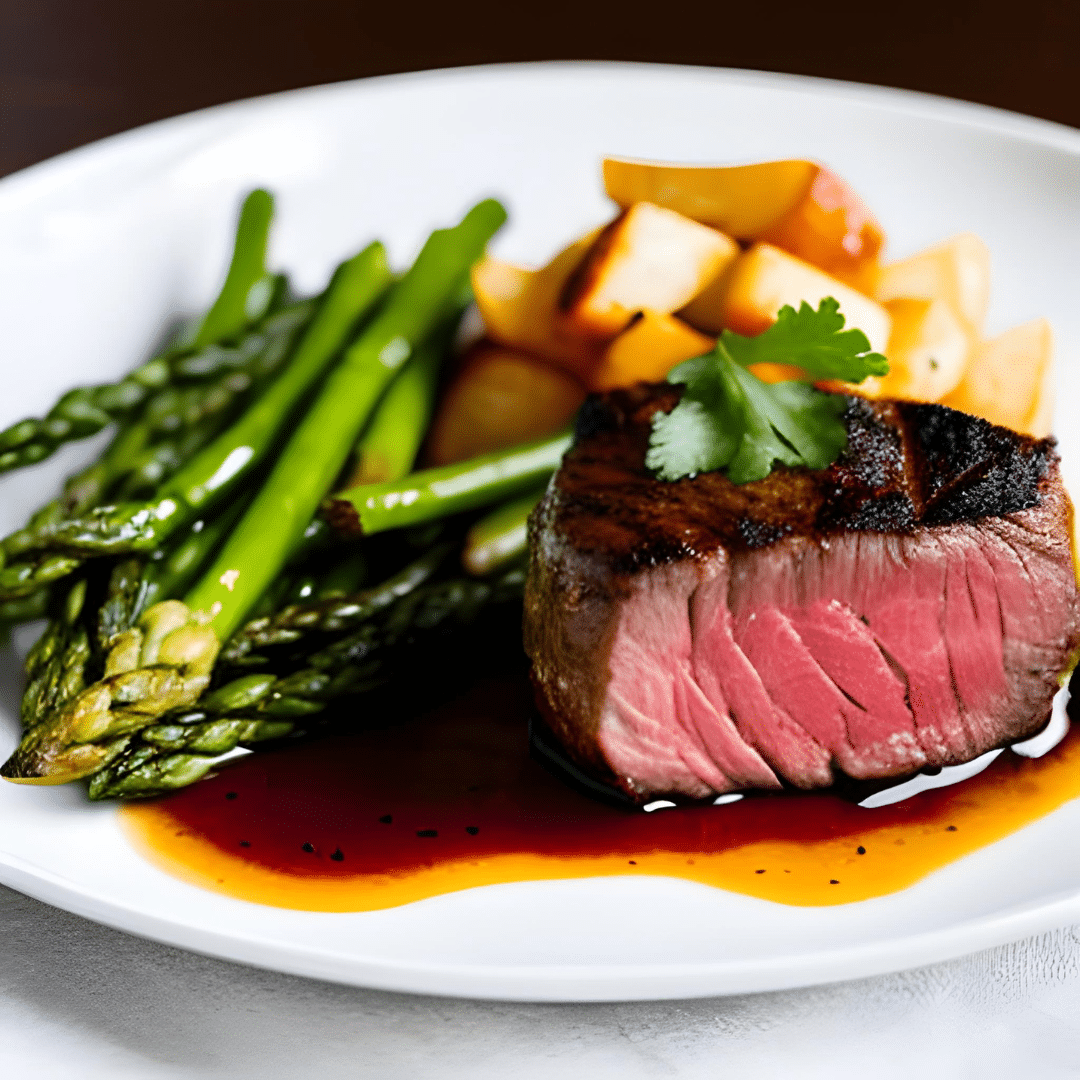
Today’s Spotlight is on Filet Mignon.
Filet mignon is a cut of beef from the small end of the tenderloin, or psoas major, which is located near the spine of the cow. The tenderloin runs along both sides of the spine and is usually butchered as two long snake-shaped cuts of meat. The tenderloin is sometimes sold whole. The tenderloin is the most well-known muscle on a cow and is also the most tender. Filet mignon is a lean cut of beef, which means you’ll enjoy a fork-tender steak without much fat or connective tissue.
Filet mignon is one of the most tender and milder cuts of steak, making it a favorite among steak lovers. It’s also one of the most expensive cuts of steak, due to its prized texture and that it’s only about 2 to 3% of the total animal.
The French word “filet mignon” translates to “delicate, fine or cute fillet”.
The main difference between filet mignon and tenderloin is size:
- Filet mignon: A smaller, more tender portion of the tenderloin
- Tenderloin: The whole piece of meat
- Filet mignon is a cut of meat taken from the smaller end of the tenderloin.
- Filet mignon is usually the more tender steak cut. However, beef tenderloin can be just as tender as filet mignon if cooked slowly in low heat to medium rare.
Because filet mignon is just a portion of the full tenderloin, it’s more expensive per pound than the beef tenderloin itself.
Filet mignon is considered a luxury steak and is in high demand by the rich. It’s also considered a leaner cut of meat, which results in less fat, less cholesterol, and fewer calories.
History
The term “filet mignon” was coined in 1906 by O. Henry (pen name of William Sydney Porter) in his book The Four Million. The term is French for “cute filet” with “filet” meaning thick, boneless slice and “mignon” meaning “dainty”. The dish has existed and been served in the U.S. since before the 18th century and was one of the most popular items on the menu. However, they were known as medallions or tenderloin steak because the term “filet mignon” was not coined until 1906.
Dry Aging
Filet mignon tends not to be dry aged because there’s no bone or fat protecting it. Dry aging is wasteful because every side of meat that is exposed to air will break down faster than the meat on the inside.
Dry-aged steaks benefit from a layer of bone or fat around the cut. Bone-in New York strip or ribeye are good contenders for dry-aging.
Here are some fun facts about filet mignon, a cut of beef from the small end of the tenderloin:
- The filet mignon is usually about 1 inch thick and 6–8 inches long.
- The filet mignon is located near the spine of the cow.
- The filet mignon is non-weight bearing and not toughened by exercise, resulting in extremely tender meat.
- The filet mignon is often garnished with a sauce or wrapped with bacon.
- Wet-aging is a faster process, so the enzymes don’t have enough time to change the meat as substantially as you would find in the dry-aging process. Wet-aged meat is tender but not as tender as dry-aged steak. Wet-aged steak has a lot more moisture in it.
Filet mignon is one of the most popular cuts of steak. It’s portioned out of the tenderloin, which is cut from the short loin of the cow. Filet mignon is known for its tender, melt-in-your-mouth texture and mild, yet rich flavor. It’s also relatively lean.
According to a survey, 47% of Americans love to eat filet steak. Filet mignon is a favorite among steak enthusiasts. It’s best cooked on a grill, broiler, or pan-seared on a stovetop.
Filet mignon is pretty simple to prepare and cook but here is a recipe for you to try:
Ingredients:
- 4 10-ounce thick tenderloin beef filets (roughly 1.5– 2 inches thick)
- salt and pepper to taste
- vegetable or canola oil (can use 2 tbsp butter but it has a lower smoke point)
Garlic & Herb Butter
- 1/2 stick of butter, softened
- 1 tablespoon chopped fresh rosemary
- 1 tablespoon chopped fresh tarragon
- 1/2 tablespoon minced garlic
Instructions:
For The Herb Butter
- Leave the butter on the counter to soften or place it in a microwave-safe bowl and microwave until malleable, 10-15 seconds. Use a fork to mash in the herbs and garlic until fully mixed. Store in the refrigerator and remove 10 minutes before adding to the filet.
For The Filets
- Preheat the oven to 415°F. Remove the steak from the fridge 30 minutes prior to cooking, this is to bring the steak to room temperature and ensure your cooking times are more accurate. Season all sides liberally with salt and pepper. This can be done while your steak comes to room temp.
- Add 1-2 tablespoons of oil to an oven-safe cast iron skillet and turn the heat up high, allowing the skillet to become very hot. Twirl the pan to distribute oil as it heats. Once the oil starts to smoke, place the filets face down and sear undisturbed for 2 minutes. Flip the filets and sear for an additional 2 minutes. This will give your filets a nice, seared edge.
- Optionally add some herb butter and a whole garlic clove/herbs to the pan before transferring it to the oven. The butter will melt, and the herbs will season the pan drippings for a later step. Transfer your skillet directly to the oven. [WARNING] skillet may be hot, handle it with oven mitts. For rare, bake for 4 minutes. Medium rare, 5-6 minutes. Medium, 6-7 minutes. Medium well, 8-9 minutes. Remember, depending on the size of the steak, the more or less time it will take. This recipe is ideal for an 8–10-ounce portion, roughly 1.5-2 inches thick.
- Optionally spoon some of the seasoned pan drippings over the steak to infuse it with extra flavor.
- Remove filets from the skillet and set them on a plate and let sit for 5-10 minutes before serving. This is important to bring your steak to its final serving temperature.
- Top with a slice of garlic and herb butter and serve.
Here are some states where demand for steak is highest:
- Demand for steak is highest – California, Nevada, Washington, Oklahoma, Minnesota, Illinois, Florida, New York.
- Demand for steak is lowest – in Idaho, Utah, Missouri, and the Appalachian regions, Tennessee, Kentucky, and West Virginia.
- Montana – Residents consume more red meat than anywhere else in the country, eating steaks and burgers almost five to six days a week.
- Iowa – Produced the most red meat in the United States in 2020, followed by Nebraska and Kansas
- Illinois, Indiana, and Iowa – Consumers in these states choose any meat option 1% more often than the average consumer.
Filet mignon is a popular steakhouse cut because it’s tender, juicy, and relatively lean. It’s also known as the “Aristocrat of Tenderness”.
National Filet Mignon Day is celebrated annually on August 13. The day celebrates the creation of the filet mignon steak, which is considered by some to be the “King of Steaks”.
To celebrate, you can order a cut of filet mignon at your favorite steakhouse and pair it with fresh vegetables or creamy potatoes. You can season it with salt and pepper, or you can try other flavors like fresh rosemary and cracked black pepper, garlic-based mixtures, or thyme and marjoram.
Some say that filet mignon is the least flavorful of the cuts. Others say that it’s the most expensive cut because of its tenderness. What do you say? Let us know in the comments.
0 Comments