National Prime Rib Day

Apr 26, 2026 | Food Blog

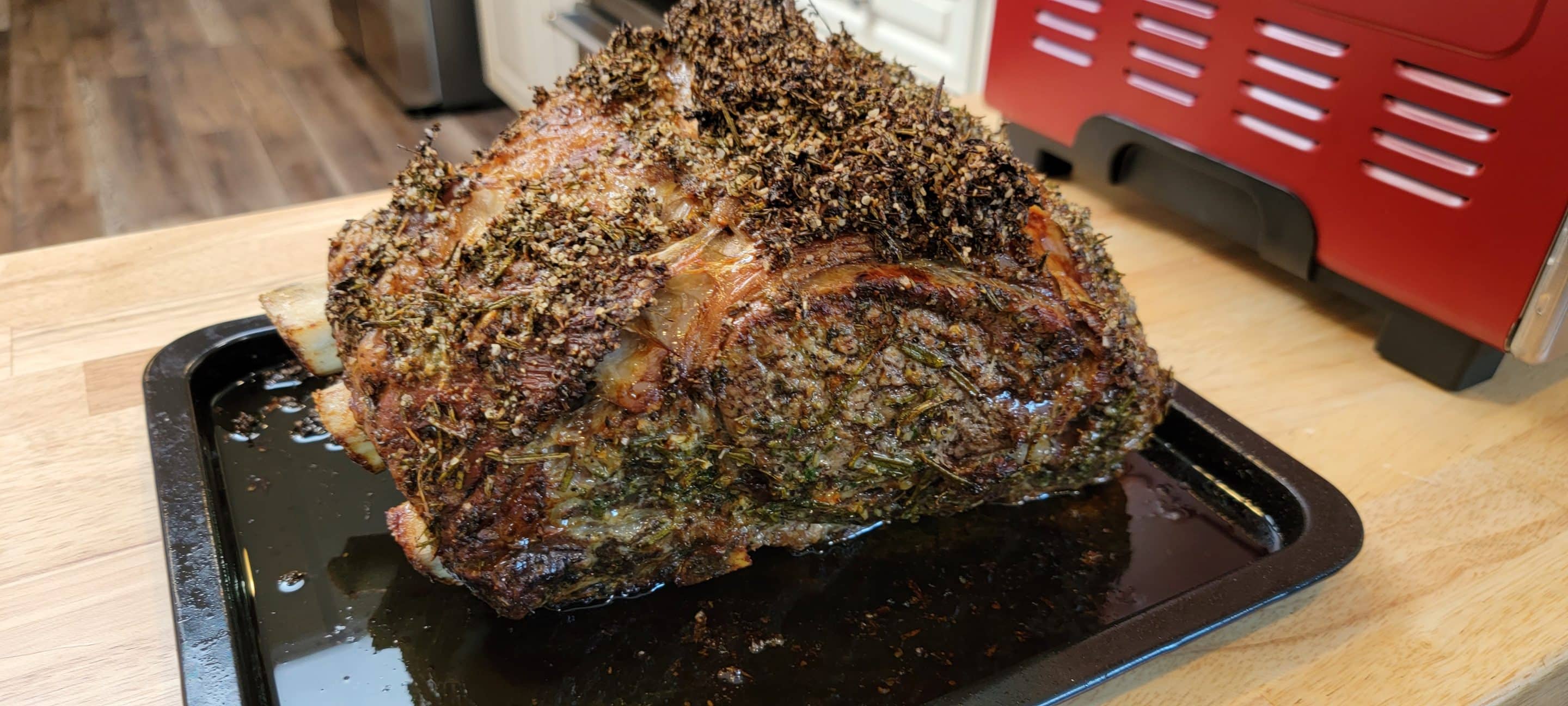
National Prime Rib Day is celebrated on April 27th every year, and it’s the perfect occasion to indulge in one of the most delicious cuts of beef. Prime rib is a cut of beef from the rib section, and it’s a favorite among meat lovers for its rich flavor and tender texture. Prime rib is typically roasted in the oven and served with a variety of side dishes, and it’s a popular choice for special occasions such as holidays and weddings.

The history of prime rib is a long and storied one, dating back to the medieval era. During the Middle Ages, the roast was a popular dish for special occasions and was served at banquets and feasts. It was a sign of prestige and wealth to serve a large prime rib cut at the table, as it was quite a luxurious item at the time.

Prime rib can be traced back to England, where it was originally known as a “standing rib roast.”  The first mention of prime rib in print was in England in the late 17th century. It was referred to as a “rib of beef” and was prepared roasted with herbs and spices. In 1897, the well-known London steakhouse Rules served prime rib to its customers.  The term “prime rib” is believed to have originated in the United States in the 1930s, when butchers began to use the term to differentiate between the highest quality cuts of beef. In the United States, the popularity of prime rib grew during the 19th century, as the dish became a symbol of affluence.

In the late 20th century, prime rib began to gain popularity in the United States, as the quality of beef began to improve and the dish was featured in popular restaurants and it’s a favorite among meat lovers around the world. Prime rib is now a staple in many restaurants and is served in a variety of ways, from simple roasts to complex preparations. It is also a popular dish for special occasions, such as Christmas and New Year’s Eve.


Here are some fun facts about prime rib:

  • Prime rib is sometimes referred to as a “standing rib roast” because the bones are left in the meat, which allows it to stand upright during the cooking process.
  • Prime rib is often served with a horseradish sauce or au jus, which is a thin gravy made from the juices of the meat.
  • Prime rib can be cooked to different degrees of doneness, ranging from rare to well-done.
  • The quality of prime rib is determined by a grading system, with the highest quality cuts receiving the “prime” designation.
  • Prime rib is a popular choice for special occasions such as weddings, holidays, and birthdays.


Tips On Selecting a Prime Rib

  1. Look for a cut of meat that has a good amount of marbling throughout the cut. The marbling will help to keep the meat moist and flavorful during cooking.
  2. Choose a Prime Rib that is on the smaller side. This will help to ensure that the roast cooks evenly and that the flavor is concentrated.
  3. Inspect the fat cap of the roast. It should be white and firm and not too thick or too thin.
  4. Look for a rib roast that has a nice, even shape with no large gaps or holes between the bones.
  5. Try to select a Prime Rib that is aged for at least one week. Aging the beef will tenderize the meat and bring out the flavor.


The oldest recorded recipe for Prime Rib comes from England in the late 19th century. The recipe includes a marinade of olive oil, Worcestershire sauce, and garlic, followed by roasting in the oven with a dry rub of rosemary, thyme, and bay leaves. The finished dish is served with a horseradish sauce. Here is the recipe:

Ingredients

  • 2 tablespoons olive oil
  • 2 tablespoons Worcestershire sauce
  • 2 cloves garlic, minced
  • 1 (4-5 pound) prime rib roast
  • 2 tablespoons rosemary, freshly chopped
  • 2 tablespoons thyme, freshly chopped
  • 2 bay leaves
  • Salt and freshly ground pepper to taste


Horseradish Sauce

  • ½ cup prepared horseradish
  • ½ cup mayonnaise
  • 2 tablespoons Dijon mustard
  • 2 tablespoons white wine vinegar
  • 2 tablespoons olive oil
  • 1 tablespoon freshly squeezed lemon juice
  • Salt and freshly ground pepper to taste


Instructions

  1. In a small bowl, whisk together the olive oil, Worcestershire sauce, and garlic.
  2. Rub the mixture all over the prime rib roast. Place the roast in a roasting pan and season with the rosemary, thyme, bay leaves, salt, and pepper.
  3. Roast the prime rib in a preheated 350°F oven for 1½ to 2 hours, or until the internal temperature reaches 140°F for medium-rare.
  4. To make the horseradish sauce, whisk together the horseradish, mayonnaise, Dijon mustard, white wine vinegar, olive oil, and lemon juice until smooth. Season with salt and pepper to taste.
  5. In a small bowl, whisk together the mayonnaise, Dijon mustard, white wine vinegar, olive oil, and lemon juice until smooth. Season with salt and pepper to taste.
  6. Serve the prime rib with the horseradish sauce. Enjoy!


Prime rib is clearly one of those dishes that is reserved for special occasions. Let us know in the comments one occasion where you have enjoyed prime rib.


0 Comments

Submit a Comment

Your email address will not be published. Required fields are marked *

Subscribe to our Blog to receive more content like this. Click here to subscribe.

Be sure to watch our shows on QVC+  or our YouTube channel

Give us your feedback on our Social Channels 

FacebookInstagramTik TokLinkedInPinterestTwitter  

National Kool-Aid Day

National Kool-Aid Day

Today’s spotlight is on the flavored water treat known as Kool-Aid.
Kool-Aid is an American brand of flavored drink mix. It's typically made with sugar, water, and artificial colorings. The powder form was created in 1927 by Edwin Perkins based on a liquid concentrate called Fruit Smack. Kool-Aid is owned by Kraft Heinz, based in Chicago, Illinois.

Read More

National Smores Day

National Smores Day

Today’s spotlight is on a fireside favorite – S’mores.
S'mores are a confection made of toasted marshmallows and chocolate sandwiched between two graham crackers. They are a traditional camping snack that are popular in the United States and Canada. S'mores are traditionally cooked over a campfire and warmed over an open flame until melted and gooey.

Read More

National Rice Pudding Day

National Rice Pudding Day

Today’s Spotlight is on Rice Pudding.
Rice pudding is a creamy mixture of rice and milk and other ingredients such as cinnamon, vanilla and raisins. It's cooked until it's thick and soft. It can be sweet or savory. Variants are used for either desserts or dinners. When used as a dessert, it is commonly combined with a sweetener such as sugar. American rice pudding often uses leftover rice and can be baked in the oven or cooked on the stove.

Read More

Sneak Some Zucchini onto Your Neighbor’s Porch Day

Sneak Some Zucchini onto Your Neighbor’s Porch Day

Today’s Spotlight is on Zucchini (and your neighbors)!
There are a lot of odd holidays but this one has got to be one of my favorites. Sneak Some Zucchini Onto Your Neighbor's Porch Day is celebrated on August 8th every year. The holiday encourages people to sneak their extra zucchinis onto the porches of unsuspecting community members. The day celebrates the bounty of the summer's zucchini harvest by demonstrating generosity, desperation, and cunning.

Read More

Raspberries and Cream Day

Raspberries and Cream Day

Today’s food spotlight is aimed at Raspberries and Cream.
Raspberries and cream is a simple treat that combines fresh, ripe berries with sweetened, hand-whipped cream. It's a good option for anyone with a sweet tooth.
Raspberries are the fruit of several shrubs in the rose family. They are usually red but can also be black or yellow. When ripe, they separate from the receptacle and are rounder and smaller than blackberries. The name "raspberry" may have come from "raspise", which means "a sweet rose-colored wine". The name may also be related to the Old English word "rasp", which means "rough berry".

Read More

National Root Beer Float Day

National Root Beer Float Day

Today’s spotlight is on Root Beer Floats!
The root beer float is traditionally made with vanilla ice cream and root beer, but it can also be made with other ice cream flavors. It's sometimes referred to by the nicknames “brown cow” or “black cow”. Root beer floats were a popular dessert drink in 1950s diners.

Read More

Oyster Day

Oyster Day

Today’s food spotlight is on Oysters.
Oysters are a type of bivalve, which are marine and freshwater mollusks with long, flat bodies and shells made up of two hinged parts. Oysters are plump, mineral rich, saltwater mollusks that live at the bottom of shallow coastal waters, often adhering to rocks or other objects. They use their gills and cilia to process water and feed. Oysters have a small heart and internal organs, but no central nervous system.

Read More

Chocolate Chip Cookie Day

Chocolate Chip Cookie Day

Today’s spotlight is on Chocolate Chip Cookies #yum

If you have been living under a rock somewhere, a chocolate chip cookie is a drop cookie that features chocolate chips or chocolate morsels as its distinguishing ingredient. Chocolate chip cookies originated in the United States in 1938, when Ruth Graves Wakefield chopped up a Nestlé semi-sweet chocolate bar and added the chopped chocolate to a cookie recipe.

The original name of the chocolate chip cookie was "Toll House Crunch Cookie". The recipe was created by Ruth Wakefield, who ran the Toll House restaurant in Whitman, Massachusetts. Wakefield included the cookie in her 1938 cookbook, Toll House “Tried and True" Recipes. The cookie was intended to accompany ice cream.

Read More

Grab Some Nuts Day

Grab Some Nuts Day

Today is Grab Some Nuts Day.
All of this evidence shows that nuts have been a staple in the human diet since the beginning of history. The oldest walnut remains were discovered in Iraq, and they are believed to be from 50,000 B.C. The Greeks and Romans were fond of the walnut, and they were considered food for Gods by early Romans.

Read More

National Watermelon Day

National Watermelon Day

Today’s focus is on Watermelons.
Watermelons are a large, sweet fruit that are related to cantaloupes, zucchinis, pumpkins, and cucumbers. They are members of the gourd family (Cucurbitaceae) and are botanically classified as Citrullus lanatus. Watermelons are native to southern Africa and are cultivated around the world. They are usually eaten raw and are often used as a table dessert.
Watermelons are a berry with a hard rind and no internal divisions. They are botanically called pepos. The fruit is usually deep red to pink and has many black seeds, although seedless varieties exist. The sweet, juicy flesh is 92% water and contains vitamin A and some vitamin C. Watermelons are also a great source of antioxidants.

Read More

Pin It on Pinterest