
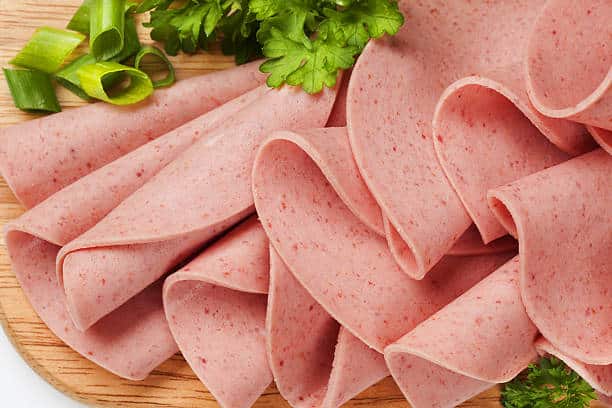
Today’s Spotlight is on Bologna.
Bologna is a type of sausage made from ground meat scraps. It’s typically made from: Pork, Beef, Chicken, Turkey. The meat is finely ground and blended into a smooth texture. It’s then packed into a casing and cooked with smoke, heat, and/or vinegar.
Bologna can be prepared with a variety of spices, including:
Black pepper, Nutmeg, Allspice, Coriander, Celery seed, Myrtle berries.
Bologna has a light, sweet flavor. It can be packaged whole or sliced.
Bologna is similar to mortadella, its Italian predecessor. Both meats have a similar flavor profile, which comes from a unique blend of spices.
Bologna is one of the least healthy foods in the Western diet. It’s estimated that 800,000 lives could be saved each year if bologna and other processed meats were eliminated from the diet.
History
Bologna’s origins date back to ancient Rome. The Romans enjoyed a salt-cured sausage that was flavored with myrtle berries. This sausage was a delicacy in the Italian city of Bologna as early as the 1400s.
The Catholic Church even created a legal definition for the sausage in 1661. Bologna recipes date back to the mid-17th century. The sausage became popular in America during the Great Depression as a tasty and economical cold cut. German immigrants are thought to have brought the technology to America.
Bologna’s American origins are primarily associated with German immigrants. German immigrants are credited with bringing bologna to America. They settled in Pennsylvania, the Midwest, and Southeastern Canada. Oskar Ferdinand Mayer, a German immigrant, worked in Chicago’s meatpacking industry. He became a butcher after moving to the U.S. at age 14.
Bologna became popular in the United States around the 1920s. Bologna was originally consumed by the lower class in America. It became popular during the Great Depression as an economical cold cut. It was affordable and versatile, so it became a staple in kids’ lunches.
Bologna was cheaper than ham or salami. It was made from discarded or fatty parts of meat, and sometimes organ meat. It was also versatile, so housewives could make bologna sandwiches for lunch and fry bologna for dinner.
Here are some fun facts about bologna:
- The most popular brand of bologna is Oscar Mayer.
- National Bologna Day is on October 24th.
- Americans eat 800 million pounds of bologna each year.
- Lebanon Bologna is a dark, smoked, all-beef sausage with a strong, tangy flavor. It originated in the Lebanon Valley in Pennsylvania.
- Myrtle berries are native to the Mediterranean and have been used to flavor sausages for thousands of years. They give bologna its bitter, spicy, and citrusy flavor.
- Bologna was cheaper than ham or salami during the Great Depression and the war-rationing era. It was so versatile that housewives could make bologna sandwiches for lunch and fry bologna for dinner.
What sets bologna apart from SPAM?
Both SPAM and bologna appear very similar if not identical. But look closer and you’ll realize they really aren’t the same at all. SPAM is less mysterious, the contents of a can of SPAM are surprisingly simple. In fact, there are only six ingredients: cooked pork (which includes both the shoulder and ham), salt, water, potato starch, sugar, and sodium nitrite.
Bologna, on the other hand, is a little more mystifying. That’s because the U.S. Department of Agriculture (USDA) requires that all processed meats be reduced to tiny particles so you can’t see exactly what’s inside that slice of bologna from the grocery store. Bologna likely contains pork (and maybe beef) along with a variety of different spices but it may also contain what bologna companies label simply “trimmings.” “Trimmings” are often kept secret because they’re from parts of the animal that “make people want to faint.”
Consumption
Americans consume an estimated 800 million pounds of bologna each year. In 2017, Americans purchased 236.4 million pounds of bologna from retail stores, which is worth $530.6 million.
On average, Americans eat a bologna sandwich 1.18 times per year. Americans eat close to 200 sandwiches per year on average.
Bologna is eaten in many countries, including:
- United Kingdom, Ireland, Australia, New Zealand, and South Africa: Known as polony, it’s usually a smoked meat made from pork and beef.
- Germany: Called “Mortadella”, it’s made from the same meats as American bologna, but often contains pistachios.
- Hungary, Romania, and the countries of the former Yugoslavia: Called “parizer” or “Parisian sausage”.
- Newfoundland: Called “Newfie Steak”, it’s a popular breakfast food.
In Australia and New Zealand, bologna is known by different names in different regions, including:
- “Luncheon” or “Belgium” in New Zealand.
- “Polony” in Western Australia.
- “Belgium” or “devon” in Victoria, Tasmania, Queensland, New South Wales, and the Australian Capital Territory.
Celebrating Bologna
National Bologna Day is celebrated on October 24th. It’s an unofficial holiday that honors the sausage and sandwich meat. People celebrate by making a bologna sandwich for lunch.
Here are some ways to celebrate National Bologna Day:
- Eat a bologna sandwich for lunch.
- Make a bologna sandwich.
- Bring a brown bag lunch to work.
- Eat bologna.
Let us know in the comments if you are a fan of Bologna.
0 Comments