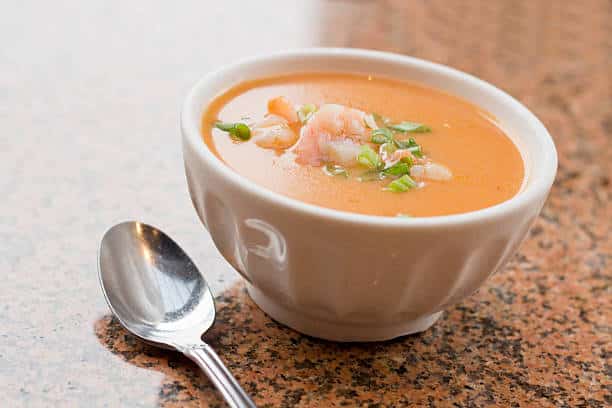
Celebrating Seafood Bisque

Oct 18, 2025 | Food Blog

Today’s Spotlight is on Seafood Bisque.

A bisque is a French style of soup that is made from crustaceans, such as lobster, crab, shrimp, and crayfish; their shells are used to make a stock and the meat is incorporated into the finished dish. So, in a way, calling the soup a “seafood bisque” is somewhat redundant.

The main characteristic of a bisque is that it is smooth and has a velvety texture. Most recipes will include wine and cream to give it its signature flavor and texture. But it’s not merely the choice of ingredient that makes bisque different from other types of soups. It’s also the technique for utilizing that ingredient, including the parts you can’t eat, making a bisque what it is.

Bisque vs. Chowder

Although bisque and chowder are both cream-based soups and most often feature seafood, it is their consistency that defines them and makes them quite different from each other. Whereas a bisque is smooth, a chowder is chunky, chock full of hearty pieces of ingredients such as potato and clams or corn. We also see bacon as an important ingredient in a chowder when it would not be featured in a bisque.


History

Seafood bisque has been around for centuries. Seafood bisque is a creamy, highly seasoned soup that originated in 16th century France.  The word “bisque” comes from the French word “biscuit” which generally referred to twice-baked bread.  Food historians believe that bisque was originally a fisherman’s dish that was made with whatever shellfish was available.

The French boatmen would use shrimp, crab, and even lobster. The initial version of bisque was thicker and known as pottage. The main ingredient was crayfish, which is also known as the American rock lobster. Traditional French chefs define bisque as a thick, creamy soup made with shellfish and thickened by a paste made from their shells. Julia Child popularized lobster bisque in the United States. Her recipe uses both the shells of the lobster and rice to thicken the bisque. The name “Bisque” is likely derived from Biscay, as in the Bay of Biscay.


Here are some fun facts about seafood bisque:

  • The word “bisque” comes from the French phrase “bis cuites” which means “twice cooked”. The shells in bisque are cooked twice.
  • The method for cooking bisque reflects this, as it must be cooked twice, the first time with stock and again, with cream.
  • Authentic recipes for bisque actually ground the shells of the crustacean into a fine paste, using that to thicken the soup. Nowadays, it is more common to use rice as a thickener.
  • The French colonization of Louisiana in the early eighteenth century led to strong French influence in creole and cajun cuisine. In the gulf of Louisiana, where seafood (particularly shellfish like shrimp and crawfish) is plentiful, this version of the French classic is made with shrimp.
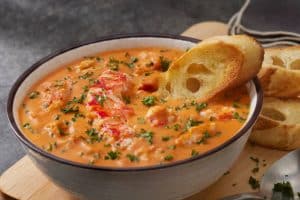
Lobster Bisque with Toasted Baguette Slices

Here is a Seafood Bisque Recipe for you to Try:

Ingredients:

  • 1 lb crawfish meat (or more shrimp and crab if unable to find)
  • 5 lb shrimp meat
  • 1/2 lb crab meat
  • 1 lb unsalted butter
  • 1 bunch green onions (white and green parts), finely chopped.
  • 1/2 cup All-Purpose flour
  • 1 qt heavy cream
  • 1 qt half and half
  • 1 16oz can creamed corn.
  • 1 1/2 tsp Tony’s Cajun Seasoning
  • 1 tsp Old Bay Seasoning
  • 1 tsp salt, to taste
  • 2 tsp freshly ground black pepper.
  • 1 tsp cayenne pepper


Instructions:

  1. In a large pot, melt butter and sauté onions.
  2. Sprinkle the flour over the butter and onions and stir until flour is fully incorporated.
  3. Add remaining ingredients and simmer for 40 minutes, stirring frequently.
  4. Serve with white wine and a good loaf of sour dough bread.


Consumption

According to Tastewise, the average person eats lobster bisque 1.19 times per year.

Seafood bisque is a good source of nutrients, including:

  • Lean protein
  • Vegetables
  • Omega-3 fatty acids
  • Zinc

Seafood bisque is also relatively low in insulin-spiking carbohydrates.

Here are some nutritional facts for lobster bisque:

  • 129 calories per 248 g serving.
  • 4 g of fat
  • 13 g of protein
  • 2g of carbohydrate
  • 20% vitamin A
  • 8% vitamin C
  • 10% calcium
  • 4% iron


Celebrating Seafood Bisque

National Seafood Bisque Day is celebrated on October 19. The day celebrates the delicious and comforting soup. Let us know in the comments about your favorite Seafood Bisque.

0 Comments

Submit a Comment

Your email address will not be published. Required fields are marked *

Subscribe to our Blog to receive more content like this. Click here to subscribe.

Be sure to watch our shows on QVC+  or our YouTube channel

Give us your feedback on our Social Channels 

FacebookInstagramTik TokLinkedInPinterestTwitter  

National Peaches and Cream Day

National Peaches and Cream Day

National Peaches and Cream Day is celebrated annually in the United States. This day commemorates the day in 1869 when druggist Thomas H. Brewer mixed together the first batch of the delicious fruit combo of juicy peaches and creamy milk or cream. He called it "Cream Peach".
National Peaches and Cream Day is thought to have started in the early 1900s as a way to promote the dairy and fruit industries. Whatever the reason for its creation, we are sure glad that this day exists so that we can all enjoy some peach-y goodness!

Read More

National Vanilla Milkshake Day

National Vanilla Milkshake Day

National Vanilla Milkshake Day is celebrated on June 20 and it's all about celebrating the original vanilla milkshake. It's made by blending milk, ice cream, and vanilla for a classic style beverage.

The vanilla milkshake has an interesting history. In 1885, the term “milkshake” showed up in print for the first time. The word milkshake combines the word 'milk', from the Old English 'milc' or 'meoluc', and the word 'shake', from the Old English 'sceacan' meaning 'move quickly back and forth'. The concoction of cream, eggs, and whiskey was often served with other alcoholic tonics such as lemonades and soda waters. Who has been holding out on this recipe? Don’t worry, we have it for you here:

Read More

National Martini Day

National Martini Day

Today is National Martini Day. National Martini Day is thought to have started in the 1940s, when the popularity of the martini drink began to rise. It's likely that people began celebrating the day as a way to honor the classic cocktail.

The martini is believed to have originated in the United States in the late 1800s by a bartender in either New York or San Francisco, however no one is certain. It was created by mixing gin and vermouth, an Italian fortified wine. The earliest known martini recipe was found in the 1888 book, "The Bartender's Guide" by Jerry Thomas. The recipe called for one-third gin and two-thirds French vermouth with a dash of orange bitters.

Read More

International Picnic Day

International Picnic Day

Today is International Picnic Day. International Picnic Day is believed to have originated in the late 18th century when an open-air meal enjoyed by friends became popular among the upper classes in France. It is thought to have been started by King Louis XVI and Marie Antoinette. The trend quickly spread throughout Europe, and eventually around the world. Today, many countries celebrate International Picnic Day to commemorate this long-standing tradition.

Picnics originated in the late 1700s as a way for the upper classes in Europe to enjoy an outdoor meal with friends. These gatherings typically featured elaborate arrangements of food and décor, often with musicians or performers to entertain the guests. Picnics were a way to socialize and enjoy nature and good company.

Read More

National Apple Strudel Day

National Apple Strudel Day

Today is National Apple Strudel Day. National Apple Strudel Day was started by a group of pastry chefs in Austria in the late 1990s. They wanted to honor the country's traditional food, and they decided to dedicate a day to the celebration of the iconic dessert. The chefs chose this day, and the holiday has been celebrated ever since.

Strudel has been a staple of Austrian cuisine for centuries, and it remains a favorite today. The history of apple strudel dates back to the 16th century, when it became popular in Austria, Germany, and Hungary. The traditional strudel is filled with apples, raisins, cinnamon, and sugar and can be served as a dessert or a snack.

Read More

National Lobster Day

National Lobster Day

National Lobster Day was started by the Lobster Institute at the University of Maine in 1974. The Lobster Institute is a non-profit organization dedicated to research, education, and outreach of lobster and the lobster industry. The day was created to celebrate the lobster industry and the iconic seafood.

And as fate would have it, National Lobster Day is observed during the peak of the lobster season. In the United States, the peak of the season usually starts in late May and runs through late October or early November.

Read More

National Strawberry Shortcake Day

National Strawberry Shortcake Day

Today is National Strawberry Shortcake Day a holiday to honor the classic strawberry shortcake dessert and its place in American food culture.

Strawberry shortcake has a long and storied history. The dessert is believed to have its origins in Britain, where it was served as early as the 16th century.

The earliest known recipe for strawberry shortcake appears in the book The Accomplisht Cook by Robert May, which was published in 1685. This recipe is for a dessert made with a mixture of flour, butter, eggs, cream, and sugar, which is rolled out into a shortbread-like dough and then topped with strawberries and cream. The recipe was most likely an adaptation of the traditional British trifle.

Read More

National Cupcake Lovers Day

National Cupcake Lovers Day

National Cupcake Lovers Day began as an online celebration in 2009. It was created by the founders of Cupcake Lovers, a website dedicated to cupcake recipes, reviews, and more. Since then, it has grown into an international day of celebration, with people around the world celebrating the joy of cupcakes on the same day each year.


Were cupcakes originally made in cups?

Yes, cupcakes were originally made in individual molds, rather than muffin tins. The name "cupcake" comes from the fact that the batter was poured or dropped into cups or molds. The cakes were then baked in the oven, and after cooling, they were removed from the molds.

Read More

National Jerky Day

National Jerky Day

Today is National Jerky Day.

This holiday was created by the National Jerky Association in order to celebrate the popular snack. The goal was to bring together jerky lovers everywhere to celebrate the nutritious and delicious snack.

Jerky has been around since ancient times. It was first made by Native Americans and was used as a way to preserve meat. Native Americans would dry strips of meat over a fire or in the sun to make jerky. The meat would be cut into thin strips and then salted and spiced before being left to dry. This process allowed them to preserve the meat and keep it edible for long periods of time. As the meat dried, it would become tough and chewy.

Read More

Corn on the Cob Day

Corn on the Cob Day

The holiday of Corn on the Cob Day has been celebrated since at least the 1950's.

Corn, or maize, is a member of the grass family and is believed to have been domesticated in Mexico around 9,000 years ago. Corn was an important part of the diets of many Native American tribes, including the Iroquois, Algonquian, and Pueblo tribes. By the time of European colonization, corn had spread throughout the Americas and was cultivated extensively by many tribes. Corn was introduced to Europe by explorers in the 15th century, and by the 17th century, it had become a common crop in many parts of Europe.

Read More

Pin It on Pinterest