National Anisette Day

Jul 1, 2026 | Food Blog

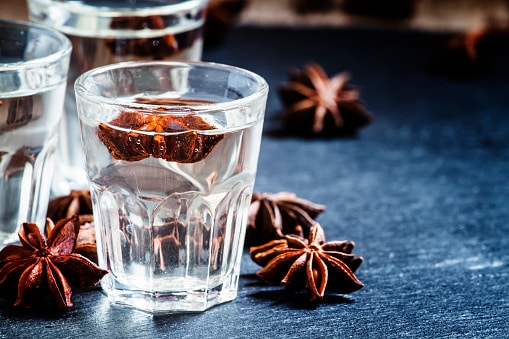
Anisette is a sweet, colorless liqueur made from anise seeds. It has a strong aniseed taste with hints of licorice, fennel, and star anise.

Anisette originated in France and is also popular in Mediterranean countries, including Italy, Spain, and Greece. It’s often mixed with water or poured over ice cubes because of its strong flavor.

Anise, called anice (pronounced ah-NEE-cheh) in Italian, once grew wild in the Mediterranean and is one of the oldest known spice plants. It was used in Egypt as far back as 1500 B.C. and was mentioned in the Bible. Over the centuries, anise has been used for a variety of purposes: to ward off the Evil Eye; to increase milk flow in nursing mothers; to cure epilepsy; as an antidote for snake bites and scorpion stings; and as an aphrodisiac. In Native American cultures, it was, and still is, used as a laxative, and it’s a known appetite suppressant. Some people believed that if you placed anise under your pillow, it would keep away nightmares. It was also used to ease sore throats, coughing, bronchitis, and congestion, and that lives on in modern medicine through its use as an expectorant in many cough syrups. Anise tastes like licorice, and, in fact, oil distilled from the plant is what gives licorice candy its flavor.

The oldest known recipe for anisette liqueur is Silvio Meletti’s recipe from 1870. The recipe is still used by the Meletti family, who are the only company owners.

Anisette is a French liqueur made from anise seeds. It has a licorice flavor and is sweeter than other anise liqueurs. Anisette is colorless and contains sugar. Anisette can be made by distilling anise seeds with a spirit or by macerating the seeds in the spirit. The most traditional style of anisette is produced by distilling aniseed.

The recipe calls for anise seed from Le Marche, which is distilled in a bain marie and then blended with herbs for further distillation. The flavoring is taken from other distillations of carefully chosen flowers, seeds, and fruits and then added to the liquor.

Anisette by itself, is a popular ingredient in many cocktails and drinks, including the French 75 and the Sazerac. Anisette is a colorless liqueur that is flavored with anise seeds.

Anisette is 25% ABV, which is lighter than pastis, which can range from 40% to 45% ABV. Anisette liqueur is typically 25% alcohol by volume (ABV). However, some varieties contain a higher percentage of alcohol.

Anisette is made from aniseed and has a distinct licorice-like flavor. It is often used in small amounts, sometimes as little as a few drops, in cocktails and as a digestif. It is also enjoyed straight and in coffee.

But to answer your question. Yes, you can drink anisette straight. Anisette is an anise-flavored liqueur that has a distinct licorice flavor that is sweet and fragrant. It can be enjoyed both straight or as part of a cocktail. You can also dilute anisette with water or add it to other mixed beverages. Anisette is a replacement for absinthe.

Anisette is distilled using only anise (fennel) seeds. The benefits of anise itself are well-known: aiding with breathing problems, as an antibacterial and anti-inflammatory properties.

Anise is an herb from the parsley family that is used in many cough syrups as an expectorant. It is also used to treat:

  • Sore throats
  • Bronchitis
  • Congestion
  • Upset stomach
  • Intestinal gas
  • Runny nose
  • Depression
  • Anxiety
  • Ulcers
  • Stomach acid
  • Blood sugar levels
  • Menopause
  • Irritable bowel syndrome (IBS)
  • Migraines
  • Allergies
  • Menstrual period symptoms
  • High blood pressure

Anise has anti-fungal, antibacterial, and anti-inflammatory properties. It is also used as a carminative and a diuretic.


Here are some fun facts about anisette liqueur:

  • Anisette is a colorless, sweet liqueur made from anise seeds.
  • Anisette is popular in Mediterranean countries like Portugal, Greece, Italy, and Turkey.
  • Anisette is used in many cocktails, including the French 75 and the Sazerac.
  • Anisette is also used to add a sweet, licorice flavor to desserts, sauces, and custards.
  • Anisette is sweeter than most anise-flavored liqueurs.
  • Anisette has a mild 25% ABV.
  • Anise is one of the oldest known spice plants. It was used in Egypt as far back as 1500 B.C. and was mentioned in the Bible.

Because there is a day for everything, why not give anisette a try. If you like licorice, there is a chance you will like anisette. Let us know in the comments what you think.

0 Comments

Submit a Comment

Your email address will not be published. Required fields are marked *

Subscribe to our Blog to receive more content like this. Click here to subscribe.

Be sure to watch our shows on QVC+  or our YouTube channel. 

Give us your feedback on our Social Channels 

Facebook • Instagram • Tik Tok • LinkedIn • Pinterest • Twitter  

Celebrating Boston Cream Pie

Celebrating Boston Cream Pie

Today’s Spotlight is on Boston Cream Pie.
A Boston cream pie is a cake with a cream filling. The dessert acquired its name when cakes and pies were cooked in the same pans, pie tins were more common than cake pans, and the words were used interchangeably. In the late 19th century, this type of cake was variously called a "cream pie", a "chocolate cream pie", or a "custard cake".
The Boston cream pie is a sponge cake. The cake batter was originally baked in a pie crust. At some point, the crust was eliminated, and the batter was poured directly into the pie pan.

Read More

Celebrating Whole Hog BBQ

Celebrating Whole Hog BBQ

Today’s spotlight is on a Whole Hog BBQ.
Whole hog barbecue involves cooking an entire hog in one piece over a pit in the ground. It's a time- and labor-intensive process. Whole hog barbecue is a regional style of barbecue where a pitmaster cooks an entire hog. The hog smoked for hours on a wood pit. The meat is seasoned with sauces like mustard-based, tomato-based, or vinegar-based.
To serve, the skin is cracked along the back, hams, and shoulders. The meat should pull easily from the bone. Guests can choose the type of meat they want, such as:
Loin, Tenderloin, Shoulder, Hams, Belly, Ribs.

Read More

Celebrating Nuts

Celebrating Nuts

Today’s focus is on nuts!
Nuts (tree nuts and peanuts) are nutrient dense foods with complex matrices rich in unsaturated fatty and other bioactive compounds: high-quality vegetable protein, fiber, minerals, tocopherols, phytosterols, and phenolic compounds.
There are over 20 edible nuts in the world. Some of the most common edible nuts include:

Read More

Celebrating Nachos

Celebrating Nachos

Today’s Spotlight is on Nachos.
Nachos is a Mexican culinary dish consisting of tortilla chips or totopos covered with cheese or cheese sauce, as well as a variety of other toppings and garnishes, often including meats, vegetables, and condiments such as salsa, guacamole, or sour cream.
They can also include other toppings and garnishes, such as:

Read More

Celebrating Chicken and Waffles

Celebrating Chicken and Waffles

Today’s Spotlight is on Chicken and Waffles.
Chicken and waffles is a dish that combines chicken and waffles. It's popular in the United States and is served in many restaurants. The dish first appeared in the United States in the 1600s in Pennsylvania Dutch country. The traditional Pennsylvania Dutch version consists of a plain waffle with pulled, stewed chicken on top, covered in gravy.

Read More

Celebrating Seafood Bisque

Celebrating Seafood Bisque

Today’s Spotlight is on Seafood Bisque.
A bisque is a French style of soup that is made from crustaceans, such as lobster, crab, shrimp, and crayfish; their shells are used to make a stock and the meat is incorporated into the finished dish. So, in a way, calling the soup a "seafood bisque" is somewhat redundant.
The main characteristic of a bisque is that it is smooth and has a velvety texture. Most recipes will include wine and cream to give it its signature flavor and texture. But it's not merely the choice of ingredient that makes bisque different from other types of soups. It’s also the technique for utilizing that ingredient, including the parts you can't eat, making a bisque what it is.

Read More

Celebrating Meatloaf

Celebrating Meatloaf

Today’s Spotlight is in Meatloaf.

Meatloaf is a traditional dish made from ground meat, such as beef, pork, or poultry, mixed with other ingredients like breadcrumbs, onions, and eggs. It is then formed into the shape of a loaf, then baked or smoked. The final shape is either hand-formed on a baking tray or pan-formed by cooking it in a loaf pan.

Read More

Celebrating Pasta

Celebrating Pasta

Today’s spotlight is on Pasta.
Pasta is a type of food made from a dough of wheat flour, water, and eggs. It's formed into different shapes and then cooked by boiling or baking. Pasta is often associated with Italian cuisine. Pasta is a good source of energy and can provide fiber if it's made from whole grain. Fiber can help with stomach problems and may help lower cholesterol.

Read More

Celebrating Shawarma

Celebrating Shawarma

Today’s Spotlight is on Shawarma.
Shawarma is a popular Middle Eastern Street food. It's made of thinly sliced, spice-marinated meat that's cooked on a vertical spit in front of a rotisserie. The meat is often wrapped in or served with pita. Shawarma is similar to Greek gyros, but shawarma is seasoned with more spices and gyros are seasoned with more herbs.

Read More

Pin It on Pinterest