Fortune Cookie Day

Sep 12, 2026 | Food Blog

Today’s Spotlight is on the Fortune Cookie.

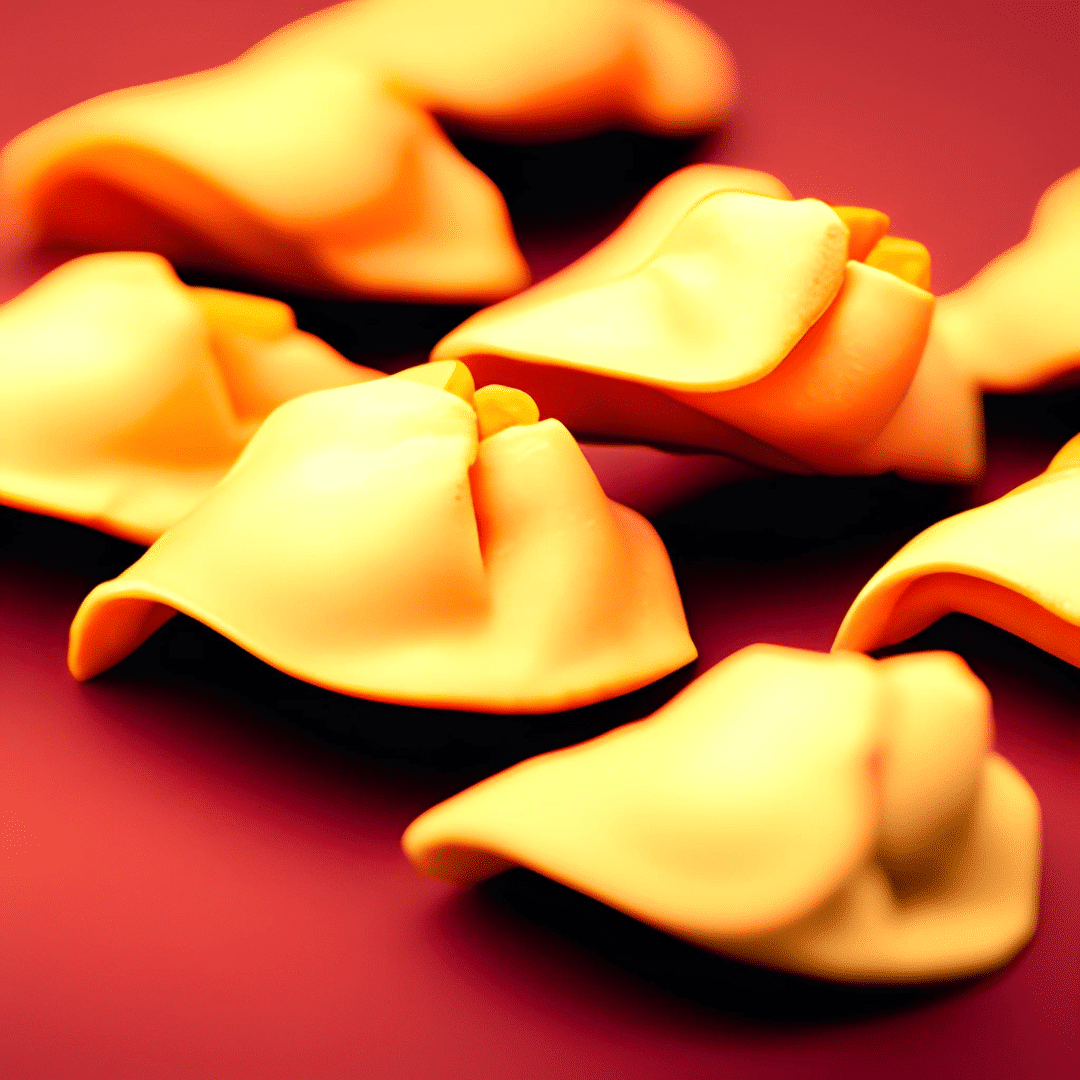
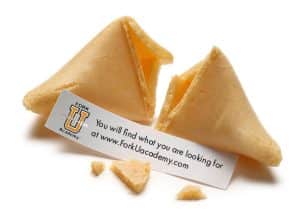
Fortune cookies are small, crispy cookies that contain a small piece of paper with a message or proverb inside. The message is often a fortune, aphorism, or prophecy. The cookies are made from flour, sugar, vanilla, and sesame seed oil. They are folded into a butterfly shape to create a pocket for the paper.

Fortune cookies are often served at the end of a meal in Chinese restaurants. They are most popular in the United States but are also served in other countries. The fortune cookie is a staple of Chinese American cuisine. It symbolizes luck, fate, soundbite Chinese wisdom, and the mysteries of the unknown.

Fortune cookies symbolize luck, wisdom, fate, and the unknown. They are a dessert served in Chinese restaurants. The fortune cookie’s distinctive shape and the hidden paper slip inscribed with a fortune give it a layered meaning. The fortune is a short message or proverb that is supposed to offer advice or a prediction about the future.

Some say that fortune cookies can predict what will happen in the future. However, you can choose to take the meaning of your fortune cookie from a negative perspective and see it as a bad omen. If there is no fortune in a fortune cookie, it is a sign that something good will happen to you soon. If you get two fortunes in one cookie, they cancel each other out.


History

The exact origin of is unclear, but they are believed to have originated in Japan. The cookie was inspired by a Japanese cracker called tsujiura senbei, which was made with sesame and miso and contained a small paper fortune.

Fortune Cookies were popularized by Makoto Hagiwara, a Japanese immigrant who ran the Japanese Tea Garden in San Francisco’s Golden Gate Park in the 1890s. Hagiwara is believed to have been the first to serve fortune cookies at the tea garden in 1908. They were originally called “fortune tea cakes”.

Another story claims that David Jung, a Chinese immigrant and founder of the Hong Kong Noodle Company, invented the cookie in 1918. Jung created the cookie as a sweet treat and encouraging word for unemployed men who gathered on the streets.

Fortune cookies are a staple of Chinese American cuisine. They symbolize luck, wisdom, fate, and all that is unknown. The message in your cookie is for you. Fortune cookies became popular in Chinese restaurants in the United States during the mid-20th century. The exact origins of the fortune cookie as a symbol of good luck are not known.
The Best Fortune Cookie

www.ForkUacademy.com

Here are some other interesting facts about fortune cookies:

  • They are meant to bring good luck to the person who eats them.
  • They are much larger than the fortune cookies you’re used to seeing.
  • They are flavored with miso instead of vanilla and sesame.
  • They are shaped after they are baked.
  • They were first sold in California.
  • Mass production of fortune cookies began in the late 1960s or early 1970s.
  • In 2008, approximately three billion fortune cookies were produced worldwide.
  • In Japan, they are called tsujiura senbei (“fortune crackers”), omikuji senbei (“written fortune crackers”), and suzu senbei (“bell crackers”).
  • David Jung, a Chinese immigrant, invented fortune cookies in 1918. He created them to give away for free to the poor people he saw near his shop.


Here is a Fortune Cookie Recipe for you to Try:

Ingredients:

  • 3 egg whites room temperature
  • 3/4 cup sugar
  • 1/2 cup salted or unsalted melted butter.
  • 1/4 tsp vanilla extract
  • 1/2 tsp almond extract
  • 1/4 cup water
  • 1 cup all-purpose flour
  • 1 tsp cornstarch


Directions:

  1. Preheat oven to 375 degrees. Line a baking sheet with parchment paper or a baking mat; have fortune strips ready.
  2. In a large mixing bowl, using a hand mixer, beat the egg whites and sugar on high speed for 2 minutes. Add the melted butter, vanilla, almond extract, and water, mix until incorporated. Add the flour and cornstarch, mix just until combined.
  3. Using a tablespoon, spoon the batter onto the prepared baking sheet. Using a spatula or the back of tablespoon, spread the batter into a 3-inch circle. Only do two at a time!
  4. Bake the cookies for 7-8 minutes or until the edges are brown. Remove them from the oven and quickly flip over. Fold the cookie in half, into a semicircle. Slip the note into the cookie. Place the semicircle onto the edge of a cup and quickly fold the ends down (see pictures below).
  5. Place the cookie in a muffin tin to let it cool and hold its shape.
  6. Repeat the process with the remaining batter.


About 3 billion fortune cookies are made each year, almost all in the United States. The largest manufacturer of fortune cookies is Wonton Food, Inc., which is based in Brooklyn, New York. They produce over 4.5 million fortune cookies per day. Other large manufacturers include Baily International in the Midwest and Peking Noodle in Los Angeles.

Wonton Food was established in New York’s Chinatown in 1973 by Chinese immigrant Ching Sun Wong. They are the largest manufacturer of noodles, wrappers, and fortune cookies in the United States.

Fortune cookies are available in vanilla, chocolate, citrus, and tri-flavored flavors. They are individually wrapped and available in bulk and in boxes.

National Fortune Cookie Day is celebrated on July 20th every year. Fortune Cookie Day is observed on September 13th.This way you get two chances to Chinese takeout or make a homemade crunchy, sweet treat. Let us know in the comments which direction you went.

0 Comments

Submit a Comment

Your email address will not be published. Required fields are marked *

Subscribe to our Blog to receive more content like this. Click here to subscribe.

Be sure to watch our shows on QVC+  or our YouTube channel. 

Give us your feedback on our Social Channels 

Facebook • Instagram • Tik Tok • LinkedIn • Pinterest • Twitter  

Celebrating Boston Cream Pie

Celebrating Boston Cream Pie

Today’s Spotlight is on Boston Cream Pie.
A Boston cream pie is a cake with a cream filling. The dessert acquired its name when cakes and pies were cooked in the same pans, pie tins were more common than cake pans, and the words were used interchangeably. In the late 19th century, this type of cake was variously called a "cream pie", a "chocolate cream pie", or a "custard cake".
The Boston cream pie is a sponge cake. The cake batter was originally baked in a pie crust. At some point, the crust was eliminated, and the batter was poured directly into the pie pan.

Read More

Celebrating Whole Hog BBQ

Celebrating Whole Hog BBQ

Today’s spotlight is on a Whole Hog BBQ.
Whole hog barbecue involves cooking an entire hog in one piece over a pit in the ground. It's a time- and labor-intensive process. Whole hog barbecue is a regional style of barbecue where a pitmaster cooks an entire hog. The hog smoked for hours on a wood pit. The meat is seasoned with sauces like mustard-based, tomato-based, or vinegar-based.
To serve, the skin is cracked along the back, hams, and shoulders. The meat should pull easily from the bone. Guests can choose the type of meat they want, such as:
Loin, Tenderloin, Shoulder, Hams, Belly, Ribs.

Read More

Celebrating Nuts

Celebrating Nuts

Today’s focus is on nuts!
Nuts (tree nuts and peanuts) are nutrient dense foods with complex matrices rich in unsaturated fatty and other bioactive compounds: high-quality vegetable protein, fiber, minerals, tocopherols, phytosterols, and phenolic compounds.
There are over 20 edible nuts in the world. Some of the most common edible nuts include:

Read More

Celebrating Nachos

Celebrating Nachos

Today’s Spotlight is on Nachos.
Nachos is a Mexican culinary dish consisting of tortilla chips or totopos covered with cheese or cheese sauce, as well as a variety of other toppings and garnishes, often including meats, vegetables, and condiments such as salsa, guacamole, or sour cream.
They can also include other toppings and garnishes, such as:

Read More

Celebrating Chicken and Waffles

Celebrating Chicken and Waffles

Today’s Spotlight is on Chicken and Waffles.
Chicken and waffles is a dish that combines chicken and waffles. It's popular in the United States and is served in many restaurants. The dish first appeared in the United States in the 1600s in Pennsylvania Dutch country. The traditional Pennsylvania Dutch version consists of a plain waffle with pulled, stewed chicken on top, covered in gravy.

Read More

Celebrating Seafood Bisque

Celebrating Seafood Bisque

Today’s Spotlight is on Seafood Bisque.
A bisque is a French style of soup that is made from crustaceans, such as lobster, crab, shrimp, and crayfish; their shells are used to make a stock and the meat is incorporated into the finished dish. So, in a way, calling the soup a "seafood bisque" is somewhat redundant.
The main characteristic of a bisque is that it is smooth and has a velvety texture. Most recipes will include wine and cream to give it its signature flavor and texture. But it's not merely the choice of ingredient that makes bisque different from other types of soups. It’s also the technique for utilizing that ingredient, including the parts you can't eat, making a bisque what it is.

Read More

Celebrating Meatloaf

Celebrating Meatloaf

Today’s Spotlight is in Meatloaf.

Meatloaf is a traditional dish made from ground meat, such as beef, pork, or poultry, mixed with other ingredients like breadcrumbs, onions, and eggs. It is then formed into the shape of a loaf, then baked or smoked. The final shape is either hand-formed on a baking tray or pan-formed by cooking it in a loaf pan.

Read More

Celebrating Pasta

Celebrating Pasta

Today’s spotlight is on Pasta.
Pasta is a type of food made from a dough of wheat flour, water, and eggs. It's formed into different shapes and then cooked by boiling or baking. Pasta is often associated with Italian cuisine. Pasta is a good source of energy and can provide fiber if it's made from whole grain. Fiber can help with stomach problems and may help lower cholesterol.

Read More

Celebrating Shawarma

Celebrating Shawarma

Today’s Spotlight is on Shawarma.
Shawarma is a popular Middle Eastern Street food. It's made of thinly sliced, spice-marinated meat that's cooked on a vertical spit in front of a rotisserie. The meat is often wrapped in or served with pita. Shawarma is similar to Greek gyros, but shawarma is seasoned with more spices and gyros are seasoned with more herbs.

Read More

Celebrating Maple Syrup

Celebrating Maple Syrup

Today’s Spotlight is on Maple Syrup.
Maple syrup is a syrup made from the sap of maple trees. In cold climates, these trees store starch in their trunks and roots before winter; the starch is then converted to sugar that rises in the sap in late winter and early spring.
Maple syrup is a natural sweetener made from the sap of maple trees. It's produced by:

Read More

Pin It on Pinterest