Celebrating Pho

Jan 30, 2026 | Food Blog

Today’s Spotlight is on Pho.

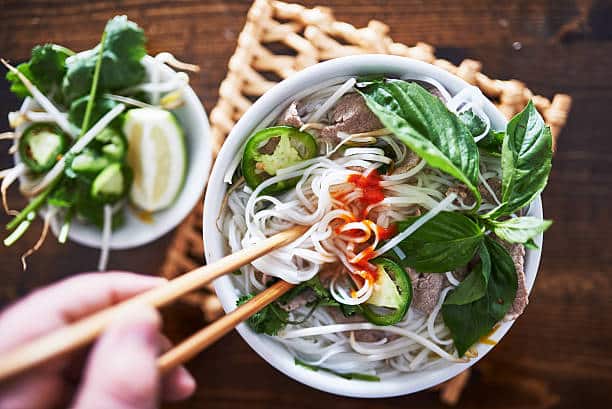
Pho is a Vietnamese soup dish consisting of broth, rice noodles, herbs, and meat. Phở is a popular food in Vietnam where it is served in households, street-stalls, and restaurants country-wide. Residents of the city of Nam Định were the first to create Vietnamese traditional phở.

Pho is a Vietnamese soup made with broth, rice noodles, and meat. It’s the national dish of Vietnam.

Pho is pronounced “fuh”. It’s made with:

  • Broth, usually made with beef bones.
  • Rice noodles
  • Meat, usually beef, but it can also be chicken, fish, pork, or tofu.
  • Fresh garnishes, such as bean sprouts, herbs, limes, and chiles

Pho is nutritious and high in protein, but it’s also high in sodium and calories. It may help reduce inflammation and improve joint health.

Pho is different from ramen. The noodles in pho are soft and translucent, while the noodles in ramen are firm and chewy.


History

Pho’s origins are poorly documented. Most historians agree that pho was invented in the late 19th and early 20th century in northern Vietnam during French colonial times. Pho was heavily influenced by both Chinese and French cooking. Rice noodle and spices were imported from China. The French popularized the eating of red meat.

Some theories about pho’s origins include:

  • Pho was an adaptation of the French one-pot beef and vegetable stew pot-au-feu.
  • Pho originated when Vietnamese villagers added French beef to the bánh đa cua.
  • Pho originated from a Cantonese dish called “ngau yuk phan”.
  • Pho is derived from “buffalo meat soup” (using vermicelli) of Vietnam.
  • The word “pho” is a corruption of the French “feu” or “fire”.
  • Pho was from Vân Cù village in Nam Dinh province.
  • Pho was popularly rose in Hanoi due to a surplus of beef bones.

Pho became popular as a street food in Vietnam. It was popularized throughout the world by refugees after the Vietnam War.


Here are some fun facts about pho:

  • The word “pho” might come from the French word “feu”, which means “fire”.
  • The original pho dish is not Pho Hanoi.
  • The flavors of pho vary by region.
  • Pho is rich in calcium, iron, and phosphorus, which are essential for maintaining healthy teeth.
  • Vietnamese cooking uses very little oil.
  • Pho represents the history of Vietnam and its push for self-determination.
  • Pho was popularized throughout the world by refugees after the Vietnam War.


Here is a Pho Recipe for you to try:

Ingredients:

AROMATICS:

  • 2 large onions, halved.
  • 150g / 5oz ginger, sliced down the center.


SPICES

  • 10-star anise
  • 4 cinnamon quills
  • 4 cardamon pods
  • 3 cloves (the spice cloves!)
  • 5 tbsp coriander seeds


BEEF BONES (NOTE 1):

  • 5kg / 3lb beef brisket
  • 1kg / 2lb meaty beef bones
  • 1kg / 2lb marrow bones (leg, knuckle), cut to reveal marrow.
  • 5 liters / 3.75 quarts water (15 cups)


SEASONING:

  • 2 tbsp white sugar
  • 1 tbsp salt
  • 40 ml / 3 tbsp fish sauce


NOODLE SOUP – PER BOWL:

  • 50g / 1.5 oz dried rice sticks (or 120g/4oz fresh) (Note 3)
  • 30g / 1 oz beef tenderloin, raw, very thinly sliced (Note 4)
  • 3 – 5 brisket slices (used for broth)


TOPPINGS:

  • Beansprouts, handful
  • Thai basil, 3 – 5 sprigs
  • Coriander/cilantro, 3 – 5 sprigs (or more basil)
  • Lime wedges*
  • Finely sliced red chilli*
  • Hoisin sauce*
  • Sriracha* (for spiciness)


Instructions

AROMATICS

  1. Heat a heavy based skillet over high heat (no oil) until smoking.
  2. Place onion and ginger in pan cut side down. Cook for a few minutes until it’s charred, then turn. Remove and set aside.
  3. Toast Spices lightly in a dry skillet over medium high heat for 3 minutes.


REMOVE IMPURITIES:

  1. Rinse bones & brisket then cover with water in large stock pot.
  2. Boil for 5 minutes, then drain.
  3. Rinse each bone and brisket under tap water.


BROTH:

  1. Wipe pot clean, bring 3.5 litres / 3.75 quarts water to boil.
  2. Add bones and brisket, onion, ginger, Spices.
  3. Add onion, ginger, Spices, sugar and salt – water should just barely cover everything.
  4. Cover with lid, simmer for 3 hours.
  5. Remove brisket (should be fall-apart tender), cool then refrigerate for later.
  6. Simmer remaining soup UNCOVERED for 40 minutes.
  7. Strain broth into another pot, discard bones and spices. Should be about 2.5 litres / 2.65 quarts (10 cups), if loads more, reduce.
  8. Add fish sauce, adjust salt and sugar if needed. Broth should be beefy, fragrant with spices, savory and barely sweet.


ASSEMBLE:

  1. Prepare rice noodles per packet, just prior to serving.
  2. Place noodles in bowl. Top with raw beef and brisket.
  3. Ladle over about 400 / 14 oz hot broth – will cook beef to medium rare.
  4. Serve with Toppings on the side.
  5. Enjoy!


Consumption

On average, pho is consumed 1.55 times every year. However, pho’s popularity has decreased by 9.11% over the past year. Pho is the national dish of Vietnam. It’s also one of the 100 most popular dishes in the world. In the United States, there are 6,340 pho restaurants.

A medium bowl of pho contains:

  • 3–4 ounces of meat
  • 6 ounces of noodles
  • 20 ounces of broth
  • Fresh herbs, onions, peppers, and bean sprouts


Celebrating Pho

January 31 is National Pho Day. Pho is often reserved for special occasions because it takes a lot of time, effort, and ingredients to make from scratch. Some say that pho is a Vietnamese holiday tradition.

Here are some pho-related holiday items:

  • Pho ornament: An original design made in the USA of thick acrylic and glitter ribbon.
  • Pho card: A funny pho Christmas card with an enamel pin
  • Pho holiday ornament: A bowl of pho ornament
  • You can also make your own pho for the holidays.


Let us know in the comments if you are a friend of Pho.

0 Comments

Submit a Comment

Your email address will not be published. Required fields are marked *

Subscribe to our Blog to receive more content like this. Click here to subscribe.

Be sure to watch our shows on QVC+  or our YouTube channel

Give us your feedback on our Social Channels 

FacebookInstagramTik TokLinkedInPinterestTwitter  

National Bratwurst Day

National Bratwurst Day

Today’s Spotlight is on Bratwurst.
Bratwurst is a type of German sausage, also known as a "brat". It's typically made from pork and veal, but can also be made with beef, or any combination of meat. Bratwurst has a smooth texture, pale color, and mild flavor. It can be seasoned with salt, white pepper, nutmeg, lemon peel, marjoram, caraway, and garlic. They are often consumed for breakfast in German cities.
Bratwurst is prepared and stored fresh, so it doesn't have a long shelf life like a sausage can. It's usually grilled or fried in a pan

Read More

National Rum Day

National Rum Day

Today’s spotlight is on Rum.
Rum is a liquor that is distilled from sugarcane or sugarcane byproducts such as molasses or sugarcane juice. The sugarcane is fermented and then distilled, producing a clear liquid that is often aged in oak barrels. This aging process gives the final product its characteristic color and flavor.
Rum has a typical alcohol concentration of 40% ABV. Some rum is "overproof," meaning that it has an alcohol concentration of at least 57.5% ABV. Most overproof rum exceeds this minimum, usually reaching 75.5% ABV, which is equivalent to 151 proof.

Read More

National Lemon Meringue Pie Day

National Lemon Meringue Pie Day

Today’s spotlight is on Lemon Meringue Pie.
Lemon meringue pie is a dessert pie consisting of a shortened pastry base filled with lemon curd and topped with meringue. Lemon meringue pie has a buttery, flaky, and crispy pie crust. The filling is jelly-like, translucent, and smooth, and is yellow due to the lemon juice, lemon rind, butter, and egg yolk. The pastry is thin and flat due to being rolled out using a rolling pin. During baking, the edges turn golden brown.

Read More

National Filet Mignon Day

National Filet Mignon Day

Today’s Spotlight is on Filet Mignon.
Filet mignon is a cut of beef from the small end of the tenderloin, or psoas major, which is located near the spine of the cow. The tenderloin runs along both sides of the spine and is usually butchered as two long snake-shaped cuts of meat. The tenderloin is sometimes sold whole. The tenderloin is the most well-known muscle on a cow and is also the most tender. Filet mignon is a lean cut of beef, which means you'll enjoy a fork-tender steak without much fat or connective tissue.
Filet mignon is one of the most tender and milder cuts of steak, making it a favorite among steak lovers. It's also one of the most expensive cuts of steak, due to its prized texture and that it's only about 2 to 3% of the total animal.

Read More

National Kool-Aid Day

National Kool-Aid Day

Today’s spotlight is on the flavored water treat known as Kool-Aid.
Kool-Aid is an American brand of flavored drink mix. It's typically made with sugar, water, and artificial colorings. The powder form was created in 1927 by Edwin Perkins based on a liquid concentrate called Fruit Smack. Kool-Aid is owned by Kraft Heinz, based in Chicago, Illinois.

Read More

National Smores Day

National Smores Day

Today’s spotlight is on a fireside favorite – S’mores.
S'mores are a confection made of toasted marshmallows and chocolate sandwiched between two graham crackers. They are a traditional camping snack that are popular in the United States and Canada. S'mores are traditionally cooked over a campfire and warmed over an open flame until melted and gooey.

Read More

National Rice Pudding Day

National Rice Pudding Day

Today’s Spotlight is on Rice Pudding.
Rice pudding is a creamy mixture of rice and milk and other ingredients such as cinnamon, vanilla and raisins. It's cooked until it's thick and soft. It can be sweet or savory. Variants are used for either desserts or dinners. When used as a dessert, it is commonly combined with a sweetener such as sugar. American rice pudding often uses leftover rice and can be baked in the oven or cooked on the stove.

Read More

Sneak Some Zucchini onto Your Neighbor’s Porch Day

Sneak Some Zucchini onto Your Neighbor’s Porch Day

Today’s Spotlight is on Zucchini (and your neighbors)!
There are a lot of odd holidays but this one has got to be one of my favorites. Sneak Some Zucchini Onto Your Neighbor's Porch Day is celebrated on August 8th every year. The holiday encourages people to sneak their extra zucchinis onto the porches of unsuspecting community members. The day celebrates the bounty of the summer's zucchini harvest by demonstrating generosity, desperation, and cunning.

Read More

Raspberries and Cream Day

Raspberries and Cream Day

Today’s food spotlight is aimed at Raspberries and Cream.
Raspberries and cream is a simple treat that combines fresh, ripe berries with sweetened, hand-whipped cream. It's a good option for anyone with a sweet tooth.
Raspberries are the fruit of several shrubs in the rose family. They are usually red but can also be black or yellow. When ripe, they separate from the receptacle and are rounder and smaller than blackberries. The name "raspberry" may have come from "raspise", which means "a sweet rose-colored wine". The name may also be related to the Old English word "rasp", which means "rough berry".

Read More

National Root Beer Float Day

National Root Beer Float Day

Today’s spotlight is on Root Beer Floats!
The root beer float is traditionally made with vanilla ice cream and root beer, but it can also be made with other ice cream flavors. It's sometimes referred to by the nicknames “brown cow” or “black cow”. Root beer floats were a popular dessert drink in 1950s diners.

Read More

Pin It on Pinterest