
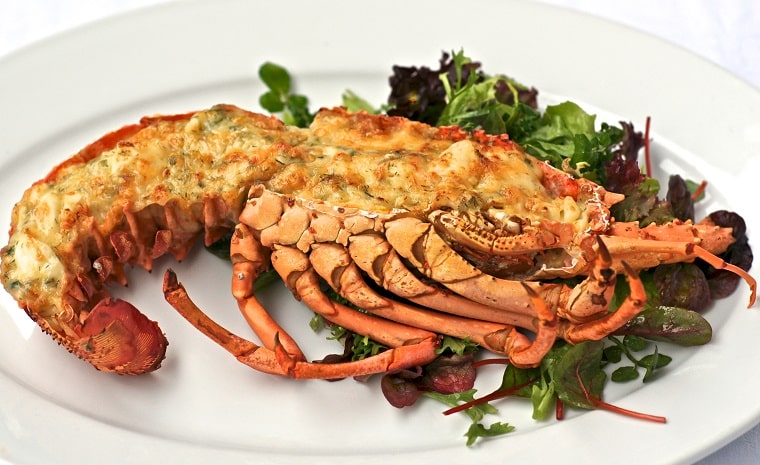
Today’s Spotlight is on Lobster Thermidor.
Lobster Thermidor is a French dish of lobster meat cooked in a rich wine sauce, stuffed back into a lobster shell, and browned. The sauce is often a mixture of egg yolks and brandy (such as Cognac), served with an oven-browned cheese crust, typically Gruyère. The sauce originally contained mustard.
Lobster thermidor is a rich, creamy, and sweet dish. The lobster’s natural sweetness comes through the sauce, which is made with cremini mushrooms and dry Sherry. The sauce is thickened with flour and flavored with white wine and dry mustard. Some say that lobster thermidor is a unique taste experience. The lobster’s flavors are powerful and clear, and the creaminess of the sauce and the dryness of the white wine accent the dish.
You can serve lobster thermidor with simple pasta or crispy French fries. You can also serve a light dessert like fresh fruit or meringue.
Here are some ingredients for lobster thermidor:
- Lobster meat, Wine sauce, Egg yolks, Brandy, Gruyère cheese, Cremini mushrooms, Dry Sherry, Leeks, Garlic, Lemon juice, Parsley, Tarragon, Cheddar.
Here are some steps for making lobster thermidor:
- Sauté mushrooms and red pepper in olive oil.
- Melt butter, add leeks and garlic.
- Stir in wine and then slowly add cream.
- Add lemon juice, parsley and tarragon.
- Add cheddar and whisk until cheese has melted.
- Stir in sauteed mushrooms, red peppers and lobster.
Lobster thermidor is expensive for two reasons: the lobster and the preparation.
- Lobster is a delicacy and is usually one of the more expensive dishes on the menu.
- It’s rare to find lobster thermidor on menus because it takes a lot of preparation.
Lobsters are expensive because they’re difficult to farm and rely on wild-caught lobsters. They also need to be shipped after they’ve been caught, which means they must be kept alive during shipping. They must be kept cool and moist, but out of water. Overfishing has made it rare to find lobsters less than 30 meters down, at the limit of diving safety.
History
There are several stories about the origin of lobster thermidor:
- It was created by Leopold Mourier, a former assistant to Auguste Escoffier, at Café de Paris.
- It was created in 1894 at Chez Marie.
- It was created at Maison Maire, whose owner Mlle. Paillard sold the restaurant to Mourier.
- It was created for Napoleon Bonaparte, who named it after the month of Thermidor, between July 19 and August 17, when the dish was served to him.
- It was created by a restaurant named Chez Marie and named in honor of a short-lived and controversial play about the French Revolution.
The most probable version is that it was invented at Marie’s, a famous restaurant at the time, on the night of Thermidor’s premiere. The dish gets its name from a popular 1891 play called Thermidor by Victorien Sardou.
Here are some fun facts about lobster thermidor:
- The play Thermidor was based on the Thermidorian Reaction of 1794, which marked the end of the Reign of Terror.
- Lobster thermidor is similar to lobster Newburg, but thermidor sauce is thickened with flour and seasoned with mustard instead of nutmeg.
Lobster thermidor was served at some NYC establishments, including:
- The Waldorf in 1915
- Delmonico’s in 1917
- Klein’s in 1948
- The Waverly in 1961
- Air France’s Concorde route from NYC to Paris in the 1980s
Here is a Lobster Thermidor recipe for you to try:
Ingredients:
- 2 1 1/2 to 1 3/4-pound cooked Maine lobsters
- 2 tablespoons unsalted butter
- 2 tablespoons minced shallots
- 1/2 teaspoon minced garlic
- 2 tablespoons all-purpose flour
- 2 tablespoons cognac or brandy
- 3/4 cup milk
- 1/4 cup heavy cream
- 1/4 teaspoon salt, plus 1/8 teaspoon
- 1/8 teaspoon ground white pepper
- 1/2 cup finely grated Parmesan, plus 2 tablespoons.
- 1 tablespoon dry mustard powder
- 1 tablespoon finely chopped fresh tarragon leaves.
- 2 teaspoons finely chopped parsley, plus additional for garnish
- 1/4 cup shredded gruyere cheese
Instructions:
- Preheat the oven to 375˚ F. Line a baking sheet with aluminum foil and set aside.
- Cut the lobsters in half lengthwise with a sharp knife and remove the tail meat.
- Twist off the claws from the body and gently crack with the back of a heavy knife to remove the meat. Gently pull the front legs from the shell and discard.
- Chop the tail meat and claw meat into bite sized pieces and set aside.
- Place the halved lobster shells on the baking sheet and set aside.
- Melt the butter in a deep skillet over medium heat. Add the shallots and garlic, stirring, until fragrant, about 30 seconds. Add the flour and whisk to combine.
- Cook the flour mixture, stirring constantly to make a light roux, approximately 2 minutes.
- Add the cognac and cook for 10 seconds, stirring constantly.
- Slowly add the milk, stirring constantly to combine. Bring to a boil, reduce the heat, and simmer until thick enough to coat the back of a spoon, approximately 2 to 3 minutes.
- Slowly add the cream, stirring constantly, until thoroughly combined. Continue cooking while stirring over medium heat for 1 minute. (The mixture will be very thick.) Season with salt and pepper.
- Remove from the heat and stir in the parmesan cheese, mustard, tarragon, and parsley. Fold in the lobster meat.
- Divide the mixture among the lobster shells and place stuffed side up on a clean baking sheet.
- Sprinkle the top of each lobster with the gruyere and broil until the top is golden brown, 5 minutes.
- Place 1 lobster half on each plate, garnish with additional parsley, and serve immediately.
- Enjoy!
Here are some sauces that go well with lobster:
- Garlic butter sauce: A simple and tasty sauce that goes well with lobster.
- Pea pesto with ricotta: A decadent sauce that pairs well with lobster
- Lemon brown butter sauce: A sauce that works well with lobster ravioli.
- Homemade mayonnaise, béarnaise, or hollandaise: Cold sauces that go well with lobster..
- Cocktail sauce: A sauce that goes well with lobster.
- Rice wine vinegar, soy sauce, ginger, and sugar: A simple sauce that goes well with lobster.
Other sauces that go well with lobster include:
- Flavored butters
- Basil oil
- Chopped fresh herbs.
- Avocado
Celebrating Lobster Thermidor
National Lobster Thermidor Day is January 24. Let us know in the comments if you have tried this wonderful dish.
0 Comments