
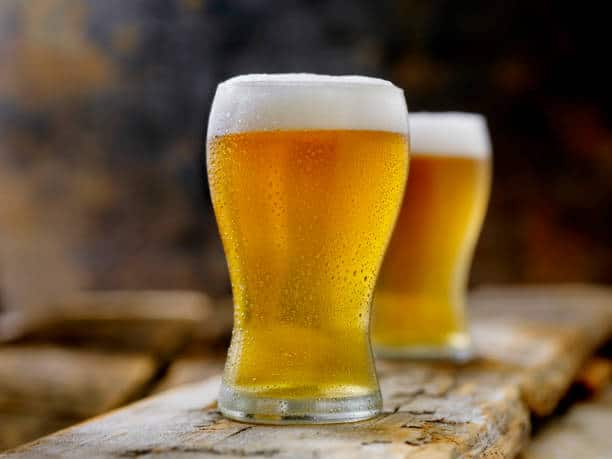
Today’s Spotlight is on Lager Beer.
Lager is a type of beer which has been brewed and conditioned at low temperature. Lagers can be pale, amber, or dark. Pale lager is the most widely consumed and commercially available style of beer. The word “lager” is German and translates to “storage”.
Lagers are fermented slowly at low temperatures. They ferment from the bottom up, and the yeasts used to ferment the beer flocculate (gather) at the bottom of the fermentation tank. Lager yeasts can tolerate much lower temperatures than yeasts used for ales.
Lagers can be pale, amber, or dark. Pale lager is the most widely consumed and commercially available style of beer.
Some popular lagers include:
- Michelob ULTRA: A light lager with a light citrus aroma and a crisp, refreshing finish.
- Corona Extra: A light and crisp pale Mexican lager with sweet notes and a bit of hoppy skunkiness
The only meaningful distinction between ales and lagers concerns the microbes used to ferment them.
Lagers have a unique taste and appearance. The bottom-fermenting yeast gives lagers a clear, smooth, and refreshing taste. Lagers are also highly carbonated and have a hint of hop flavor. Lagers have a lighter, more delicate flavor because the alcohol builds up during the longer fermentation process. The alcohol conversion rates are slowed, which results in a lighter flavor.
Lagers also have subtle flavors like:
- Malt
- Hoppy flavors
- Subtle bitterness
- Funky sour flavors
Lagers have an ABV (Alcohol by Volume) that can range from 4.5–13 percent. They also have a bitterness that’s usually relatively low, falling anywhere on the scale between 5–45 IBU (International Bitterness Units).
History
Lager beer originated in Bavaria in the 1400s. Monks stored their beer in icy alpine caves during the summer to prevent spoilage and maintain its consistency. In the early 19th century, Bavarian brewers began experimenting with storing their beers in cold beer cellars for long periods. Anton Dreher started renting a cellar in late 1840 to mature his beer under cold conditions. This process is called “lagering”.
The development of refrigeration equipment in the late 19th century enabled lager beers to be brewed in summer. German immigrants brought European lager to America in the 18th century. They made it with a combination of corn and barley malt. During World War II, Americans made their own lager by replacing grain with rice.
Here are some fun facts about lagers:
- The original German lager was dark in color.
- Beer is the third most consumed beverage in the world, behind water and tea.
- The oldest known instance of beer consumption dates back to 3400 BCE.
- Lagers are also known as pilsner, helles, or Märzen.
- American-style lagers have a golden, light appearance that is generally filtered and unhazy with plenty of bubbles.
- Many lagers have a pleasant toasty, grainy flavor and some fruity elements.
Consumption
Lager is the most common type of beer in the world. It’s a diverse group that includes many famous American beers, such as: Budweiser, Busch Lite, Coors, Miller Genuine Draft, PBR.
Lagers are brewed with bottom-fermenting yeast at cold temperatures (35˚–50˚F). They should mature at cold temperatures for at least four weeks. The bottom-fermented techniques used to brew lagers result in a crisp, refreshing beer.
Celebrating Lager Beers
National Lager Day is celebrated on December 10th. This day celebrates the world’s most popular beer style. Lagers come in many varieties, including light and crisp, rich and malty, and everything in between.
Here are some other beer holidays:
- National Homebrew Day – Celebrated on May 7th, this day honors the American tradition of homebrewing.
- Saison Day – Celebrated on April 14th, this day is dedicated to the Saison beer.
- World Bartender Day – Celebrated on February 24th, this day celebrates beer enthusiasts around the world.
- Orval Day – Celebrated on March 26th, this day celebrates the unique Trappist Belgian Pale Ale known as Orval.
Let us know in the comments which is your favorite lager beer.
0 Comments