
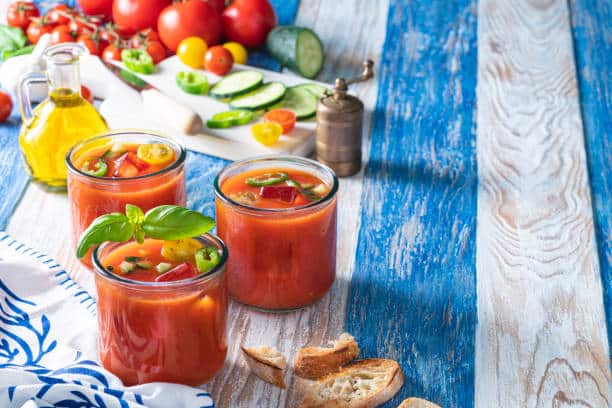
Today’s Spotlight is on Gazpacho.
Gazpacho or Gaspacho, also called Andalusian gazpacho, is a cold soup and drink made of raw, blended vegetables. It originated in the southern regions of the Iberian Peninsula and spread into other areas. Gazpacho is widely eaten in Spain and Portugal, particularly during hot summers, since it is refreshing and cool.
Gazpacho is a chilled soup made from raw vegetables and is often consumed during hot summers because it is refreshing and cool.
Traditional recipes for gazpacho call for:
- Tomatoes, Cucumbers, Bell peppers, Garlic, Olive oil, Vinegar, Bread, which thickens the soup.
Gazpacho can vary based on the fruit or veggie of choice. For example, watermelon gazpacho is a variation. Gazpacho is thinner, less spicy, and in many cases fresher than salsa. It’s a source of Vitamin A, Vitamin C, and Vitamin E, along with several other minerals and nutrients.
Spanish cookbooks classify gazpacho as a salad.
Gazpacho is served cold to reflect the hot region it originated from. The coolness of the soup is designed to cool you down on a hot Spanish day. Gazpacho is never heated in the first place. It’s basically just a puree of raw vegetables. Regular tomato soup is cooked. Gazpacho tastes best after it’s been chilled for at least a couple hours and tastes even better the next day.
Gazpacho can be served with a variety of side dishes, including:
Spanish rice, Patatas bravas, Garlic bread, Paella, Churros, Grilled asparagus, Pork stew, Tortilla española, Fried calamari, Empanadas, Croquetas, Hard-boiled eggs, chopped ham, Chopped almonds, Cumin crushed with mint, Orange segments, Finely chopped green bell peppers, Onion, Tomato, Cucumber.
Gazpacho can also be served with wine, including:
- Rueda or sauvignon blanc
- Albarino
- Picpoul de Pinet
- Dry Italian whites
- Manzanilla sherry
- Provence rosé
Gazpacho is different from other cold soups because it’s never heated. It’s made with raw vegetables and is often puréed for a smooth, thick soup.
History
Gazpacho is originated in the Andalusian region of southern Spain. Gazpacho is an ancient dish that dates back to Islamic Spain between the 8th and 13th centuries. It’s mentioned in Greek and Roman literature.
The original version of gazpacho was a simple mix of bread, garlic, olive oil, vinegar, and water. It was often consumed by laborers working in the vineyards and olive groves under the hot sun.
The Moors invaded Spain and brought new ingredients like almonds and olive oil, which were added to the dish. Tomatoes and green peppers were brought to Spain from the New World in the 16th century. During the 19th century, red gazpacho was created when tomatoes were added to the ingredients.
The name gazpacho may come from the Latin word caspa, meaning fragments or little pieces, referring to the breadcrumbs. The word gazpacho is Spanish for “ice cold tomato soup”. It’s also known as Andalusian gazpacho.
In slang, gazpacho can mean:
- A street musician or performer
- Faithlessness or treachery
Here are some more fun facts about gazpacho:
- The name gazpacho is of Arabic origin and means “soaked bread”.
- Gazpacho should be drunk slightly chilled, but not iced.
- The Moorish influence is evident in some variations of gazpacho, such as ajo blanco, made with ground almonds.
- Gazpacho is widely eaten in Spain and Portugal, particularly during hot summers.
- There are other recipes called gazpacho, such as gazpacho manchego, but the standard usage implies a soup.
Here is a traditional Gazpacho recipe for you to try:
Ingredients
- 3 stalks celery, diced.
- 1 seedless hot-house cucumber with skin on, diced.
- 1 zucchini, diced.
- ¾ whole medium red onion, diced
- 4 cups tomato juice such as V-8
- 2 cloves garlic pressed or minced.
- ¼ cup extra virgin olive oil or grapeseed oil
- ¼ cup red wine vinegar
- 2 tablespoons sugar
- 2 tablespoons Chohula hot sauce or other hot sauce to taste
- 1 tablespoon celery salt
- 1 tablespoon garlic salt
- 6 cocktail or campari tomatoes, diced.
- Kosher salt and freshly ground black pepper.
- ¼ cup sour cream
- Fresh chives for garnish
Instructions:
- In the bowl of a food processor or in a blender, combine half of the celery, cucumber, zucchini, red onion and 2 cups of the tomato juice with the pressed or minced garlic, olive oil, red wine vinegar, sugar, hot sauce, celery salt, and garlic salt.
- Pulse all of ingredients until well blended. Add the rest of the tomato juice and pulse to mix.
- Add the celery, cucumber, zucchini, and the diced tomatoes and pulse once or twice. Season with kosher salt and freshly ground black pepper and adjust the hot sauce to taste.
- Chill the soup for at least 1 hour before serving.
- Serve the soup with a drizzle of sour cream that has been thinned with a bit of water. Top with fresh chopped chives.
- Enjoy!
Consumption
According to Tastewise, gazpacho is consumed an average of 1.26 times per year.
Gazpacho is a healthy dish that’s rich in nutrients:
- Vitamins – Gazpacho contains vitamins A, C, and E. It also contains potassium and folate, which support immune function and overall well-being.
- Fiber – Gazpacho is rich in fiber, which helps with intestinal transit and the elimination of toxins.
- Antioxidants – Gazpacho is rich in antioxidants, including lycopene and carotenoids. The antioxidants in gazpacho fight free radicals, which can help keep your skin free of spots and wrinkles.
- Hydration – Gazpacho is an isotonic drink that hydrates your body.
Gazpacho is also low in calories and can be good for people on weight reduction diets. It’s also thought to support a healthy gut microbiome.
Celebrating Gazpacho
National Gazpacho Day is celebrated on December 6. This holiday is celebrated across the United States. The holiday is ironic because gazpacho is a cold soup. Perhaps the holiday is intended to remind us of summer.
Let u know in the comments your favorite spin in this classic salad?
0 Comments