
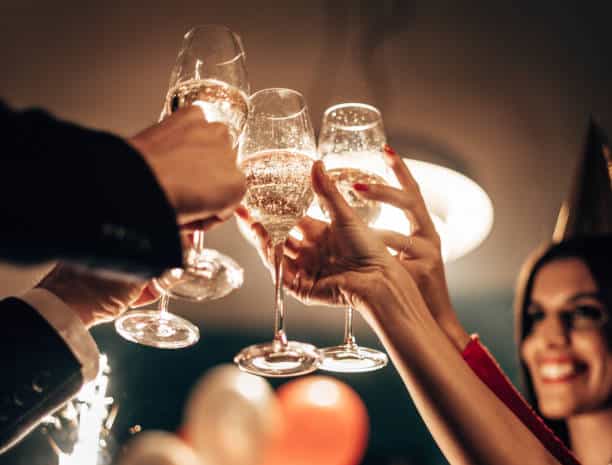
Today’s Spotlight is on Champagne.
Champagne was a province in the northeast of the Kingdom of France, now best known as the Champagne wine region for the sparkling white wine that bears its name in modern-day France. The County of Champagne, descended from the early medieval kingdom of Austrasia, passed to the French crown in 1314.
Champagne the beverage, is a sparkling wine that’s made in the Champagne region of France. It’s made using the traditional method (méthode traditionnelle), the rules of the appellation, that demand specific vineyard practices, which involves sourcing of grapes exclusively from France and a two-step fermentation process. The grape juice is fermented into alcohol and then bottled to turn into sparkling wine.
Champagne is made from specific varieties of grapes, including: Pinot noir, Chardonnay, Pinot meunier.
Champagne is made according to a long, strictly regulated list of requirements that govern every step of the production process from grape to glass. Only wines that are made by this procedure and grown in the Champagne region are allowed to carry the name Champagne.
The term champagne is also applied generically, with restrictions, outside France, to many white or rosé wines that are characterized by effervescence.
Champagne is often seen as a luxurious drink to be savored slowly. It’s a celebratory drink with a bubbly, effervescent quality that’s said to add to the festive atmosphere. Champagne is often described as refreshing and palate-cleansing.
Champagne is different from other sparkling wines because of its:
- Grapes: Champagne is made from only three grape varieties: Chardonnay, Pinot Noir, and Pinot Meunier. These grapes are often blended together to create a unique complexity, body, and aroma.
- Aging process: Champagne must be aged for at least 15 months. It’s aged on the “lees” or the dead yeast cells for at least 12 months, followed by an additional 3 months in the bottle. The dead yeast is part of what gives champagne its unique taste.
- Flavors: Champagne has signature bread and brioche flavors.
Champagne is made by 16,200 winemakers and sold via almost 400 Champagne houses. It’s expensive because of the storage costs and the staffing needed to pay due care and attention.
Some of the best sparkling wine houses in Napa Valley include:
- Domaine Chandon: The first winery in the United States established by a French wine producer. Chandon is known for its sparkling wine, but also offers other selections.
- Mumm Napa: Established in the late 1970s, Mumm Napa uses the same techniques used in Champagne, France.
- Schramsberg Vineyards: The oldest sparkling wine house in Napa Valley, founded in 1862.
Other sparkling wine houses in Napa Valley include:
- Domaine Carneros
- Castello di Amorosa
Even though some wineries in Napa Valley use the traditional Methode Champenoise, these wines are still considered “sparkling wine” (not Champagne) since they are produced in California rather than the Champagne region of France.
History
The Romans introduced winemaking to the Champagne region of France in the 1st century AD. The wine was popular with locals. In the 9th century, the wine became popular across France because it was associated with the coronation of French Kings in Reims Cathedral.
In the 17th century, Dom Pierre Pérignon, a monk, planted vines in the region. He’s credited with observing the sparkling wines of Limoux and bringing the style to Champagne. However, he died in 1715 before any commercial production began.
The first sparkling wine production in France began in the last years of the 17th century, probably around 1695. Ruinart, the oldest surviving Champagne house to exclusively produce sparkling wine, was established in 1729. Other Champagne houses followed, including Moet, Roederer, Clicquot, and Heidsieck.
The sparkling version of Champagne wine was discovered by accident. Wine growers in the Champagne region were trying to equal the Burgundy wines. However, they didn’t succeed because the cold winters in the region caused the fermentation of the wine.
Here are some fun facts about Champagne:
- Champagne facts: 33% of all champagne sales are made in November and December. The most expensive bottle of Champagne costs $2.07 million.
- Champagne facts: Champagne contains fewer calories than red and white wine.
- Champagne facts: Champagne has three times more gas than beer.
- Champagne facts: Champagne was referred to as the “Devil’s Wine” because wine makers would go to their cellars to see the corks had blown off and they believed it was the spirits.
- Champagne facts: It takes 1.2kg of grapes to produce one 750ml bottle of champagne. The best champagnes use only the first four-fifths of the extracted juice, gently pressed (the equivalent of 1.5kg of top quality grapes), called cuvée.
Consumption
In 2021, the US sold 34.2 million bottles of Champagne, which is a record. This is a 19.4% increase from 2020, when sales dropped to 20.8 million bottles. In 2021, the US sold 36.5 million 9-liter cases of sparkling wine and Champagne.
Champagne is the most consumed sparkling wine. In 2018, France sold 147 million bottles of Champagne. The US is the third largest consumer of sparkling wine in the world, behind Germany and Russia. The US consumes 1.9 million hectolitres of sparkling wine.
Celebrating Champagne
The tradition of drinking champagne to celebrate originated in the royal courts of Europe before 1789. Royalty loved the novelty of sparkling wine and it was said to have positive effects on women’s beauty and man’s wit.
The first documentation of lifting a glass of Champagne in celebration dates back to 5th century France to King Clovis. After the French Revolution in 1789, sparkling wine became more available to the general public. People began to sip the drink on special occasions such as weddings, baptisms, and other religious events.
The big Champagne houses began to set up camp in the region in the 18th century. These firms built on Champagne’s growing reputation as a drink of status and turned it into the drink of celebration.
Champagne is often seen as a drink to be savored and enjoyed slowly. Its bubbly, effervescent quality is said to add to the festive atmosphere, and its taste is often described as refreshing and palate-cleansing.
Let us know in the comments, which Champagne you like to toast at your special occasions.
0 Comments