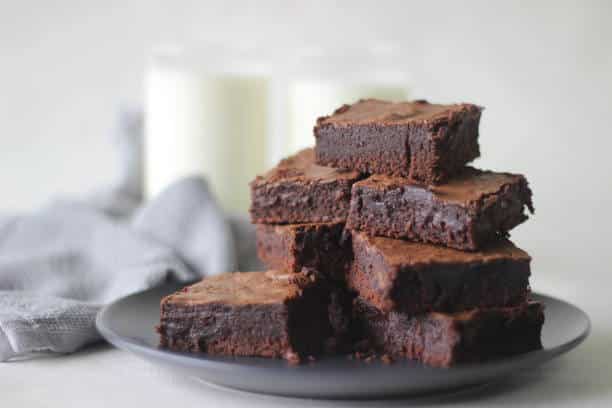
Celebrating Brownies

Dec 7, 2025 | Food Blog

Today’s Spotlight is on Brownies.

Brownies are an American dessert made with chocolate. They are similar to cake but are denser and heavier because they are not leavened with baking powder. Brownies are named after the color brown and taste like a cross between a cake and a cookie.

A chocolate brownie, or simply a brownie, is a chocolate baked confection. Brownies come in a variety of forms and may be either fudgy or cakey, depending on their density. Brownies often, but not always, have a glossy “skin” on their upper crust.

Brownies are typically made with:

  • Chocolate, Eggs, Butter, Sugar, Flour, Salt, Vanilla extract.

Brownies can be fudgy or cakey, depending on their density. There are three types of brownie recipes: Fudgy, Chewy, Cakey.

But brownies don’t have to be chocolate. Blondies are a variation of brownies that are made with brown sugar and vanilla instead of chocolate. Blondies are typically cake-like in texture.

Brownies can also contain other ingredients, such as:

Nuts, Frosting, Chocolate chips, Extracts, Cacao powder, baking powder.

The three types of brownies are fudgy, chewy, and cakey. The types are distinguished by their texture and taste.

  • Fudgy: Dense, gooey, and extra-moist.
  • Chewy: Slightly crispy edge, moist, and slightly gooey inside.
  • Cayky: Light, moist, and airy, with a slightly fluffy, cake-like interior.

Fudgy brownies have a higher fat-to-flour ratio than cakey brownies. Cakey brownies have a higher composition of flour and rely on baking powder for leavening. The amount of sugar and eggs does not change whether you’re going fudgy or cakey.


Are Brownies Cookies or Cake?

Brownies are classified as a cookie bar in America. They are considered cookies because they are finger food, while cakes are usually eaten with a fork. Brownies are also cut into small squares.

Brownies are more similar to cookies than cakes. Cakes are soft and fluffy, while brownies are crunchy and dense.

Brownies also have a higher liquid/fat content, so they are formed from a batter. Cookies have a higher flour content, so they are formed from dough.

Brownies are also different from cakes because they contain more chocolate and don’t use leavening agents like baking powder or baking soda.


History

Brownies appear to have originated in the late 1880s. The first reference to the word “brownie” in America appears in the Sears Roebuck Catalog published in Chicago in 1898.

Brownies were invented in 1893 at the Palmer House Hotel in Chicago. Bertha Palmer, the wife of the hotel’s owner, asked the pastry chef to create a portable dessert for the World’s Columbian Exposition. The chef, Joseph Sehl, created a chocolate cake-like treat that could be easily boxed and transported.

The name “brownie” originated in the late 19th century to describe a dark brown bar cookie. The name was applied to both chocolate and non-chocolate versions. The usage eventually standardized on chocolate brownies.

The earliest-known published recipes for a modern style chocolate brownie appeared in:

  • Home Cookery (1904, Laconia, NH)
  • Service Club Cookbook (1904, Chicago, IL)
  • The Boston Globe (April 2, 1905)
  • Fannie Farmer’s cookbook (1906)


Here are some fun facts about brownies:

  • One story suggests that the first brownie was created by accident when the baker didn’t have baking powder.
  • The name “brownie” comes from the color of the dessert and the mythical pixie-like characters in children’s stories.
  • The first brownies were decorated with an apricot glaze and a layer of walnuts.
  • The recipe was modified in 1905 to include chocolate, which made brownies even more popular.
  • The world’s largest brownie weighed 3,000 pounds.


Here is a Brownie Recipe for you to try:

Ingredients:

  • 5 tablespoons (71 grams) unsalted butter
  • 1 1/4 cups (249 grams) granulated sugar
  • 2 large eggs plus 1 egg yolk, cold
  • 1 teaspoon vanilla extract
  • 1/3 cup vegetable oil
  • 3/4 cup (75 grams) unsweetened cocoa powder
  • 1/2 cup (63 grams) all-purpose flour
  • 1/8 teaspoon baking soda
  • 1 tablespoon cornstarch
  • 1/4 teaspoon salt
  • 3/4 cup (128 grams) semisweet chocolate chips


Instructions:

  1. Preheat the oven to 325°F. Line a 8 by 8-inch pan with foil or parchment paper and spray with nonstick cooking spray.
  2. In a microwave safe bowl, add the butter and sugar. Microwave for about 1 minute, or until the butter is melted. Whisk in the eggs, egg yolk, and vanilla. Stir in the oil and cocoa powder.
  3. With a rubber spatula, stir in the flour, baking soda, cornstarch, and salt until combined. Stir in the chocolate chips.
  4. Spread the brownie batter evenly into the prepared pan. Place in the oven and bake for 30 minutes, or until the brownies are set and a cake tester inserted into the center has moist crumbs attached. Do not overcook. Let cool completely before cutting and serving.
  5. Enjoy!


Consumption

Brownies are a classic American dessert. They are also popular in Canada and the United Kingdom. In the United States, brownies are a common homemade treat. They are also popular in restaurants, ice cream parlors, and coffeehouses. An increasing number of brownies are ready-made and individually wrapped.

According to a Betty Crocker Brownie Survey, Americans eat about 4 billion brownies a year. However, other sources say that Americans eat about 1.5 billion brownies per year. On average, brownies are consumed 2.04 times every year.

Brownies can be addictive because they contain ingredients that trigger reward pathways in the brain:

  • Dopamine – When you eat pleasurable foods, your brain releases dopamine, which can create a pleasurable sensation and reinforce the desire for more.
  • Enkephalin – Chocolate contains enkephalin, a natural brain chemical that triggers opioid receptors similar to those triggered by heroin and morphine use. This chemical leads the brain to desire more after chocolate is initially consumed, which can lead to addiction.
  • Sugar and fat – Chocolate contains ingredients like sugar and fat that also exist in other addictive foods. These ingredients can trigger reward pathways in the brain.

Other reasons why brownies are addictive include:

  • They are super delicious.
  • They have a rich chocolate flavor.
  • They have an ooey-gooey/soft texture.
  • They’re not too dry to munch.
  • They’re sweet.


Celebrating Brownies

There are a couple of days dedicated to celebrating brownies:

  • National Brownie Day is celebrated annually on December 8.
  • National Have a Brownie Day is celebrated on February 10.

Let us know in the comments which day, including others you decide on, that you celebrate brownies?

0 Comments

Submit a Comment

Your email address will not be published. Required fields are marked *

Subscribe to our Blog to receive more content like this. Click here to subscribe.

Be sure to watch our shows on QVC+  or our YouTube channel

Give us your feedback on our Social Channels 

FacebookInstagramTik TokLinkedInPinterestTwitter  

Celebrating Peking Duck

Celebrating Peking Duck

Today’s Spotlight is on Peking Duck.
Peking duck is a traditional Chinese dish from Beijing that has been prepared since the Imperial era back to 400 AD. It's made with roasted duck meat and crispy skin, and is served with thin pancakes, spring onion, cucumber, and hoisin sauce. The meat is characterized by its thin, crispy skin, with authentic versions of the dish serving mostly the skin and little meat, sliced in front of the diners by the cook.
The dish is named after the Romanized name for Beijing, where it originated. The duck's skin is so brittle that it shatters like an eggshell. The meat is tender, rich, and slightly sweet. The dish is made with a specific breed of duck called the Imperial Peking. The ducks are force-fed and housed in small cages to ensure tender meat

Read More

Celebrating Hot Buttered Rum

Celebrating Hot Buttered Rum

Today’s Spotlight is on Hot Buttered Rum.
Hot buttered rum is a mixed drink containing rum, butter, hot water or cider, a sweetener, and various spices. It is especially popular in the fall and winter and is traditionally associated with the holiday season. In the United States, the drink has a lengthy history that dates back to colonial days.

Read More

Celebrating Bagels

Celebrating Bagels

Today’s Spotlight is on Bagels.
A bagel is a bread roll that's shaped like a doughnut. It's made from yeasted wheat dough that's shaped into a ring, boiled in water, and then baked. Bagels are often served sliced in half, toasted, and spread with butter or cream cheese. Bagels are traditionally made from yeasted wheat dough that is shaped by hand into a torus or ring, briefly boiled in water, and then baked. The result is a dense, chewy, doughy interior with a browned and sometimes crisp exterior.

Read More

Celebrating Peach Melba

Celebrating Peach Melba

Today’s Spotlight is on Peach Melba.
Peach Melba is a dessert that was invented in the late 1800s by French chef Auguste Escoffier. It's made with poached peaches, raspberry sauce, and vanilla ice cream. The dessert is named after Australian soprano Nellie Melba.
Melba sauce is made from pureed raspberries, red currant jelly, sugar, and cornstarch. It has a smooth, syrupy texture and intense berry flavor.

Read More

Celebrating Marzipan

Celebrating Marzipan

Today’s Spotlight is on Marzipan.
Marzipan is a confection consisting primarily of sugar, honey, and almond meal, sometimes augmented with almond oil or extract. It is often made into sweets; common uses are chocolate-covered marzipan and small marzipan imitations of fruits and vegetables. It's often shaped and painted to look like realistic fruits and vegetables.
Marzipan is a common confection in Europe and has been used for centuries as both a sweet treat and a medium for food art. It's also called almond candy dough.
`

Read More

Celebrating Hot Toddy

Celebrating Hot Toddy

Today’s Spotlight is on the Hot Toddy.
Hot toddy is typically a mixed drink cocktail made with liquor, hot water, spices, sugar or honey, lemon, herbs and served hot. It's popular during the cold months and especially around Christmas. A hot toddy is also known as hot whiskey in Ireland.
Hot toddy recipes vary, and hot toddy is traditionally drunk before retiring for the night, in wet or cold weather or to relieve the symptoms of the cold and flu. The hot Toddy is known to alleviate a sore throat and symptoms from the common cold and flu. The hot toddy is made with: Lemon, Honey, Whiskey.
The ingredients in a hot toddy have cough-suppressing properties. The science behind a hot toddy includes:

Read More

Celebrating Bittersweet Chocolate

Celebrating Bittersweet Chocolate

ittersweet chocolate is a type of dark chocolate that contains a high percentage of cocoa solids and less sugar than other types of chocolate. The FDA requires that bittersweet chocolate contain at least 35 percent cocoa. Most bittersweet bars contain 50 percent, with others having as much as 80 percent cocoa.
Bittersweet chocolate has a rich, intense chocolate flavor that can be quite bitter. It also has subtle fruity flavor notes. Bittersweet chocolate is often used for baking and cooking. You can replace the bittersweet chocolate called for in your recipe with an equal amount of semi-sweet chocolate. The two are actually very similar in taste and composition.

Read More

Celebrating Apricots

Celebrating Apricots

Today’s Spotlight is on Apricots.
An apricot is a fruit, or the tree that bears the fruit, of several species in the genus Prunus. Usually, an apricot is from the species P. armeniaca, but the fruits of the other species in Prunus sect. Armeniaca are also called apricots.
Another description is that apricots are a small, pitted stone fruit that are about the size of a golf ball. They are also known as Armenian plums. Apricots are round and yellow and look similar to a smaller version of a peach. They have soft, velvety skin with a light fuzz.

Read More

Celebrating English Toffee

Celebrating English Toffee

Today’s Spotlight is on English Toffee.
English toffee is a hard candy made by cooking sugar and butter until it caramelizes. The mixture is heated until it reaches the hard crack stage, which is 300–310°F (149–154°C).
In America, English toffee is usually coated in chocolate and almonds. It can also be mixed with nuts or raisins. English toffee is crunchy and buttery, with a little stickiness when chewed. It has a balance of caramelly flavor, chocolate, and nuts. Toffee can be made denser and harder, or lightened by adding baking soda when it's almost done cooking.

Read More

Celebrating Shortbread

Celebrating Shortbread

Today’s Spotlight is on Shortbread.

Shortbread or shortie is a traditional Scottish biscuit usually made from one-part white sugar, two parts butter, and three to four parts plain wheat flour. Shortbread does not contain any leavening, such as baking powder or baking soda.

Shortbread is a cookie, not bread. It's called shortbread because it's made with a dough that's rich in fat.  The traditional ratio is one part sugar to two parts butter. This gives the dough a high fat content, which results in a soft, buttery crumb that melts in your mouth.

Shortbread is made with the following ingredients:

Read More

Pin It on Pinterest