
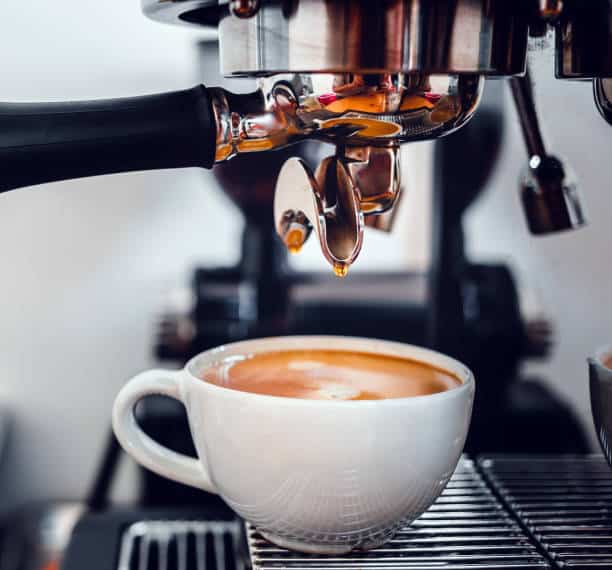
Today’s Spotlight is on Espresso.
Espresso is one of the most popular coffee-brewing methods, of Italian origin. The French also made a significant contribution to the invention of the first coffee makers, predecessors of today’s espresso machines, and generally to the café culture.
Espresso is a type of coffee, a concentrated form of coffee that is served in shots. It’s made by forcing pressurized hot water through finely ground coffee beans using an espresso machine. The main difference between espresso and coffee is the brewing method. Espresso is brewed using high pressure to force hot water through very finely ground coffee beans.
Regular coffee uses a coarser grind, more water, and gravity to extract the final brew. Espresso is thicker and more intense than coffee because of the lower grounds to water ratio, the finer grind, and the pressurized brewing method. Espresso also has more caffeine per ounce than regular coffee. A single espresso shot typically has 63 mg of caffeine, while regular coffee has 12 to 16 mg of caffeine in every ounce, on average.
Espresso is thicker than regular coffee and has a layer of “crema” on top. The crema is the result of air bubbles mixing with the coffee’s oils.
Espresso is made of two ingredients:
- Finely ground, 100% coffee
- Hot water
Espresso is typically 63 mg of caffeine in 1 ounce. Regular coffee has 12 to 16 mg of caffeine in every ounce, on average. You can drink espresso by sipping it. You should ideally consume the intense drink before it cools down.
History
Espresso was invented in Venice, Italy in the early 20th century by Luigi Bezzera. Bezzera was a businessman who was experimenting with coffee to see how he could make his brew faster. He was the first to use a steam-pressure method of brewing coffee.
Espresso was first introduced at the 1906 World’s Fair in Milano. Bezzera and Desidero Pavoni created a machine with a vertical boiler that could brew a single cup of coffee in seconds.
The first espresso machines forced steam through the coffee, which made a burnt flavor. In 1938, Cremonesi developed a piston pump that forced hot and not boiling water through the coffee. This gave a more natural taste and had a layer of foam.
The term “crema caffè” (in English, “cream coffee”) was originally used to describe modern espresso. This term is no longer used, though variants still appear in branding.
Here are some fun facts about espresso:
- The word “espresso” comes from the Italian word esprimere, which means “press out”.
- The ideal brewing temperature for espresso is 190°F to 195°F.
- The serving temperature for espresso is 160°F.
- It takes 25-30 seconds to brew one shot of espresso.
- It only takes about 50 coffee beans to make one shot of espresso.
- The Italian government regulates espresso because it’s considered “essential” to everyday life.
- Astronauts on the International Space Station can brew espresso with the ISSpresso.
Consumption
Italians consume 14 billion espressos each year. This is impressive for a country with a population of just over 60 million. Most Italians drink their daily coffee in local cafés. It’s not unheard of for Italians to drink seven or eight espressos a day.
Worldwide, 400 billion cups of coffee are consumed each year. In the United States, 146 billion cups of coffee are consumed each year.
In a survey, 32.83% of respondents said they prefer espresso. In another survey, 30% of young adults reported drinking espresso in the past 30 days.
In the United States, espresso-based beverages are among the most popular gourmet coffee beverages. In 2020, 9% of coffee drinkers reported using an espresso machine.
Here are some other coffee preferences in the United States:
- 32% prefer flat whites.
- 31% prefer filter coffee.
- 30% prefer cold brew or cold drip coffee.
- 29% prefer cappuccino or Piccolo lattes.
- 20% prefer long black or Americanos.
- 50% increase in consumption of cappuccinos, lattes, and flat whites.
Celebrating Espresso
November 23rd has been designated as National Espresso Day. It’s a day to sip on this concentrated coffee extract and pick up a little energy along the way. Let us know in the comments how you like your espresso.
0 Comments