Fortune Cookie Day

Sep 12, 2025 | Food Blog

Today’s Spotlight is on the Fortune Cookie.

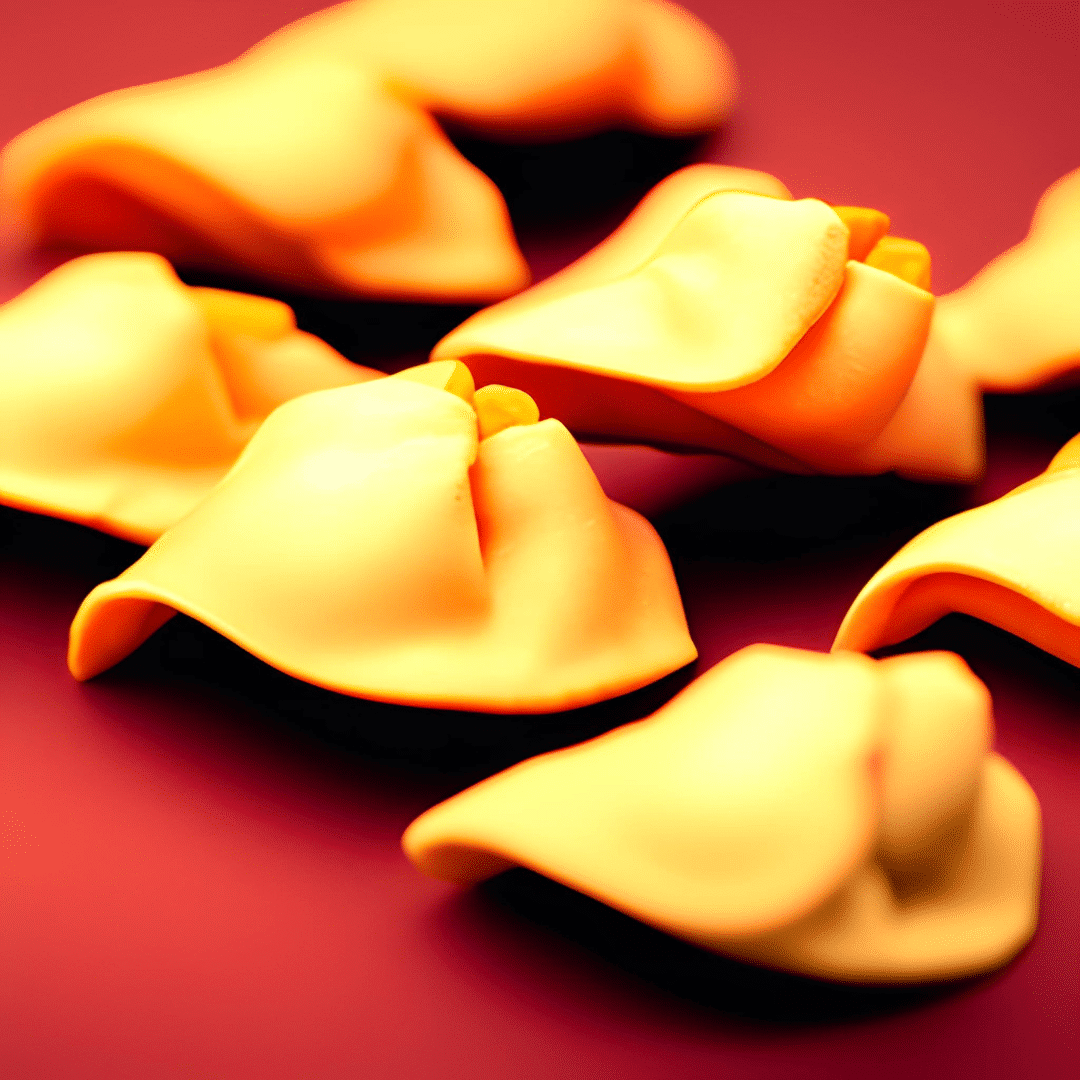
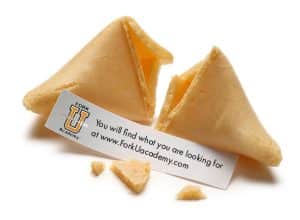
Fortune cookies are small, crispy cookies that contain a small piece of paper with a message or proverb inside. The message is often a fortune, aphorism, or prophecy. The cookies are made from flour, sugar, vanilla, and sesame seed oil. They are folded into a butterfly shape to create a pocket for the paper.

Fortune cookies are often served at the end of a meal in Chinese restaurants. They are most popular in the United States but are also served in other countries. The fortune cookie is a staple of Chinese American cuisine. It symbolizes luck, fate, soundbite Chinese wisdom, and the mysteries of the unknown.

Fortune cookies symbolize luck, wisdom, fate, and the unknown. They are a dessert served in Chinese restaurants. The fortune cookie’s distinctive shape and the hidden paper slip inscribed with a fortune give it a layered meaning. The fortune is a short message or proverb that is supposed to offer advice or a prediction about the future.

Some say that fortune cookies can predict what will happen in the future. However, you can choose to take the meaning of your fortune cookie from a negative perspective and see it as a bad omen. If there is no fortune in a fortune cookie, it is a sign that something good will happen to you soon. If you get two fortunes in one cookie, they cancel each other out.


History

The exact origin of is unclear, but they are believed to have originated in Japan. The cookie was inspired by a Japanese cracker called tsujiura senbei, which was made with sesame and miso and contained a small paper fortune.

Fortune Cookies were popularized by Makoto Hagiwara, a Japanese immigrant who ran the Japanese Tea Garden in San Francisco’s Golden Gate Park in the 1890s. Hagiwara is believed to have been the first to serve fortune cookies at the tea garden in 1908. They were originally called “fortune tea cakes”.

Another story claims that David Jung, a Chinese immigrant and founder of the Hong Kong Noodle Company, invented the cookie in 1918. Jung created the cookie as a sweet treat and encouraging word for unemployed men who gathered on the streets.

Fortune cookies are a staple of Chinese American cuisine. They symbolize luck, wisdom, fate, and all that is unknown. The message in your cookie is for you. Fortune cookies became popular in Chinese restaurants in the United States during the mid-20th century. The exact origins of the fortune cookie as a symbol of good luck are not known.
The Best Fortune Cookie

www.ForkUacademy.com

Here are some other interesting facts about fortune cookies:

  • They are meant to bring good luck to the person who eats them.
  • They are much larger than the fortune cookies you’re used to seeing.
  • They are flavored with miso instead of vanilla and sesame.
  • They are shaped after they are baked.
  • They were first sold in California.
  • Mass production of fortune cookies began in the late 1960s or early 1970s.
  • In 2008, approximately three billion fortune cookies were produced worldwide.
  • In Japan, they are called tsujiura senbei (“fortune crackers”), omikuji senbei (“written fortune crackers”), and suzu senbei (“bell crackers”).
  • David Jung, a Chinese immigrant, invented fortune cookies in 1918. He created them to give away for free to the poor people he saw near his shop.


Here is a Fortune Cookie Recipe for you to Try:

Ingredients:

  • 3 egg whites room temperature
  • 3/4 cup sugar
  • 1/2 cup salted or unsalted melted butter.
  • 1/4 tsp vanilla extract
  • 1/2 tsp almond extract
  • 1/4 cup water
  • 1 cup all-purpose flour
  • 1 tsp cornstarch


Directions:

  1. Preheat oven to 375 degrees. Line a baking sheet with parchment paper or a baking mat; have fortune strips ready.
  2. In a large mixing bowl, using a hand mixer, beat the egg whites and sugar on high speed for 2 minutes. Add the melted butter, vanilla, almond extract, and water, mix until incorporated. Add the flour and cornstarch, mix just until combined.
  3. Using a tablespoon, spoon the batter onto the prepared baking sheet. Using a spatula or the back of tablespoon, spread the batter into a 3-inch circle. Only do two at a time!
  4. Bake the cookies for 7-8 minutes or until the edges are brown. Remove them from the oven and quickly flip over. Fold the cookie in half, into a semicircle. Slip the note into the cookie. Place the semicircle onto the edge of a cup and quickly fold the ends down (see pictures below).
  5. Place the cookie in a muffin tin to let it cool and hold its shape.
  6. Repeat the process with the remaining batter.


About 3 billion fortune cookies are made each year, almost all in the United States. The largest manufacturer of fortune cookies is Wonton Food, Inc., which is based in Brooklyn, New York. They produce over 4.5 million fortune cookies per day. Other large manufacturers include Baily International in the Midwest and Peking Noodle in Los Angeles.

Wonton Food was established in New York’s Chinatown in 1973 by Chinese immigrant Ching Sun Wong. They are the largest manufacturer of noodles, wrappers, and fortune cookies in the United States.

Fortune cookies are available in vanilla, chocolate, citrus, and tri-flavored flavors. They are individually wrapped and available in bulk and in boxes.

National Fortune Cookie Day is celebrated on July 20th every year. Fortune Cookie Day is observed on September 13th.This way you get two chances to Chinese takeout or make a homemade crunchy, sweet treat. Let us know in the comments which direction you went.

0 Comments

Submit a Comment

Your email address will not be published. Required fields are marked *

Subscribe to our Blog to receive more content like this. Click here to subscribe.

Be sure to watch our shows on QVC+  or our YouTube channel

Give us your feedback on our Social Channels 

FacebookInstagramTik TokLinkedInPinterestTwitter  

National Spumoni Day aka Neapolitan ice cream

National Spumoni Day aka Neapolitan ice cream

Today’s Food Spotlight is on Spumoni.
Spumoni, or spumone, is a traditional Italian dessert that's a frozen, layered loaf of mostly ice cream. It's a milk sherbet, which is not quite ice cream and not quite sorbet, and has the addition of dairy, usually milk or buttermilk. This gives it a slightly creamier texture than sorbet, as well as a lighter, pastel color.
Spumoni is typically made by layering three flavors of ice cream or gelato, along with candied fruits, nuts, and whipped cream. The typical flavors in the United States are cherry, pistachio, and either chocolate or vanilla. The fruit/nut layer often contains cherry bits, which causes the traditional red/pink, green, and brown color combination. In America, spumoni is usually accompanied by butter cookies on the side, especially during wintertime.

Read More

National Bacon Lovers Day

National Bacon Lovers Day

Today’s Spotlight is on Bacon.
By definition, bacon is a type of salt-cured pork that comes from a pig. It is typically made from the belly or less fatty parts of the back. Bacon is often smoked after being cured. Bacon can be eaten on its own as a side dish, or used as an ingredient in dishes like sandwiches, salads, soups, and even sweets. It can also be used as a flavoring or accent, such as in bacon bits in a salad.

Read More

National Soft Serve Ice Cream Day

National Soft Serve Ice Cream Day

Today’s Spotlight is on Soft Serve Ice Cream.
Soft serve is a frozen dessert that is similar to ice cream but is softer and less dense. Soft serve is made by churning air into the ice cream mixture as it freezes, giving it a lighter and creamier texture. Soft serve is at least 50% air, while ice cream is between 30% and 50% air.
Soft serve also contains less milk fat than hard ice cream, often 3% to 6%. Hard ice cream is more likely to contain other flavorings, like pieces of chocolate, fruit, nuts, and other sweets. The final product is formed at retail, made from a powdered or liquid premix.

Read More

National Potato Day

National Potato Day

Today’s spotlight is on the Potato.
A potato is a starchy tuber, or underground stem, that grows under the ground. The part of the potato that people eat is the tuber, which can be round or oval and have small white roots called "eyes". The size and color of the potato's skin can vary by variety, and can be white, yellow, or purple.
Potatoes are a root vegetable, which refers to any underground part of a plant that is eaten by humans. They are native to the Andes Mountains in South America and have been grown for thousands of years. Potatoes are a staple food in many countries around the world and are used in a wide variety of dishes.

Read More

National Ice Cream Pie Day

National Ice Cream Pie Day

Today’s Spotlight is shining on Ice Cream Pie.
Ice cream pie is a frozen dessert made with a sweet crust, creamy ice cream, and whipped cream topping. The crust can be made from a standard pastry, crumbled cookies, or graham cracker. The ice cream can be filled with your favorite flavors and topped with hot fudge or more whipped cream.

Read More

Celebrate National Cheeseburger Day

Celebrate National Cheeseburger Day

Today’s Spotlight is on the Cheeseburger.
A cheeseburger is a grilled sandwich made of a patty of ground meat, topped with a slice of cheese, and placed between two halves of a bun. The patty is often seasoned with chopped onions, spices, or breadcrumbs before cooking. The cheese is added near the end of the cooking time. The burger is then placed in a bun and topped with condiments like lettuce, tomato slices, onion slices, pickles, and ketchup. The bun should be slightly crunchy on the outside and soft inside. The cheese should be melting over the meat.

Read More

National Vanilla Custard Day

National Vanilla Custard Day

Today’s Spotlight is on Vanilla Custard.
Custard is a culinary preparation made with milk or cream, egg yolks, sugar and vanilla. Depending on its consistency, custard can be served on its own or used as a filling for other desserts or dessert sauce. It can be served warm or cold and is often combined with fruits and cookies to create other dessert dishes. Vanilla custard contains egg yolks which gives it a yellow color.

Read More

National Bratwurst Day

National Bratwurst Day

Today’s Spotlight is on Bratwurst.
Bratwurst is a type of German sausage, also known as a "brat". It's typically made from pork and veal, but can also be made with beef, or any combination of meat. Bratwurst has a smooth texture, pale color, and mild flavor. It can be seasoned with salt, white pepper, nutmeg, lemon peel, marjoram, caraway, and garlic. They are often consumed for breakfast in German cities.
Bratwurst is prepared and stored fresh, so it doesn't have a long shelf life like a sausage can. It's usually grilled or fried in a pan

Read More

National Rum Day

National Rum Day

Today’s spotlight is on Rum.
Rum is a liquor that is distilled from sugarcane or sugarcane byproducts such as molasses or sugarcane juice. The sugarcane is fermented and then distilled, producing a clear liquid that is often aged in oak barrels. This aging process gives the final product its characteristic color and flavor.
Rum has a typical alcohol concentration of 40% ABV. Some rum is "overproof," meaning that it has an alcohol concentration of at least 57.5% ABV. Most overproof rum exceeds this minimum, usually reaching 75.5% ABV, which is equivalent to 151 proof.

Read More

National Lemon Meringue Pie Day

National Lemon Meringue Pie Day

Today’s spotlight is on Lemon Meringue Pie.
Lemon meringue pie is a dessert pie consisting of a shortened pastry base filled with lemon curd and topped with meringue. Lemon meringue pie has a buttery, flaky, and crispy pie crust. The filling is jelly-like, translucent, and smooth, and is yellow due to the lemon juice, lemon rind, butter, and egg yolk. The pastry is thin and flat due to being rolled out using a rolling pin. During baking, the edges turn golden brown.

Read More

Pin It on Pinterest