
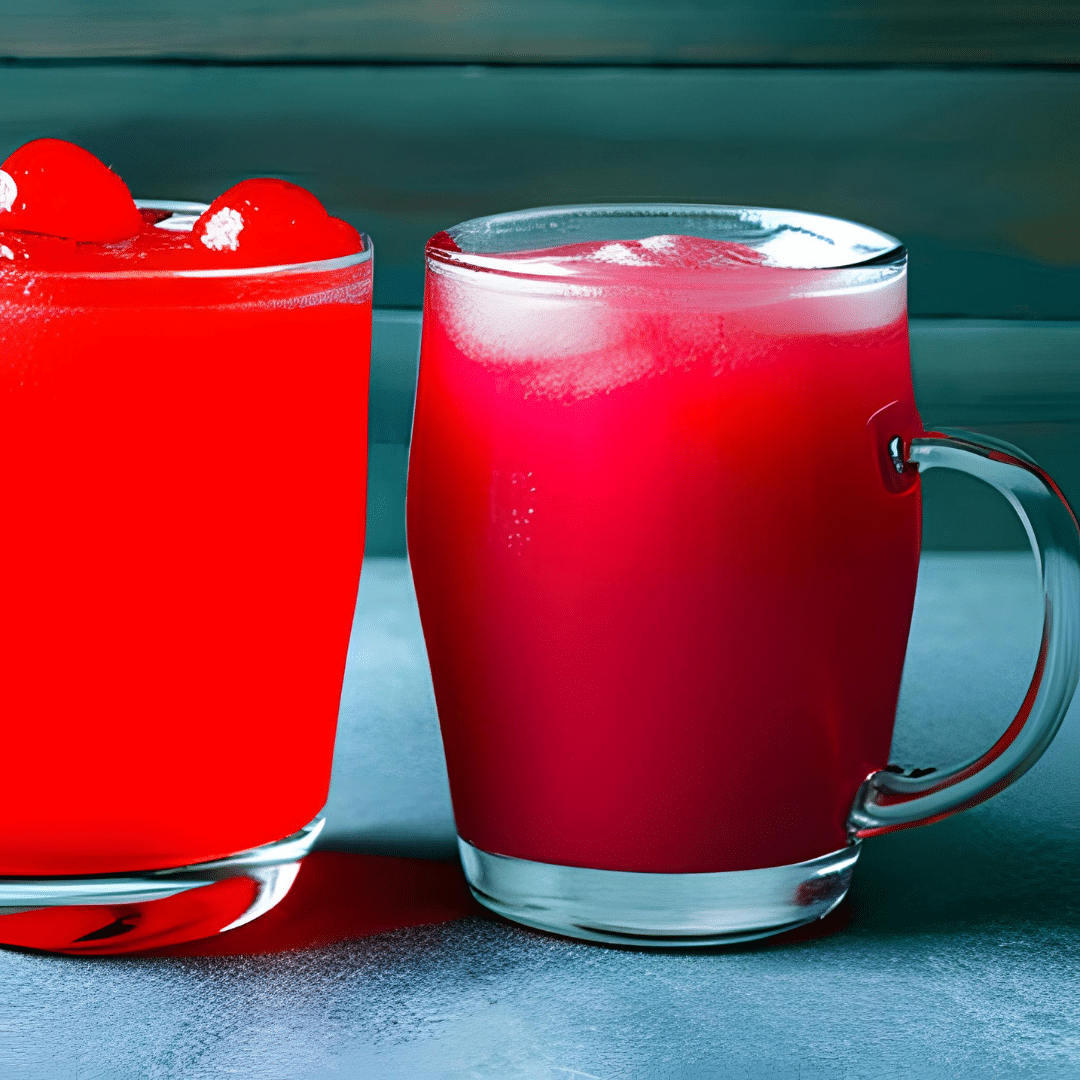
Today’s spotlight is on the flavored water treat known as Kool-Aid.
Kool-Aid is an American brand of flavored drink mix. It’s typically made with sugar, water, and artificial colorings. The powder form was created in 1927 by Edwin Perkins based on a liquid concentrate called Fruit Smack. Kool-Aid is owned by Kraft Heinz, based in Chicago, Illinois.
Here are some reasons why Kool-Aid is popular:
- Cost: Kool-Aid is affordable and less expensive than fruit juice
- Mascot: The Kool-Aid Man is a popular mascot for the brand, which has grown in popularity through commercials, comic books, and a video game
- Flavors: Kool-Aid comes in many different flavors, including the well-known tropical punch
- Consistency: The Kool-Aid brand has been successful because of its consistent quality
- Fun: Kool-Aid is a fun beverage that many kids have grown up drinking
- Popularity: Kool-Aid is a popular drink in the U.S., Canada, and many other countries
So, to sum it up you can take any good flavoring, add it to water and it won’t be Kool-Aid. Kool-Aid is Kool-Aid because it has tremendous branding supported by its slogan and mascot.
History
The Kool-Aid brand is owned by the Kraft Heinz company, which is based in Chicago, Illinois. Edwin Perkins created the Kool-Aid powder in 1927 based on a liquid concentrate called Fruit Smack. Perkins discovered a way to remove the liquid from Fruit Smack, a liquid concentrate, leaving only a powder. Perkins first produced Kool-Aid in Hastings, Nebraska. The drink mix was packaged in bright paper envelopes and sold in self-service display cartons in grocery stores. The company moved production to Chicago in 1931. By 1934, it was made and distributed overseas. During the Depression, the price of Kool-Aid was cut from ten cents to five cents per packet. In 1953, Within a year the popular Smiling Face Pitcher was introduced in print advertisements. Perkins sold the Kool-Aid brand to General Foods, which merged with Kraft in 1990.
Mascot
The Kool-Aid Man mascot was originally called “Pitcher Man”. The mascot was created in 1954 by Marvin Potts, an art director for a NYC-based ad agency. Potts was inspired by watching his son trace smiley faces on a frosted window. The mascot was a glass pitcher with a wide smile and filled with Kool-Aid.
The mascot was originally a supporting role, singing or dancing while kids and moms took the limelight. By the mid-1970s, the mascot had evolved into a life-sized, anthropomorphic character who became famous for his destructive antics. He was rebranded as the Kool-Aid Man in 1974. The Kool-Aid Man’s famous catchphrase is “Oh yeah!”
The character is often alluded to when describing literal and figurative acts of crashing in or through something. He’s usually depicted answering the call of children by smashing through walls or furnishings while holding a pitcher filled with Kool-Aid. The Kool-Aid Man first appeared in an ad in 1954. He also became a celebrity in his own right, starring in cartoons, video games, and art.
Here are some interesting facts about the Kool-Aid Man mascot:
- The Kool-Aid Man is a 6-foot-tall pitcher of cherry drink who’s eager to bust down any wall in his way.
- The Kool-Aid Man has his own video game, comic book, and museum display in Hastings, Nebraska.
- If scaled to six feet, the Kool-Aid Man would weigh 5,800 pounds without being filled with liquid.
- When filled with liquid, the Kool-Aid Man would weigh 11,000 pounds, which is roughly the same weight as an elephant.
The original Kool-Aid flavors are grape, orange, cherry, lemon lime, raspberry, and strawberry. Other flavors include green apple, strawberry kiwi, peach mango, cherry limeade, tropical punch, lemonade, pink lemonade, black cherry, sharkleberry fin, and invisible grape.
Fruit Punch is the most popular Kool-Aid flavor because of its vibrant red color and refreshing taste. It’s a fan favorite that captures the essence of mixed fruits, offering a burst of flavor that is both sweet and tangy. Others say that Tropical Punch is one of the best-known Kool-Aid flavors. This bright-red beverage is beloved by many and has a mix of fruits ranging from cherries to grapes to citruses like orange, lemon, and lime.
Here are some fun facts about Kool-Aid:
- Kool-Aid wasn’t always called Kool-Aid. It was “Kool-Ade”.
- It was first sold as a liquid drink mix.
- Its invention was inspired in part by Jell-O.
- There were originally just six flavors.
- It was invented by Edwin Perkins in Hastings, Nebraska
- Before Kool-Aid, there was a liquid drink called Fruit Smack
- To cut down shipping costs, Perkins found a way to remove the liquid from Fruit Smack and leave only a powder.
- The powder was called “Kool-Aid.”
- In 1929, Kool-Aid was placed with food brokers for distribution to stores all over the country.
- During the Depression, the price of Kool-Aid was cut from ten cents to five cents per packet.
- It became by far the most successful of the Perkins products.
- In 1998, Kool-Aid was awarded the title of official state soft drink of Nebraska.
- There’s a weekend-long festival in its honor every summer in Hastings.
- Kool-Aid Jammers Juice Pouches Tropical Punch Flavored have 75% less sugar than leading regular sodas.
Negative Brand Influence
The phrase “drinking the Kool-Aid” has a negative connotation and refers to someone who believes in a dangerous idea because of the potential for high rewards.
The phrase “drinking the Kool-Aid” began after the 1978 Jonestown massacre, in which more than 900 people committed mass suicide by drinking a flavored drink mixed with Valium, chloral hydrate, cyanide, and Phenergan. The phrase is often used to describe someone who believes in a possibly doomed or dangerous idea because of perceived potential high rewards.
Today, “Drinking the Kool-Aid” is an expression that means someone believes in something so much that they are willing to spout its principles without thinking. It can also mean ignoring evidence that the company’s way of doing things isn’t working as well as it could. “Drinking the Kool-Aid” usually has negative connotations, such as that the enthusiastic employees are dim, can’t think for themselves, or mistakenly think the company has their best interests at heart. It can also mean “buying the program” or “swallowing the party line”.
Calling someone “Kool Aid” can mean that they are gullible or easily duped. The phrase may have originated from the massacre of Jim Jones’ followers when they drank poisoned Kool Aid.
“All up in my Kool-Aid” is a slang phrase that means someone is bothering you, in your face, or in your business. It can also mean someone is being nosy or inquisitive, or wanting to know what’s going on. For example, you might say “You’re all in the Kool-Aid but don’t know the flavor!” to someone who is commenting on something they weren’t there for.
With all of the negative connotations of the name Kool-Aid remains popular with children. On a positive note, a Kool-Aid smile is an informal term for a large, beaming smile.
Recipe
Kool-Aid has the simplest recipe ever. Get a glass of water, add a packet of Kool-Aid and stir. Let the fin begin.
More than 563 million gallons of Kool-Aid are consumed each year, with more than 225 million gallons consumed in the summer. That means that 17 gallons of Kool-Aid are consumed every second during the summer season. Some say that 620 million gallons are consumed annually, with more than 26 gallons consumed every second during the long, hot summer. The people of Memphis, Tennessee drink the most Kool-Aid in the United States. Little Rock, Arkansas is second in Kool-Aid consumption.
National Kool-Aid Day is celebrated on the second Friday in August. In 2023, National Kool-Aid Day was observed on Friday, August 11th.
National Kool-Aid Day coincides with the first day of Kool-Aid Days, a festival held in Hastings, Nebraska from Friday, August 19 to Sunday, August 21. Kool-Aid Days began in 1998, the same year that Kool-Aid was named Nebraska’s official state drink.
Let us know your favorite Kool-Aid flavor?
0 Comments