
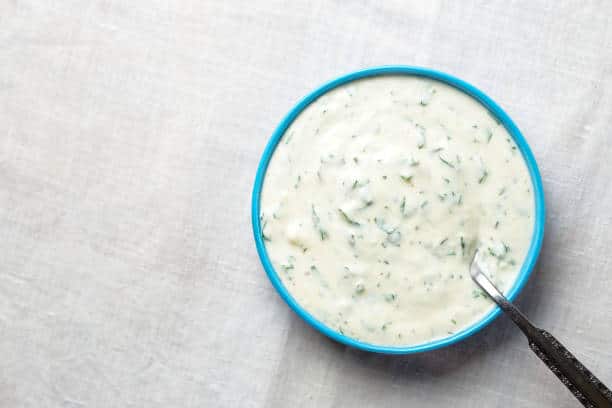
Today’s Spotlight is on Ranch Dressing.
It has been said that if you dress like a Cowboy, you are Ranch Dressing.
But seriously, Ranch dressing is a savory, creamy American salad dressing usually made from buttermilk, salt, garlic, onion, mustard, herbs, and spices mixed into a sauce based on mayonnaise or another oil emulsion. Sour cream and yogurt are sometimes used in addition to, or as a substitute for, buttermilk and mayonnaise.
Ranch dressing goes well with many foods, including:
- Fries, Chips, Pizzas, Wraps, Sandwiches, Chips, Mozzarella sticks, Fried chicken, Pork chops, Arancini, Crispy potatoes, Sausages.
History
Ranch dressing was invented in 1949 by Steve Henson, a plumber-turned-cowboy. Henson was working as a contract plumber in Alaska when he started cooking for his coworkers and perfecting his buttermilk dressing recipe. Five years later he moved to California with his wife Gayle and bought a ranch he called Hidden Valley Ranch, which made the now famous dressing a staple.
Steve Henson created ranch dressing to complement the dishes he was serving to his work crews while working as a plumber in Alaska. The dressing was originally intended to be a dressing for green salads, but it can also work well on pasta salad, potato salad, or chickpea salad.
Other ways to use ranch dressing include:
- Chicken dishes, especially ones smothered in barbecue or buffalo sauce.
- As a dipping sauce for breaded and fried zucchini
- As a dip for roasted vegetables
- As a topping for burgers
The earliest recipes for buttermilk dressing date back to around 1937, in Texas.
In the 1980s, ranch became a common snack food flavor, starting with Cool Ranch Doritos in 1987. Hidden Valley Ranch Wavy Lay’s potato chips were introduced in 1994. During the 1990s, Hidden Valley had three child-oriented variations of ranch dressing: pizza, nacho cheese, and taco flavors.
In 1992 Ranch beat out Italian as the most sold dressing. People started using the dressing for more than just salads. A Fort Worth, Texas Pizza Hut claimed to have to order 8 to 12 gallons of ranch each week.
It’s not known exactly who first put ranch on pizza. Some believe that college students started dipping their pizza in ranch dressing after a night of partying. Others say that the combination was popularized by Domino’s Pizza in 1994 when the chain started including sides of ranch dressing with its wings.
The combination of ranch and pizza is a popular and divisive one. Some say that it’s a quick way to elevate a basic pizza, while others say that it ruins a perfectly good slice. Let us know in the comments what you think.
Here are some more fun facts about ranch dressing:
- The average American eats salad dressing 38 times a year.
- A pizzeria in Dallas charges $1,000 for a side of ranch.
- Ranch-flavored soda exists.
- Ranch dressing contains a considerable amount of vitamin K.
- Canola oil, the primary ingredient in bottled ranch dressings, is a good source of vitamin K.
- Ranch dressing does not contain eggs of its own, but eggs are added to the dressing as a component of the mayonnaise.
- The dressing was an attempt to get grouchy, finicky bush workers to eat their vegetables.
Here is a recipe for homemade Ranch Dressing for you to try:
Ingredients:
- 1/2 cup cold buttermilk, or kefir
- 1/2 cup cold sour cream
- 1/2 cup real mayonnaise
- 1 tsp white vinegar
- 1 tsp onion powder, or 2 Tbsp finely chopped chives
- 1 tsp dried parsley leaves, or 2 Tbsp finest chopped Italian parsley leaves
- 1/2 tsp dried dill, or 1 Tbsp chopped fresh dill.
- 1/2 tsp garlic powder, or 3 medium garlic cloves (1 Tbsp finely grated garlic)
- 1/2 tsp fine sea salt, plus more to taste
- 1/2 tsp freshly cracked black pepper, or to taste.
Instructions:
- In a bowl, combine all of your ranch ingredients and whisk together to combine. Add more salt to taste. As a dressing, 3/4 tsp salt is nice and as a dip, you can get by with 1/2 tsp salt. Cover and refrigerate for at least 2 hours before serving.
- Enjoy on more than Salad!
Consumption
Americans consume over 100 million bottles of ranch dressing annually, making it a $1.7 billion industry. In 2020, 143.21 million Americans used ranch prepared salad dressing. The average American consumes salad dressing 38 times a year, and 15 of those 38 are served with ranch dressing.
Ranch dressing is more popular in the Midwest than any other region in the country. 40 percent of Americans pick ranch dressing as their favorite. Its nearest competitor, Italian, came in at 10 percent.
Ranch has been the best-selling salad dressing in the United States since 1992, when it overtook Italian.
Celebrating Ranch Dressing
National Ranch Day is celebrated on March 10th. This day honors one of the most popular salad dressings in America. Ranch dressing is used on salads, as a dipping sauce for chicken wings, pizza, fresh vegetables, French fries, tater tots, mozzarella sticks, and more.
Hidden Valley Ranch has also introduced a new holiday tradition called “Ranch on a Branch”. Ranch on a Branch is a ranch dressing bottle-shaped ornament who wants to “remind everyone to spread joy throughout the season”. A plushie of Ranch on a Branch is available as part of a boxed set that also includes a storybook.
0 Comments