
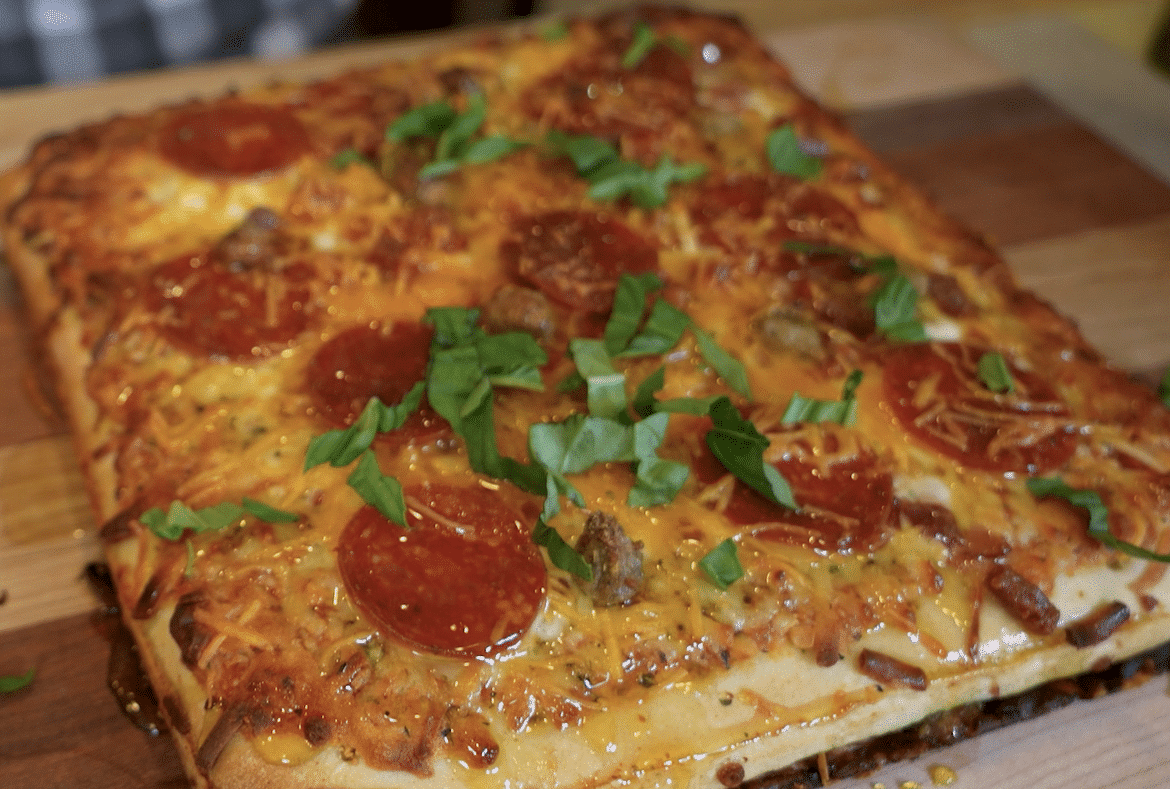
Our spotlight today is on Pepperoni Pizza.
Pepperoni pizza is a classic American pizza. It’s made with a combination of pepperoni, tomato sauce, and cheese. Pepperoni is a spicy salami made from a mixture of beef and pork and seasoned with paprika and chili powder. It’s soft, slightly smoky, and bright red in color.
Pepperoni is one of the most popular pizza toppings. The spice of the pepperoni balances the sweetness of the tomato sauce and complements the fat in the cheese. When cooked, the pepperoni renders flavorful oil. Pepperoni became a popular pizza topping because it was cured and wouldn’t spoil easily. It was also inexpensive and could be shipped long distances.
Pepperoni is a type of spicy salami that originated in southern Italy. It first appeared in Italian American markets after World War I. The name pepperoni is a corruption of the Italian word peperoni, which refers to the small peppers used to add heat and color to the salami.
Pepperoni is a popular pizza topping because it has a unique flavor profile that is designed to appeal to Americans. It is a combination of salty, spicy, and slightly sweet flavors. Pepperoni is also meaty, a little sour, and chewy. It has a higher fat content than other popular toppings like chicken or fish, which makes it more satisfying and flavorful. Pepperoni also has a high salt content, which can make it addictive. Pepperoni is also a popular topping because it adds a slightly spicy, meaty flavor to the pizza. The spice balances the sweetness of the tomato sauce and complements the fat in the cheese.
History
Pepperoni was invented in the US by Italian immigrants in New York City in the early 1900s. The first recorded mention of pepperoni was in 1919 in New York City. At the time, people considered pepperoni an ethnic Italian dish. It grew in popularity in the 1920s in part because dry-age sausages received the endorsement of the United States Department of Agriculture. At the time, trichinosis posed a real threat to people who ate undercooked pork.
Pepperoni was created as a way to emulate Italian sausage and salami using ingredients available in the United States. It was called “sausage for pizza” because Italian Americans needed a faster solution to making cured meats like capicola.
The word “pepperoni” comes from the Italian word “peperoni” which is the plural of “peperone”. “Peperone” is the Italian word for bell pepper. The first known mention of pepperoni was in 1919 in New York City. At the time, pepperoni was a topping in many Italian delis and pizzerias in Lower Manhattan. The word “pepperoni” literally translates to “big peppers”. This may be because early pepperonis included ingredients like bell peppers.
The Italian word for hot and spicy chili peppers is “peperoncino”. In Italy, what Americans call pepperoni is called “salame picante” which is a generic term meaning “spicy salami”.
The first evidence of pepperoni as a pizza topping is a photo of a menu from 1950 at The Spot in New Haven, Connecticut. The Spot is believed to be the first pizzeria to offer pepperoni on a pizza. Pepperoni became a popular pizza topping because it was cheap, easy to supply, and could be mass-produced. When pizza chains like Pizza Hut and Domino’s opened in the 1960s, they were looking for toppings that could be mass-produced and traveled well. Pepperoni fit the bill.
Fun Facts about Pepperoni Pizza
- Pepperoni is the most popular pizza topping in the United States, excluding cheese. Americans consume more than 250 million pounds of pepperoni each year, or more than 340 tons each day. More than 36% of pizzas ordered in the US have pepperoni as a topping.
- Pepperoni is an air-dried, spicy salami that is a uniquely American invention. It is made from ground pork and beef, and is often seasoned with garlic, cayenne, and paprika. Nitrites and nitrates give it its red color and help preserve it.
- Pepperoni first appeared in Italian American markets after World War I. It didn’t become a pizza topping until much later. It was first used as a pizza topping sometime between the First and Second World Wars.
- The term “pepperoni” comes from the Italian word peperoni, which is the plural of peperone, the Italian word for bell pepper. The first use of “pepperoni” to refer to a sausage date to 1919.
- National Pepperoni Day is September 20th.
Here is a Pepperoni Pizza Recipe for you to Try:
Ingredients:
- 16 ounces pizza dough, store-bought or homemade
- 1/2 cup pizza sauce (see below)
- 18 to 20 slices pepperoni
- 12 ounces mozzarella cheese, grated.
- 1/2 teaspoon ground black pepper
- 1 teaspoon fresh oregano, optional
- Flour for rolling and shaping dough.
Pizza Sauce Ingredients:
- 1/2 cup tomato sauce (no salt)
- 1/2 teaspoon kosher salt
- 1/2 teaspoon ground black pepper
- 1/2 teaspoon granulated garlic
- 1/2 teaspoon granulated onion
- 1/4 teaspoon red pepper flakes
- 1 teaspoon olive oil
Instructions:
- Preheat oven to 500°F. If you are using a pizza stone, preheat it in the oven for at least 20 minutes so it is nice and hot as well.
- If you are using this sauce recipe, stir together the ingredients. The sauce recipe makes just enough for one large pizza. You can easily double it if you are making more than one pizza.
- Roll out dough on a lightly floured surface. If it’s hard to roll, let it rest for 5 minutes so it can come to room temperature. For a large pizza, I like to roll my dough into about a 14-inch diameter circle.
- Transfer the dough to a lightly dusted pizza peel. Alternatively, fit it into a large cast-iron. Add sauce in a light layer all over the pizza, leaving about 1/4-inch crust around the edges. Chop half of the pepperoni and sprinkle it over the sauce. Top the pizza with grated cheese and the rest of the pepperoni. Season with black pepper.
- If you’re using a pizza stone, carefully slide pizza into the center of the preheated pizza stone. Cook for 6 minutes, then rotate the pizza halfway so it cooks evenly. Cook for another 6-8 minutes, or until the crust is golden brown and charred in spots.
- If you’re using a skillet, press the dough into a cast iron skillet and add toppings. Place the skillet over a high heat burner for 2 minutes to get it preheated and get the crust cooking right away. Then transfer to a 500 ̊F oven and bake for 10 to 12 minutes, or until the crust is golden brown.
- Use pizza peel to slide pizza out onto a cutting board. Let the pizza rest for a minute and slice it into pieces. Season with fresh oregano (optional). Serve while warm with a side salad.
- Enjoy!
Consumption
In a poll of more than 6,000 US adults, about two-thirds (64%) of Americans say they like pepperoni. Other popular additions among US adults are sausage (56%), mushrooms (54%), extra cheese (52%), and onions (48%).
Pepperoni is the most popular pizza topping in the United States, with 36% of all pizzas containing it. Americans consume about 251.7 million pounds of pepperoni on pizza each year. That’s roughly 1.55 pepperoni pizzas per person each year.
The average American eats about 46 slices of pizza per year, which is equivalent to about 23 pounds of pizza. This is the equivalent of 5.75 pizzas if each pizza has 8 slices.
Americans eat about 350 slices of pizza per second, which is equivalent to about 100 acres of pizza per day. According to a Mintel survey, 93% of Americans who eat pizza eat it at least once a month.
The average American eats about 40 pizzas a year, which is over 8 million pizzas ordered every day. That’s about 350 slices per second.
Americans spend about $38 billion on pizza each year.
Celebrating Pepperoni Pizza
National Pepperoni Pizza Day is celebrated on September 20th annually. It’s frankly not a hard thing to celebrate. Let us know in the comments how you plan to celebrate Pepperoni Pizza.
0 Comments