
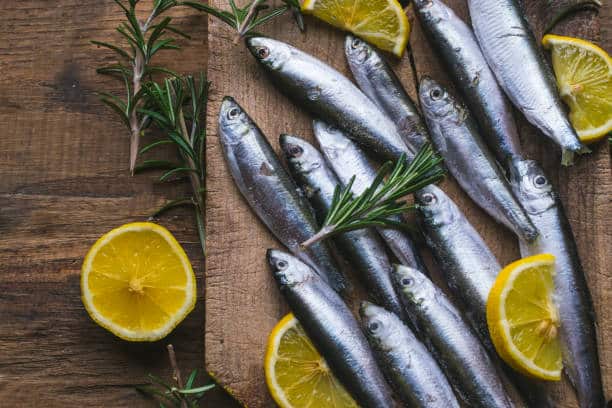
Today’s Spotlight is on Sardines.
Sardines are small, silvery, elongated fish that live in dense schools. They range in length from about 15 to 30 cm (6 to 12 inches). They have a single short dorsal fin, no lateral line, and no scales on the head.
Sardines are oily and soft in texture. They have a strong flavor and can be bought and prepared in various forms. They are a popular seafood choice around the world.
Sardines are an important forage fish for larger forms of marine life. They eat plankton and small crustaceans. They are eaten by just about everything, including people.
Sardines are named after the Mediterranean island of Sardinia, which was once a haven for an abundant sardine population. They are a group of herring fishes that encompass five distinct genera and at least 21 unique species.
Sardines are a nutritious type of fish for most people. They contain many important nutrients, including beneficial omega-3 fats. However, people with gout may need to consume sardines in moderation because they are high in purines, a compound that can make gout symptoms worse.
Sardines can symbolize many things, including:
- Extraordinary friendship
- Good luck, especially if the fish is swimming freely.
- Cheapness or scarcity
- The unity of the Portuguese people
In Portugal, sardines are a symbol of unity. They are a staple of Portuguese popular culture and are eaten at summer barbecues and festivals. Canned sardines are a Portuguese delicacy.
In some cultures, seeing a sardine in a dream can be a sign of good luck. In other cultures, a sardine may represent a symbol of cheapness or scarcity.
History
Sardines have been enjoyed since ancient times. The Romans discovered sardines in abundance along the coast when they first settled in Lisbon in 19 BC. The Phoenicians and Greeks caught wild sardines off the coast of Portugal and preserved them in containers filled with salt.
The term “sardine” was first used in English during the early 15th century. The name “sardine” may come from the Italian island of Sardinia, where sardines were once abundant. The term “sardine” was first used in English in the early 15th century. The name “sardine” comes from the fact that similar, tiny fish, called French sardines, were first found and caught in great abundance around the island of Sardinia.
The name “sardine” means “small fish”. When they’re young and small, these fish are called sardines. When they get older and bigger, they’re called herring.
Over time, the name “sardine” became a colloquialism to refer to any small, oily fish that could be packed into a tin and preserved using salt or oil. In other words, the “sardine” we eat today, may not be true sardine.
The Phoenicians and Greeks preserved sardines in containers filled with salt. In Breton, off the coast of northern France, fishermen were known to fry sardines and preserve them in clay jars. One of the fishermen, a friend of Appert, used his methods to create canned sardines as we know it today.
Commercial canning on the East Coast began in 1875 in Eastport, when a New York-based businessman set up the Eagle Preserved Fish Company.
Here are some facts about sardines:
- Sardines are a sustainable seafood choice. They are low in mercury compared to tuna.
- Sardines are high in omega-3 fatty acids, which promote heart health. They are one of the best omega-3 foods.
- Sardines are rich in essential nutrients, including vitamin B12 and selenium. They can protect bone health, defend against mood disorders, control blood sugar levels, and promote weight loss.
Sardines are versatile and can be eaten in various ways, including:
- Canned
- Grilled
- Pickled
- Smoked
Consumption
In 2022, the global sardine market reached 3.5 million tons. IMARC Group predicts that the market will reach 3.86 million tons by 2028. The global canned sardine market was valued at $7.9 billion in 2020. It’s projected to reach $15.8 billion by 2031.
Morocco is the world’s largest canned sardine exporter. Sardines make up more than 62% of the Moroccan fish catch. Sardines are a common source of nutrition around the world. They’re frequently canned in olive oil. The oil helps the meat remain moist and tender and keeps its rich flavor.
Celebrating Sardines
National Sardine Day is celebrated every year on November 24th. Let us know in the comments if you will be celebrating this year?
0 Comments