
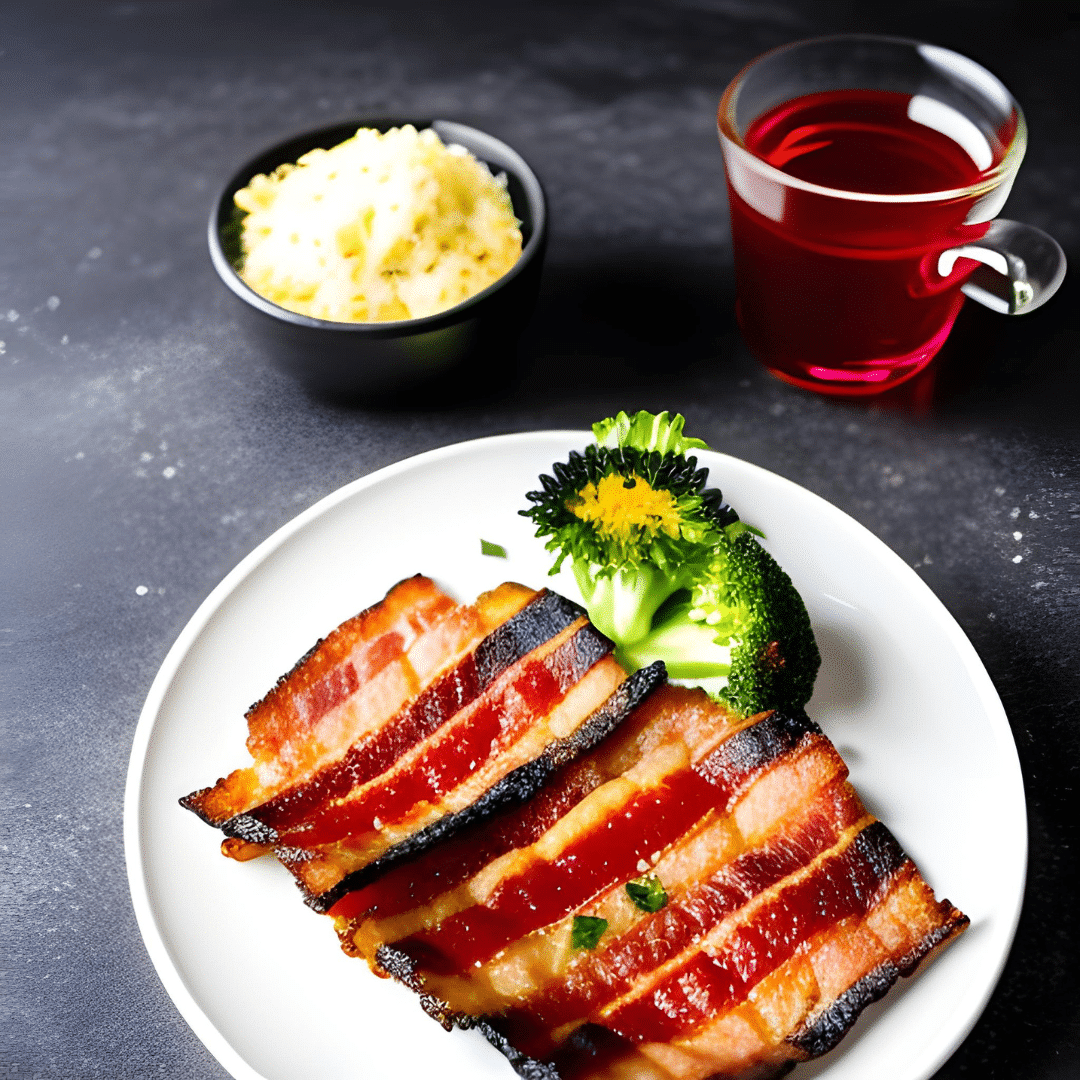
Today’s Spotlight is on Bacon.
By definition, bacon is a type of salt-cured pork that comes from a pig. It is typically made from the belly or less fatty parts of the back. Bacon is often smoked after being cured. Bacon can be eaten on its own as a side dish, or used as an ingredient in dishes like sandwiches, salads, soups, and even sweets. It can also be used as a flavoring or accent, such as in bacon bits in a salad.
There are several varieties of bacon. Some varieties of bacon, such as Canadian bacon, are cut from the loin portion of the pork, which is leaner. Butchers may also make bacon from cuts of pork other than pork belly, such as back bacon, jowl bacon, cottage bacon, and slab bacon. Bacon is often cured with salt and smoked. Many producers also add synthetic nitrates or nitrites and sugar to the meat.
Bacon is best known as part of the classic New Yorker bacon, egg, and cheese breakfast sandwich and the simple staple BLT.
Here are the types of bacon:
- Back bacon. A leaner cut of bacon that includes the pork loin from the back of the pig.
- Cottage bacon. A leaner cut of bacon that comes from the pork shoulder or pork butt.
- Slab bacon. Whole smoked pork belly that can be sliced into strips.
- Pancetta. An Italian bacon made from pork belly and cured with spices like clove, rosemary, or juniper.
- Streaky bacon. Also known as American bacon or side bacon, this is the regular bacon you can find in stores.
- Turkey bacon. A lower-fat alternative to pork bacon made by reconstituting turkey meat into bacon-shaped pieces.
And if you are asking, yes, bacon is considered a processed meat. Processed meats are any meat product that has been preserved through curing, smoking, salting, canning, or other methods. Cured meats like bacon are considered processed, alongside cold cuts, hot dogs, sausage, and jerky.
All sliced bacon is sold in two grades, number one and number two. Number one grade bacon is inspected for quality assurance as it is processed. Bacon that does not meet the number one grade minimum specifications is sold as grade number two.
You may also see labels that say “cured” or “uncured” on bacon. Bacon is a cured meat by definition, but there are different preservation processes that the meat can go through. Some methods are so natural that the cured meat is labeled as uncured. Tender Belly Cured bacon uses artificial nitrates, while uncured bacon uses natural nitrates. Uncured bacon can be saltier than cured bacon.
History
The history of bacon dates back to 1500 BC when the Chinese began curing pork bellies with salt. The Chinese were the first to cook salted pork bellies, making bacon one of the world’s oldest processed meats. The pork curing process spread throughout the Roman Empire. n Ancient Rome, bacon was made from pork bellies known as “petaso”. The pork was salted, smoked, and eaten with other staples of the Roman diet such as bread and cheese.
The word “bacon” relating to pork products did not come into use until around 1350. Bacon might then have come to mean someone who prepared and sold cured pork. The word “bacon” comes from various Germanic and French dialects. It derives from the French “bako”, Old High German “bakko”, and Old Teutonic “backe”, all of which refer to the back. The name may derive from the Germanic personal name “Bac(c)o”, “Bahho”, from the root “bag”, to fight, which was common among the Normans in the form “Bacus”, “Bacon”. By the 14th century, it found its way into Old French as “bacun”, meaning “back meat”.
The 17th century marked the introduction of bacon as we know it today, cured using sugar, potassium nitrate, and smoked. Early on, only cold smoking was recommended as hot smoked meat was particularly susceptible to bacteria if not carefully processed.
In the 1770s, Englishman John Harris started a company in Caine, Wiltshire, that made bacon using a brine curing solution. The “Wiltshire cure” pioneered large-scale industrial bacon processing. The area is still considered a bacon capital.
Kingan & Company is credited with being the first company to package pre-sliced bacon for consumer use in 1914. The company sold the bacon in one-pound boxes under the name Kingan’s Reliable. Oscar Mayer patented the type of sliced, packaged bacon that most people have in their fridge in 1924. Soon after, bacon became a staple of the American family breakfast.
Bacon remained a family favorite until marketers began the product focused health craze starting in the 1970s and 1980s. Sizzlean was a popular bacon alternative that came out of that era. It was a cured meat product that was marketed as a healthier option to bacon, with less fat and shrinkage than regular pork bacon. Sizzlean was produced by Swift & Co. and was manufactured until 2005 when it was discontinued.
Consumption
The average person consumes bacon 18 times per year. Bacon is mostly served in breakfast entrees, hamburgers, and sandwiches. 70% of bacon in the US is eaten at breakfast. The American Institute for Cancer Research recommends eating no more than 18 ounces of red meat per week.
Which states in the U.S.A. like bacon the most? The top five states are Nebraska, West Virginia, Iowa, Colorado and Connecticut.
Is Pork Belly thick Bacon?
Pork belly is not bacon. Pork belly is a whole slab of meat cut from the underside of a pig. It’s unsmoked and uncured and is sold in thick strips or big chunks. Bacon is a type of pork belly that has been thinly sliced and cured. Bacon can also be cut from the sides, back, neck, and jowls of a pig.
National Bacon Lovers Day is celebrated annually on August 20th. The holiday was created in 1997 as a break from traditional holidays.
0 Comments