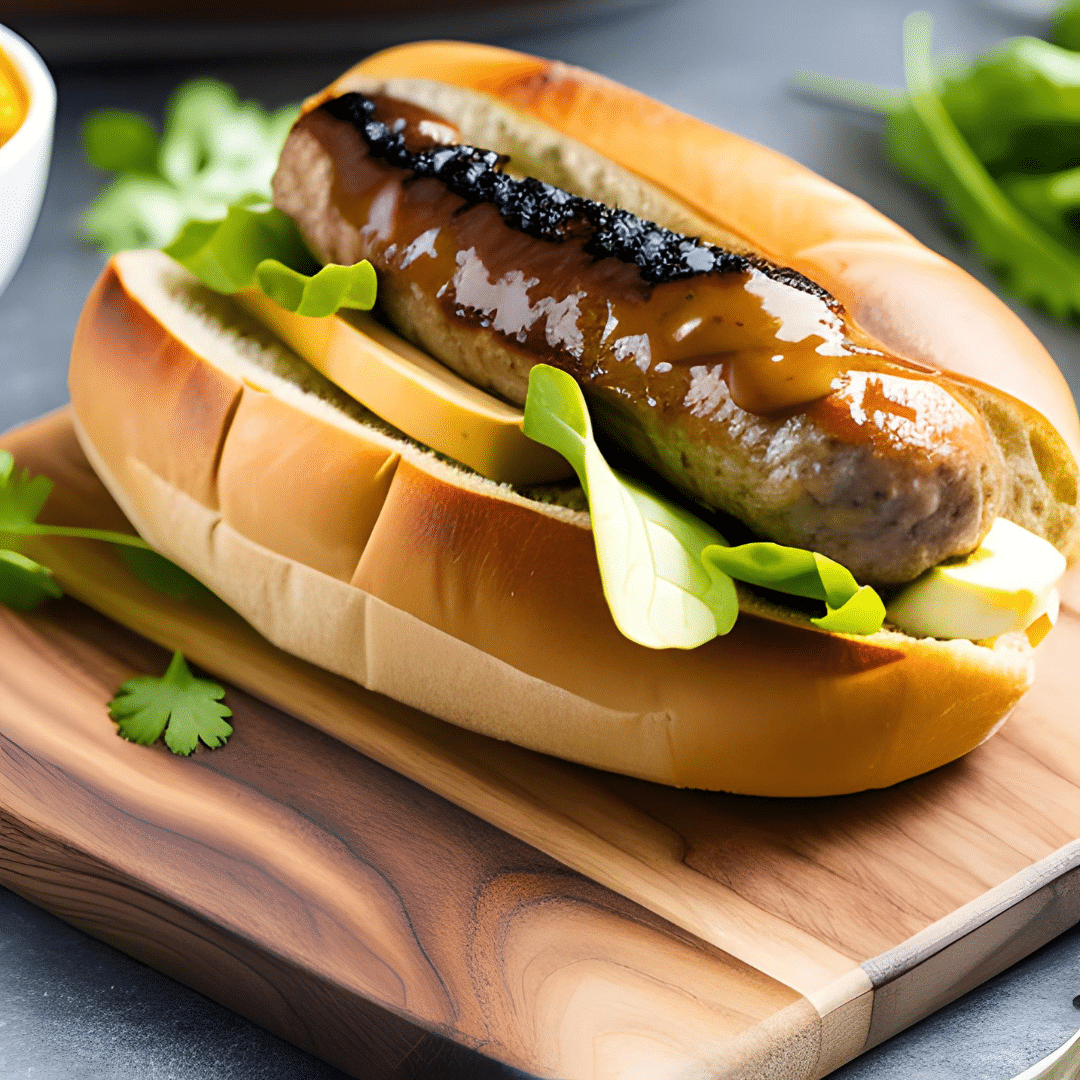
National Bratwurst Day

Aug 15, 2026 | Food Blog

Today’s Spotlight is on Bratwurst.

Bratwurst is a type of German sausage, also known as a “brat”. It’s typically made from pork and veal, but can also be made with beef, or any combination of meat. Bratwurst has a smooth texture, pale color, and mild flavor. It can be seasoned with salt, white pepper, nutmeg, lemon peel, marjoram, caraway, and garlic. They are often consumed for breakfast in German cities.

Bratwurst is prepared and stored fresh, so it doesn’t have a long shelf life like a sausage can. It’s usually grilled or fried in a pan.


How is Bratwurst different than Sausage?

Grind

Bratwurst often has a coarser grind than other sausages like hot dogs or Italian sausages.

Spices

Bratwurst has a specific blend of spices, including garlic, nutmeg, and other spices that give it its signature taste.

Casing

Bratwurst usually has a natural casing made from animal intestines or animal skin, while other sausages can have natural or synthetic casings.

Freshness

Bratwurst is prepared and stored fresh, so it doesn’t have a long shelf life like other sausages.

Flavors

Bratwurst can have stronger flavors like ginger, nutmeg, coriander, and caraway, and sometimes cream and eggs are added to the mix.

Meat

Bratwurst is usually made with pork and veal, though some recipes also use beef Mashed, The Bearded Butchers.

History

The first documented evidence of bratwurst dates back to 1313 in the Franconian city of Nuremberg, Germany. The sausage originated in Western Europe, where German butchers would make it during the winter when there was a lack of meat. The word “bratwurst” comes from the Old High German “Brätwurst”, from “brät” meaning finely chopped meat, and “Wurst” meaning sausage. In modern German, “brat” is often associated with the verb “braten” which means to pan fry or roast. The word “bratwurst” roughly translates to “finely chopped sausage”.

German immigrants brought bratwurst, also known as brats, to the United States. The first German immigrants began coming to America in the 1680s. German settlers brought their knowledge of preserving meat to America in 1709 when they established Germantown, Pennsylvania.

Brats have become a staple food in America and can be found at every summer grill and baseball stadium. The word “bratwurst” is a catch-all term for all sausages in Germany, where “brat” means ground meat and “wurst” means sausage. Bratwursts typically consist of pork and veal, but they can also be made with beef and veal, or any combination of meat.


Here are some fun facts and world records about Bratwurst German sausage:

  • Germany has almost 42 varieties of bratwurst.
  • The world’s biggest bratwurst measured 360 feet in length and weighed over 250 pounds.
  • Carmen Cincotti holds the world record for most bratwursts eaten, eating 101 in just 10 minutes.
  • Madison, Wisconsin holds the world record for the most bratwurst sausages sold in a year, selling 209,376 in 2010.
  • Ptacek’s IGA broke the world’s record for the longest bratwurst at 52 feet and two inches.
  • But a family grocery store took the record for world’s longest bratwurst at 152 feet.
  • Bratwursts were a means of survival for many German people centuries ago.
  • To preserve its white flavor, cooked bratwurst is not smoked, which keeps it pale colored.


Cooking Bratwurst

Ingredients:

  • Brats (High-quality bratwurst is best)
  • A Red Onion
  • Water, beer or stock (If beer use something lighter and not too hoppy)
  • Olive Oil or Butter


Instructions:

  1. Heat a 12″ cast-iron skillet over medium heat with a drizzle of canola oil until it just starts to smoke.
  2. While the skillet heats, prep the brats by poking a few holes on each side to allow steam to escape so they don’t burst while cooking.
  3. Place the brats in the skillet and stir in the onions around them.
  4. Once the brats are browned on the first side (3 to 4 minutes), use tongs to turn them over and carefully pour in ½ cup water, beer or stock and immediately cover with a lid and reduce the heat to medium-low.
  5. Continue to cook for about 10 more minutes, or until they reach an internal temperature of 160° F (71° C), verified with an instant-read thermometer.
  6. The total cooking time will be about 13 to 15 minutes, depending on the size of the brats.
  7. Remove the sausages from the skillet and increase the heat to reduce the liquid for a few minutes until a sauce consistency is reached, stirring frequently. Taste and season. Serve the brats topped with the onions and sauce.
  8. Enjoy!


Here are some health facts about Bratwurst German sausage:

  • A standard serving size of bratwurst is typically one sausage, which is approximately 85-100 grams.
  • Cooked bratwurst traditional German sausage contains 230 calories per 90 g serving and 8g of saturated fat.
  • A serving size of cooked pork and beef bratwurst has 283 calories, 25g of total fat, and 8.5g of saturated fat.
  • Bratwurst is a good source of protein, providing 14g per serving.
  • Bratwurst is a great source of vitamins, offering 35 percent of the daily recommended value of thiamin, 17 percent of B6, 20 percent of niacin, 11 percent of B12, and 13 percent of riboflavin in 85 grams of serving.
  • Bratwurst is an excellent source of choline, an essential chemical in the construction of cell membranes, especially in the brain and the heart.
  • Johnsonville Original Bratwurst contains 260 calories in a 1 link (82.000g) serving size.
  • Authentic German Sausage by Brat Haus contains 18g of protein.


National Bratwurst Day is August 16. This is a day to pay special attention to this Germain creation. Let us know in the comments your favorite Bratwurst story.

0 Comments

Submit a Comment

Your email address will not be published. Required fields are marked *

Subscribe to our Blog to receive more content like this. Click here to subscribe.

Be sure to watch our shows on QVC+  or our YouTube channel

Give us your feedback on our Social Channels 

FacebookInstagramTik TokLinkedInPinterestTwitter  

National Rum Day

National Rum Day

Today’s spotlight is on Rum.
Rum is a liquor that is distilled from sugarcane or sugarcane byproducts such as molasses or sugarcane juice. The sugarcane is fermented and then distilled, producing a clear liquid that is often aged in oak barrels. This aging process gives the final product its characteristic color and flavor.
Rum has a typical alcohol concentration of 40% ABV. Some rum is "overproof," meaning that it has an alcohol concentration of at least 57.5% ABV. Most overproof rum exceeds this minimum, usually reaching 75.5% ABV, which is equivalent to 151 proof.

Read More

National Lemon Meringue Pie Day

National Lemon Meringue Pie Day

Today’s spotlight is on Lemon Meringue Pie.
Lemon meringue pie is a dessert pie consisting of a shortened pastry base filled with lemon curd and topped with meringue. Lemon meringue pie has a buttery, flaky, and crispy pie crust. The filling is jelly-like, translucent, and smooth, and is yellow due to the lemon juice, lemon rind, butter, and egg yolk. The pastry is thin and flat due to being rolled out using a rolling pin. During baking, the edges turn golden brown.

Read More

National Filet Mignon Day

National Filet Mignon Day

Today’s Spotlight is on Filet Mignon.
Filet mignon is a cut of beef from the small end of the tenderloin, or psoas major, which is located near the spine of the cow. The tenderloin runs along both sides of the spine and is usually butchered as two long snake-shaped cuts of meat. The tenderloin is sometimes sold whole. The tenderloin is the most well-known muscle on a cow and is also the most tender. Filet mignon is a lean cut of beef, which means you'll enjoy a fork-tender steak without much fat or connective tissue.
Filet mignon is one of the most tender and milder cuts of steak, making it a favorite among steak lovers. It's also one of the most expensive cuts of steak, due to its prized texture and that it's only about 2 to 3% of the total animal.

Read More

National Kool-Aid Day

National Kool-Aid Day

Today’s spotlight is on the flavored water treat known as Kool-Aid.
Kool-Aid is an American brand of flavored drink mix. It's typically made with sugar, water, and artificial colorings. The powder form was created in 1927 by Edwin Perkins based on a liquid concentrate called Fruit Smack. Kool-Aid is owned by Kraft Heinz, based in Chicago, Illinois.

Read More

National Smores Day

National Smores Day

Today’s spotlight is on a fireside favorite – S’mores.
S'mores are a confection made of toasted marshmallows and chocolate sandwiched between two graham crackers. They are a traditional camping snack that are popular in the United States and Canada. S'mores are traditionally cooked over a campfire and warmed over an open flame until melted and gooey.

Read More

National Rice Pudding Day

National Rice Pudding Day

Today’s Spotlight is on Rice Pudding.
Rice pudding is a creamy mixture of rice and milk and other ingredients such as cinnamon, vanilla and raisins. It's cooked until it's thick and soft. It can be sweet or savory. Variants are used for either desserts or dinners. When used as a dessert, it is commonly combined with a sweetener such as sugar. American rice pudding often uses leftover rice and can be baked in the oven or cooked on the stove.

Read More

Sneak Some Zucchini onto Your Neighbor’s Porch Day

Sneak Some Zucchini onto Your Neighbor’s Porch Day

Today’s Spotlight is on Zucchini (and your neighbors)!
There are a lot of odd holidays but this one has got to be one of my favorites. Sneak Some Zucchini Onto Your Neighbor's Porch Day is celebrated on August 8th every year. The holiday encourages people to sneak their extra zucchinis onto the porches of unsuspecting community members. The day celebrates the bounty of the summer's zucchini harvest by demonstrating generosity, desperation, and cunning.

Read More

Raspberries and Cream Day

Raspberries and Cream Day

Today’s food spotlight is aimed at Raspberries and Cream.
Raspberries and cream is a simple treat that combines fresh, ripe berries with sweetened, hand-whipped cream. It's a good option for anyone with a sweet tooth.
Raspberries are the fruit of several shrubs in the rose family. They are usually red but can also be black or yellow. When ripe, they separate from the receptacle and are rounder and smaller than blackberries. The name "raspberry" may have come from "raspise", which means "a sweet rose-colored wine". The name may also be related to the Old English word "rasp", which means "rough berry".

Read More

National Root Beer Float Day

National Root Beer Float Day

Today’s spotlight is on Root Beer Floats!
The root beer float is traditionally made with vanilla ice cream and root beer, but it can also be made with other ice cream flavors. It's sometimes referred to by the nicknames “brown cow” or “black cow”. Root beer floats were a popular dessert drink in 1950s diners.

Read More

Oyster Day

Oyster Day

Today’s food spotlight is on Oysters.
Oysters are a type of bivalve, which are marine and freshwater mollusks with long, flat bodies and shells made up of two hinged parts. Oysters are plump, mineral rich, saltwater mollusks that live at the bottom of shallow coastal waters, often adhering to rocks or other objects. They use their gills and cilia to process water and feed. Oysters have a small heart and internal organs, but no central nervous system.

Read More

Pin It on Pinterest