
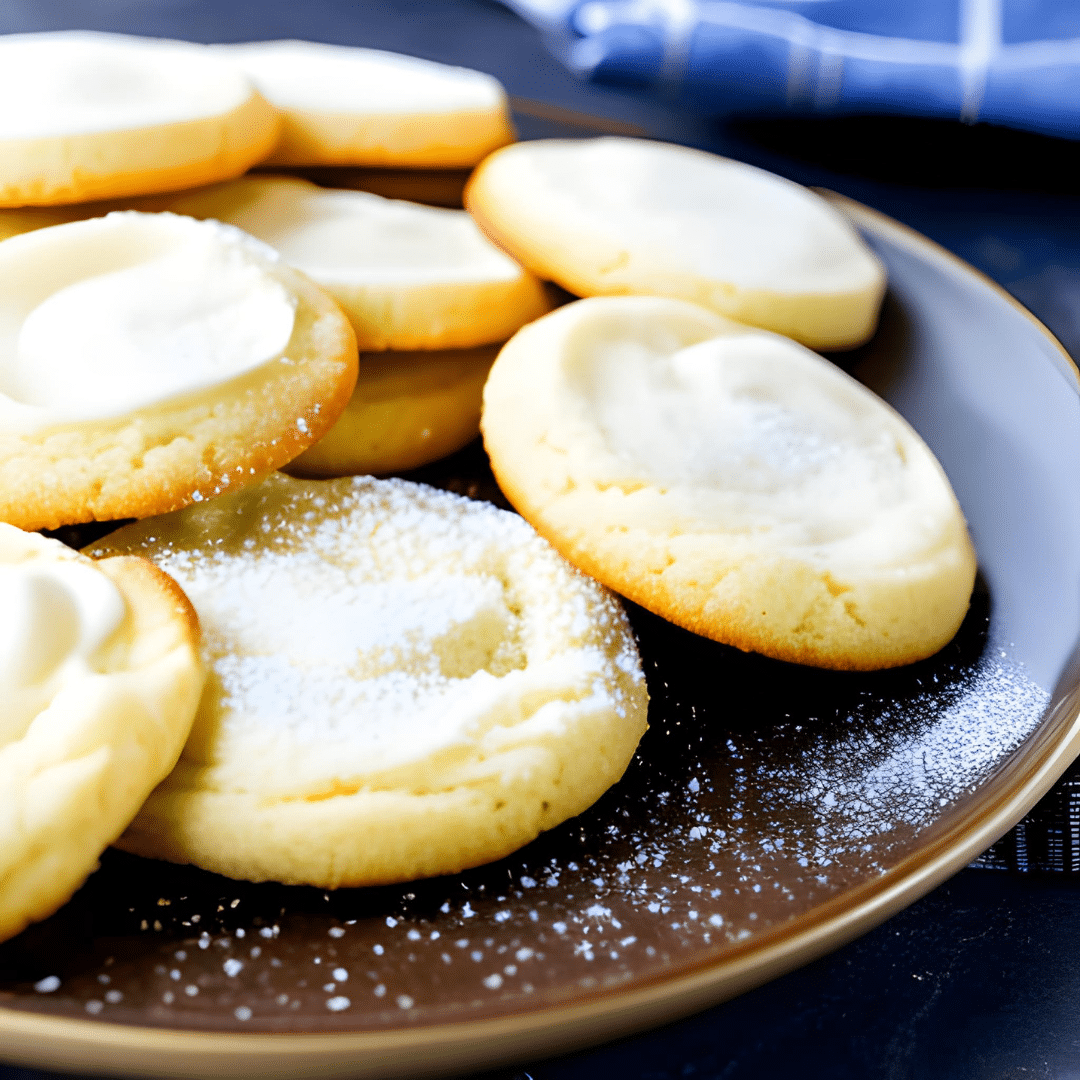
The earliest form of sugar cookies was called jumbles.
The history of sugar cookies dates to the 7th century in Persia. Cookies spread to Europe through the Muslim conquest of Spain. By the 14th century, they were common in all levels of society throughout Europe, from royal cuisine to street vendors.
The sugar cookie as we know it today was created in the 1700s by German Protestant settlers in the Nazareth colony of Pennsylvania. The cookies were baked in the shape of the state’s symbol, a keystone. These round, crumbly, buttery cookies came to be known as the Nazareth Cookie.
Sugar cookies were created by German Protestant settlers in the Nazareth colony of Pennsylvania in the 1700s. They were originally called Nazareth Cookies. The cookies were baked in the shape of the state’s symbol, a keystone.
The first real sugar cookie was created by Dutch settlers in New York in the 1700s. It was called a koekje and was the first cookie to use an alkaline leavener known as “pearl ash”.
The science behind sugar cookies includes the Maillard reaction, which is a chemical reaction between amino acids and reducing sugars. This reaction produces a rich, nutty, toasted flavor and browning. The higher the sugar content, the darker golden brown the surface appears.
Sugar also caramelizes and recrystallizes upon cooling to give the cookies a crispy texture.
The gluten in the flour forms a polymer mesh that works with the albumin protein from the egg white and the emulsifier lecithin from the egg yolk to form the dough and support the bubbles.
Baking soda and baking powder are leavening agents that make the cookies rise.
Here are some fun facts about sugar cookies:
- Sugar cookies are believed to have originated in the 1700s in Nazareth, Pennsylvania.
- They were originally called Nazareth Cookies by German Protestant settlers.
- The cookies were baked in the shape of a keystone, the state’s symbol.
- The settlers improved the recipe and introduced variants of the cookies.
- Sugar cookies have also been known as jumbles, crybabies, plunkets, gemmels, gimblettes, and cimbellines.
- Sugar cookies are made from sugar, flour, butter, eggs, vanilla, and baking powder or baking soda.
- The average American will eat 35,000 cookies in their lifetime.
- The world’s largest chocolate chip cookie weighed in at more than 40,000 pounds.
Americans eat over 2 billion cookies a year, or about 300 cookies per person. The average American eats 35,000 cookies in a lifetime.
Here is a sugar cookie recipe for you to Try:
Ingredients
- 2 ¾ cups all-purpose flour
- 1 teaspoon baking soda
- ½ teaspoon baking powder
- 1 cup softened butter
- 1 ½ cups white sugar
- 1 egg
- 1 teaspoon vanilla extract
Directions:
- Preheat the oven to 375 degrees F (190 degrees C).
- Stir flour, baking soda, and baking powder together in a small bowl.
- Beat sugar and butter together in a large bowl with an electric mixer until smooth. Beat in egg and vanilla. Gradually blend in flour mixture. Roll dough into walnut-sized balls and place 2 inches apart onto ungreased baking sheets.
- Bake in the preheated oven until edges are golden, 8 to 10 minutes. Cool on the baking sheets briefly before removing to a wire rack to cool completely.
Here are some tips for making sugar cookies:
- Mix the dry ingredients until they’re just incorporated.
- Chill the rolled-out dough in the refrigerator to prevent the cookies from over-spreading.
- Underbake the cookies slightly and allow them to finish baking on the hot baking sheet outside of the oven.
- Bake the cookies quickly in a hot oven at 375 degrees F.
You can also try these tips:
- Put the cut out cookies in the freezer for 10 minutes before baking.
- Brush each cookie with beaten egg white and top with a light coating of sugar before baking.
- Use the largest biscuit cutter you have and spin it while the cookies are warm straight out of the oven.
So why not take a moment today and have a couple of old-fashioned sugar cookies. We’d love to hear in the comments how you enjoyed them.
0 Comments