National Catfish Day

Jun 24, 2026 | Food Blog

Did you know B.B. King’s favorite food was catfish? He even had two songs featuring the dish; “Saturday Night Fish Fry” and “Catfish Blues (Fishin’ After Me).” Some have asked the question, “How long have people been eating catfish?”

In the past, scientists thought that Stone Age people depended mainly on land mammals for food. However, although these people did eat some mammals, new research finds that more than half of their diet was fish. But except for the bones of two catfish dated to about 1.8 million years ago at Olduvai Gorge in Tanzania, there has been scant evidence of catfish eating this early in human evolution.

Fossil records now reveal that about 1.95 million years ago, a group of early human ancestors assembled on the shores of an ancient lake or river in Kenya and gathered catfish and other aquatic animals from the shore and shallow water. Using stone tools, they deboned a catfish, eviscerated a turtle, and de-fleshed the foot of a crocodile.

So, it is safe to say that catfish has been part of the human diet for nearly as long as there have been people. The Mississippi Encyclopedia shares that Native Americans were the first to incorporate catfish in their diets in the South. When Americans of African and European descent migrated to North America, they also adopted the habit of eating catfish.

West Africa was the homeland of most Africans who were enslaved, and they brought their culinary traditions to America with them. During this time, people who were enslaved ate a variety of fish, but catfish was preferred because it was so easily found in Southern lakes and rivers. These enslaved people are credited as the inventors of fried catfish.

There are nearly 3,000 different species of catfish and over 30 just in the United States alone. The most commonly eaten species in the United States are the channel catfish and the blue catfish, both of which are common in the wild as well as farm raised.


Fun Facts about Catfish

  • They can be found on all continents except Antarctica.
  • Channel catfish can live up to forty years.
  • The common length for channel catfish is 22 inches with the longest maximum reported length at 52 inches.
  • The Mekong giant catfish is the official freshwater heavyweight champion of the world. According to the Guinness Book of Records, a nine-foot-long individual caught in northern Thailand in 2005 weighted an astounding 646 pounds, making it the largest exclusively freshwater fish ever recorded.
  • The greatest concentration of sensory organs on a catfish is located on their whiskers, also known as barbels.
  • Catfish develop up to four pairs of whiskers.
  • Some of the smallest species of catfish reach sexual maturity at only 1 cm (0.39 in) in length.


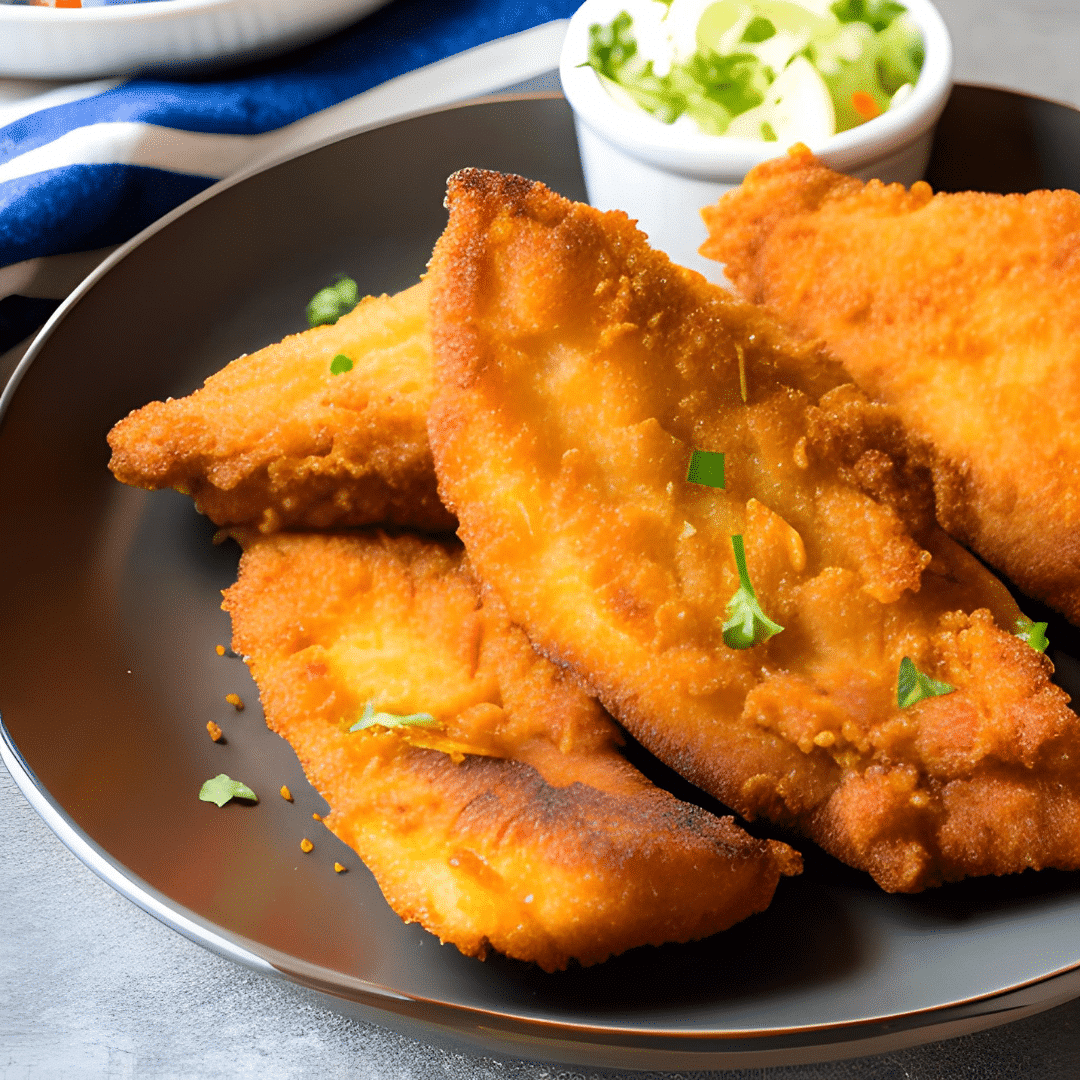
Catfish can be cooked in any number of ways, however, the most common cooking method for catfish is deep-frying. Catfish has a mild, sweet flavor and is less flaky and denser than other whitefish, allowing for a variety of cooking choices.


Traditional Southern Recipe for Fried Catfish

Ingredients

6 catfish filets

1 cup cornmeal

1½ tablespoons Cajun seasoning (we like Lawry’s brand)

1½ teaspoons garlic powder

½ teaspoon salt

½ teaspoon black pepper

6 tablespoons butter


Instructions

  1. In a flat dish (Like a baking dish or cake pan), combine cornmeal, Cajun seasoning, garlic powder, salt, and pepper. Whisk together to combine.
  2. Coat catfish in cornmeal mixture. Remove to a large plate or tray.
  3. Heat half of the butter in a large skillet over medium-high heat.
  4. When butter is hot, fry 2-3 fillets at a time for about 3 minutes on each side, or until fish flakes easily when tested with a fork.
  5. Repeat with remaining butter and catfish.
  6. Serve immediately.


Because enslaved people in America liked to eat fried catfish, many people think catfish is the “poor man’s fish,”. These people are completely wrong. Catfish is actually a delicious and healthy food item, enjoyed by all social classes. With one exception. All segments of Judaism consider catfish a non-kosher fish, as the Torah explicitly proscribes fish that do not have both fins and scales. Bummer.

Catfish is low in fat and high in protein, making it a great choice for a healthy meal, assuming you are not a practicing Jew. Let us know in the comments your favorite catfish memory if you have one.

0 Comments

Submit a Comment

Your email address will not be published. Required fields are marked *

Subscribe to our Blog to receive more content like this. Click here to subscribe.

Be sure to watch our shows on QVC+  or our YouTube channel

Give us your feedback on our Social Channels 

FacebookInstagramTik TokLinkedInPinterestTwitter  

National Strawberry Parfait Day

National Strawberry Parfait Day

So, today’s focus is on strawberry parfait. We have covered strawberries from many different angles here at Fork U Academy. But just like strawberries themselves, they never get old.

Strawberry parfait originated from France in the late 1800s and has since become a part of the European and American dessert culture.

The oldest recipe dates back to 1892. The French version of parfait consisted of custard made from sugar, eggs, cream, and syrup. In French, the word “parfait” means " something perfect" from Latin perfectus. The official definition of “parfait” is:

Read More

National Pralines Day

National Pralines Day

Pralines are a traditional Southern candy, and many Southern chefs and cooks are known for making them.

The origins of pralines can be traced back to France in the 17th century. It is believed that the cook of Marshal du Plessis-Praslin, Clement Lassagne, created the treat by coating whole almonds in caramelized sugar. It is believed that Lassagne created the praline by coating whole almonds in caramelized sugar, which is how the treat was originally made. The recipe has since evolved, and there are many variations of pralines today, including those made with pecans or other nuts.

The name "praline" is thought to have been derived from the name "Praslin". Pralines were brought to the United States by French settlers, particularly to New Orleans, where they became a popular treat in the city's cuisine. Today, pralines are enjoyed in various forms, including as a candy made with pecans or other nuts and as a filling in pastries.

Read More

We Love Pecan Sandy Cookies

We Love Pecan Sandy Cookies

Pecan Sandy Cookies are a classic dessert that has been enjoyed for generations. These delicious cookies are made with a buttery, shortbread-like dough that is studded with chopped pecans. They are typically rolled into small balls and then flattened slightly with a fork before baking. The result is a crisp, buttery cookie with a delicate nutty flavor that is perfect for enjoying with a cup of coffee or tea. Pecan Sandy Cookies are a great option for any occasion, from holiday parties to afternoon snacks, and are sure to be a crowd-pleaser.

The exact origin of Pecan Sandy cookies is unclear, but it is believed that they have been enjoyed in the United States for well over a century. Pecans are native to North America, and it is known that early settlers and indigenous peoples incorporated them into their baking. The first known recipe for Pecan Sandies was published in the 1920s, and the cookies quickly became a popular treat across the country.

Read More

Chocolate Eclairs: The History, Making, And consuming Of A French Classic

Chocolate Eclairs: The History, Making, And consuming Of A French Classic

The eclair is a French pastry that has been around since the early 19th century. It is made from a dough that is filled with cream and chocolate, and then baked until it is crisp. The word “eclair” comes from the French word for “flash of lightning”, which is fitting given its shape.

Eclairs were traditionally made with a choux pastry dough, but in recent years there have been many different variations of the eclair. Some of the most popular variations include the chocolate eclair, the strawberry eclair, and the coffee eclair.

Read More

National Peaches and Cream Day

National Peaches and Cream Day

National Peaches and Cream Day is celebrated annually in the United States. This day commemorates the day in 1869 when druggist Thomas H. Brewer mixed together the first batch of the delicious fruit combo of juicy peaches and creamy milk or cream. He called it "Cream Peach".
National Peaches and Cream Day is thought to have started in the early 1900s as a way to promote the dairy and fruit industries. Whatever the reason for its creation, we are sure glad that this day exists so that we can all enjoy some peach-y goodness!

Read More

National Vanilla Milkshake Day

National Vanilla Milkshake Day

National Vanilla Milkshake Day is celebrated on June 20 and it's all about celebrating the original vanilla milkshake. It's made by blending milk, ice cream, and vanilla for a classic style beverage.

The vanilla milkshake has an interesting history. In 1885, the term “milkshake” showed up in print for the first time. The word milkshake combines the word 'milk', from the Old English 'milc' or 'meoluc', and the word 'shake', from the Old English 'sceacan' meaning 'move quickly back and forth'. The concoction of cream, eggs, and whiskey was often served with other alcoholic tonics such as lemonades and soda waters. Who has been holding out on this recipe? Don’t worry, we have it for you here:

Read More

National Martini Day

National Martini Day

Today is National Martini Day. National Martini Day is thought to have started in the 1940s, when the popularity of the martini drink began to rise. It's likely that people began celebrating the day as a way to honor the classic cocktail.

The martini is believed to have originated in the United States in the late 1800s by a bartender in either New York or San Francisco, however no one is certain. It was created by mixing gin and vermouth, an Italian fortified wine. The earliest known martini recipe was found in the 1888 book, "The Bartender's Guide" by Jerry Thomas. The recipe called for one-third gin and two-thirds French vermouth with a dash of orange bitters.

Read More

International Picnic Day

International Picnic Day

Today is International Picnic Day. International Picnic Day is believed to have originated in the late 18th century when an open-air meal enjoyed by friends became popular among the upper classes in France. It is thought to have been started by King Louis XVI and Marie Antoinette. The trend quickly spread throughout Europe, and eventually around the world. Today, many countries celebrate International Picnic Day to commemorate this long-standing tradition.

Picnics originated in the late 1700s as a way for the upper classes in Europe to enjoy an outdoor meal with friends. These gatherings typically featured elaborate arrangements of food and décor, often with musicians or performers to entertain the guests. Picnics were a way to socialize and enjoy nature and good company.

Read More

National Apple Strudel Day

National Apple Strudel Day

Today is National Apple Strudel Day. National Apple Strudel Day was started by a group of pastry chefs in Austria in the late 1990s. They wanted to honor the country's traditional food, and they decided to dedicate a day to the celebration of the iconic dessert. The chefs chose this day, and the holiday has been celebrated ever since.

Strudel has been a staple of Austrian cuisine for centuries, and it remains a favorite today. The history of apple strudel dates back to the 16th century, when it became popular in Austria, Germany, and Hungary. The traditional strudel is filled with apples, raisins, cinnamon, and sugar and can be served as a dessert or a snack.

Read More

National Lobster Day

National Lobster Day

National Lobster Day was started by the Lobster Institute at the University of Maine in 1974. The Lobster Institute is a non-profit organization dedicated to research, education, and outreach of lobster and the lobster industry. The day was created to celebrate the lobster industry and the iconic seafood.

And as fate would have it, National Lobster Day is observed during the peak of the lobster season. In the United States, the peak of the season usually starts in late May and runs through late October or early November.

Read More

Pin It on Pinterest