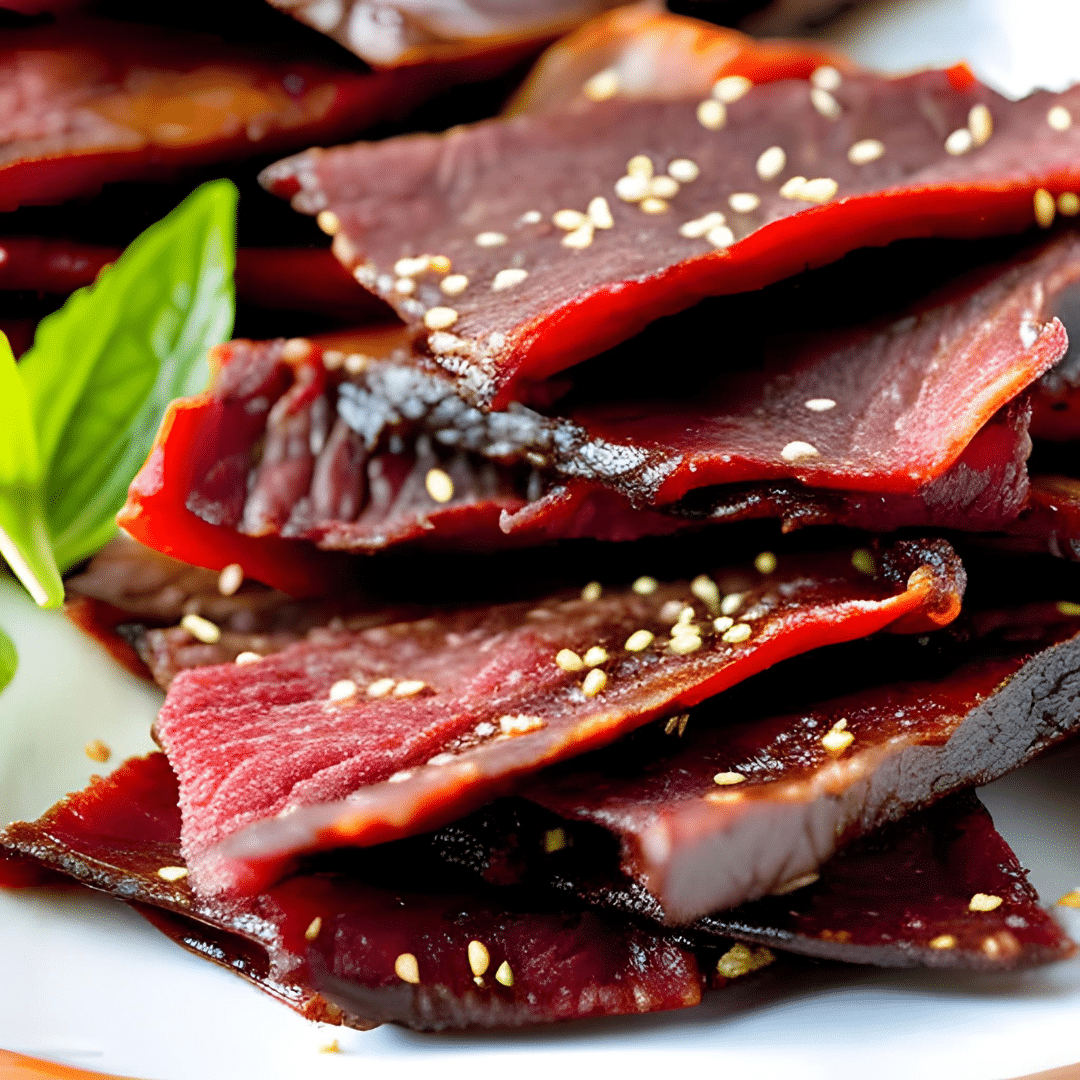
National Jerky Day

Jun 11, 2026 | Food Blog

Today is National Jerky Day.

This holiday was created by the National Jerky Association in order to celebrate the popular snack. The goal was to bring together jerky lovers everywhere to celebrate the nutritious and delicious snack.

Jerky has been around since ancient times. It was first made by Native Americans and was used as a way to preserve meat. Native Americans would dry strips of meat over a fire or in the sun to make jerky. The meat would be cut into thin strips and then salted and spiced before being left to dry. This process allowed them to preserve the meat and keep it edible for long periods of time. As the meat dried, it would become tough and chewy.

The origin of the word “jerky” is believed to come from the Quechua language of the Incas. The word “ch’arki” translates to “dried, salted meat,” which is thought to be the origin of the term. It’s also possible that the word originated from the Spanish word “charqui,” which means “dried meat,” or the French word “jerké,” which means “dried meat strips.”. Regardless, it is still known as “jerky.” today.

The oldest known recipe for jerky comes from the Incan Empire and was passed down orally through generations. The recipe calls for thin strips of meat, which are salted and then placed in the sun to dry. The meat is then spiced with herbs and spices, such as oregano, garlic, and cumin. The final step is to smoke the jerky over a fire, which gives it its unique flavor and texture.

Jerky was later popularized by European settlers and was brought to North America in the 1600s. It was made using the same process as Native Americans, with thin strips of meat being salted and spiced before being left to dry. The settlers often used bison, deer, and other game animals to make the jerky, and it quickly became a popular snack. Jerky was a great way to preserve meat for long periods of time, and it was often used by settlers on their travels.

Jerky has since become a popular snack worldwide, with many different variations available. It is often made with beef, turkey, or fish and is usually seasoned with spices and herbs. Today, there are hundreds of different kinds of jerky available. There are traditional beef and turkey jerky, as well as jerky made from other types of meat such as chicken, salmon, and even alligator. Jerky can also be flavored with sweet, spicy, and savory spices, as well as marinades and sauces. There are even vegetarian and vegan jerky options available.

In the United States, approximately 1.9 billion pounds of jerky is consumed each year. This translates to about 6 pounds of jerky per person. Globally, the jerky market is estimated to be worth around $7 billion.

There are a few people who are famous for making jerky. One such person is Don Wirtz, who is the founder of the National Jerky Association. He is responsible for creating National Jerky Day. Another famous jerky maker is Chef Alton Brown, who has been making jerky since the mid-1990s. He is known for his unique recipes, such as his Chipotle Lime Jerky. Finally, Bill Morley is another famous jerky maker, who is best known for his Barbecue Jerky.


Fun Facts About Jerky

  • Jerky is the oldest form of processed meat in the world.


  • The Incas used to make jerky by air-drying strips of meat in the sun.
  • In the late 1800s, jerky was referred to as “dried beef” and was used by cowboys on long cattle drives.
  • The term “jerky” was first commercially used in the United States in the 1950s.
  • The most popular type of jerky in the United States is beef jerky.
  • In 2018, the world’s largest jerky was made in the United Kingdom, weighing in at a whopping 5.5 tons.


Jerky Recipe

Ingredients:

  • 2 lbs of lean beef, cut into thin strips
  • 3 teaspoons of salt
  • 1 teaspoon of black pepper
  • 1 teaspoon of garlic powder
  • 1 teaspoon of onion powder
  • 1 teaspoon of smoked paprika
  • 1 teaspoon of oregano
  • 1 teaspoon of cumin
  • 1 teaspoon of chili powder


Instructions:

  1. Preheat the oven to 175 degrees.
  2. Place the beef strips in a bowl and season with the salt, pepper, garlic powder, onion powder, smoked paprika, oregano, cumin, and chili powder.
  3. Mix the ingredients together until the beef is evenly coated.
  4. Place the strips on a baking sheet lined with parchment paper.
  5. Bake for 2-4 hours, or until the beef strips are dry and become chewy.
  6. Allow to cool before serving. Enjoy!


National Jerky Day is celebrated by jerky lovers all over the world. So whether your jerky is made with beef, turkey, or fish we encourage you to grab some today. Let us know in the comments what you r favorite kind of jerky is.


0 Comments

Submit a Comment

Your email address will not be published. Required fields are marked *

Subscribe to our Blog to receive more content like this. Click here to subscribe.

Be sure to watch our shows on QVC+  or our YouTube channel

Give us your feedback on our Social Channels 

FacebookInstagramTik TokLinkedInPinterestTwitter  

National Filet Mignon Day

National Filet Mignon Day

Today’s Spotlight is on Filet Mignon.
Filet mignon is a cut of beef from the small end of the tenderloin, or psoas major, which is located near the spine of the cow. The tenderloin runs along both sides of the spine and is usually butchered as two long snake-shaped cuts of meat. The tenderloin is sometimes sold whole. The tenderloin is the most well-known muscle on a cow and is also the most tender. Filet mignon is a lean cut of beef, which means you'll enjoy a fork-tender steak without much fat or connective tissue.
Filet mignon is one of the most tender and milder cuts of steak, making it a favorite among steak lovers. It's also one of the most expensive cuts of steak, due to its prized texture and that it's only about 2 to 3% of the total animal.

Read More

National Kool-Aid Day

National Kool-Aid Day

Today’s spotlight is on the flavored water treat known as Kool-Aid.
Kool-Aid is an American brand of flavored drink mix. It's typically made with sugar, water, and artificial colorings. The powder form was created in 1927 by Edwin Perkins based on a liquid concentrate called Fruit Smack. Kool-Aid is owned by Kraft Heinz, based in Chicago, Illinois.

Read More

National Smores Day

National Smores Day

Today’s spotlight is on a fireside favorite – S’mores.
S'mores are a confection made of toasted marshmallows and chocolate sandwiched between two graham crackers. They are a traditional camping snack that are popular in the United States and Canada. S'mores are traditionally cooked over a campfire and warmed over an open flame until melted and gooey.

Read More

National Rice Pudding Day

National Rice Pudding Day

Today’s Spotlight is on Rice Pudding.
Rice pudding is a creamy mixture of rice and milk and other ingredients such as cinnamon, vanilla and raisins. It's cooked until it's thick and soft. It can be sweet or savory. Variants are used for either desserts or dinners. When used as a dessert, it is commonly combined with a sweetener such as sugar. American rice pudding often uses leftover rice and can be baked in the oven or cooked on the stove.

Read More

Sneak Some Zucchini onto Your Neighbor’s Porch Day

Sneak Some Zucchini onto Your Neighbor’s Porch Day

Today’s Spotlight is on Zucchini (and your neighbors)!
There are a lot of odd holidays but this one has got to be one of my favorites. Sneak Some Zucchini Onto Your Neighbor's Porch Day is celebrated on August 8th every year. The holiday encourages people to sneak their extra zucchinis onto the porches of unsuspecting community members. The day celebrates the bounty of the summer's zucchini harvest by demonstrating generosity, desperation, and cunning.

Read More

Raspberries and Cream Day

Raspberries and Cream Day

Today’s food spotlight is aimed at Raspberries and Cream.
Raspberries and cream is a simple treat that combines fresh, ripe berries with sweetened, hand-whipped cream. It's a good option for anyone with a sweet tooth.
Raspberries are the fruit of several shrubs in the rose family. They are usually red but can also be black or yellow. When ripe, they separate from the receptacle and are rounder and smaller than blackberries. The name "raspberry" may have come from "raspise", which means "a sweet rose-colored wine". The name may also be related to the Old English word "rasp", which means "rough berry".

Read More

National Root Beer Float Day

National Root Beer Float Day

Today’s spotlight is on Root Beer Floats!
The root beer float is traditionally made with vanilla ice cream and root beer, but it can also be made with other ice cream flavors. It's sometimes referred to by the nicknames “brown cow” or “black cow”. Root beer floats were a popular dessert drink in 1950s diners.

Read More

Oyster Day

Oyster Day

Today’s food spotlight is on Oysters.
Oysters are a type of bivalve, which are marine and freshwater mollusks with long, flat bodies and shells made up of two hinged parts. Oysters are plump, mineral rich, saltwater mollusks that live at the bottom of shallow coastal waters, often adhering to rocks or other objects. They use their gills and cilia to process water and feed. Oysters have a small heart and internal organs, but no central nervous system.

Read More

Chocolate Chip Cookie Day

Chocolate Chip Cookie Day

Today’s spotlight is on Chocolate Chip Cookies #yum

If you have been living under a rock somewhere, a chocolate chip cookie is a drop cookie that features chocolate chips or chocolate morsels as its distinguishing ingredient. Chocolate chip cookies originated in the United States in 1938, when Ruth Graves Wakefield chopped up a Nestlé semi-sweet chocolate bar and added the chopped chocolate to a cookie recipe.

The original name of the chocolate chip cookie was "Toll House Crunch Cookie". The recipe was created by Ruth Wakefield, who ran the Toll House restaurant in Whitman, Massachusetts. Wakefield included the cookie in her 1938 cookbook, Toll House “Tried and True" Recipes. The cookie was intended to accompany ice cream.

Read More

Grab Some Nuts Day

Grab Some Nuts Day

Today is Grab Some Nuts Day.
All of this evidence shows that nuts have been a staple in the human diet since the beginning of history. The oldest walnut remains were discovered in Iraq, and they are believed to be from 50,000 B.C. The Greeks and Romans were fond of the walnut, and they were considered food for Gods by early Romans.

Read More

Pin It on Pinterest