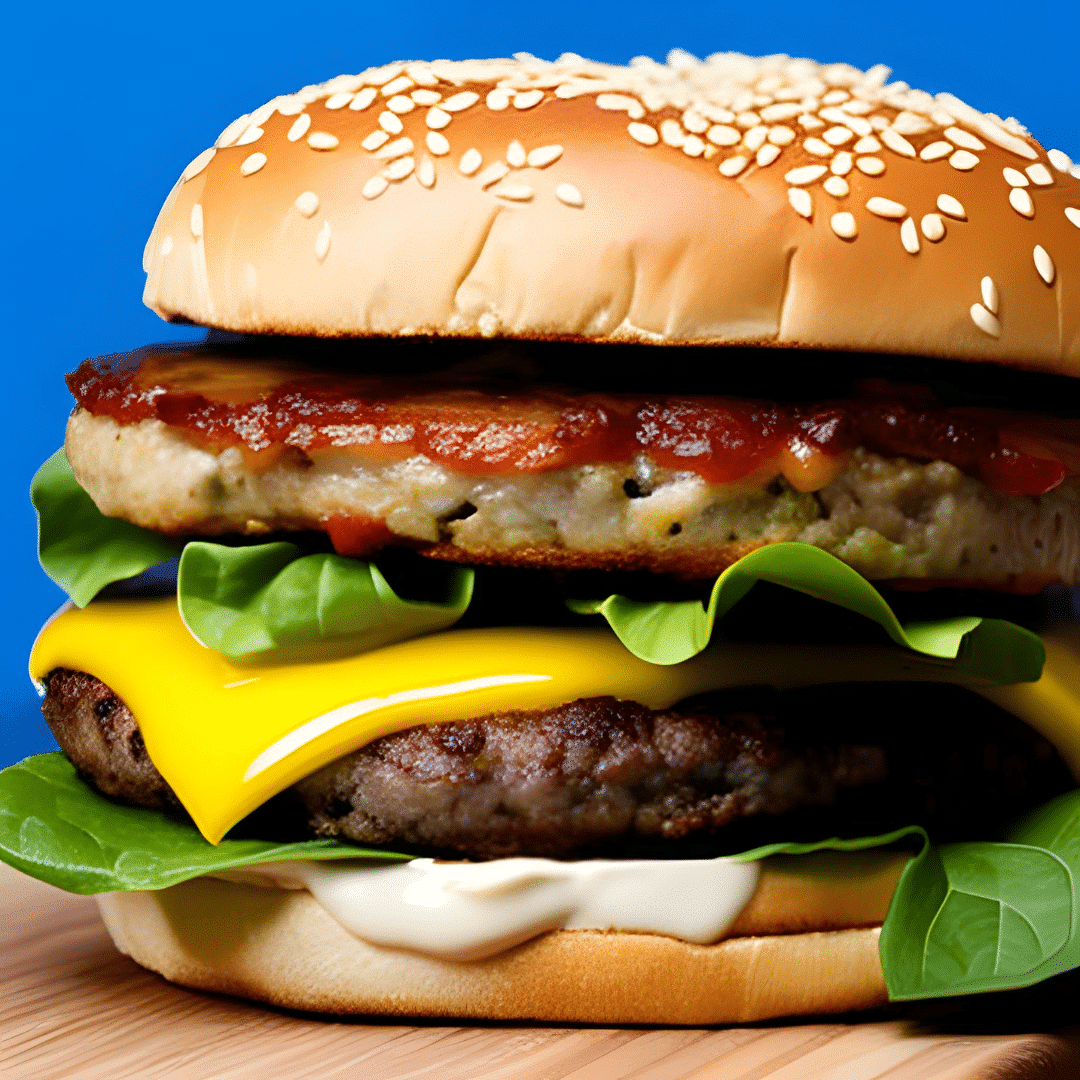
National Hamburger Day

Jul 27, 2026 | Food Blog

Today’s food spotlight is on the Hamburger.

There’s some controversy over the origin of the hamburger because its two basic ingredients, bread and beef, had been prepared and consumed separately for many years before they were combined. Some have pointed to a recipe for “Hamburgh sausages” on toasted bread, published in The Art of Cookery Made Plain and Easy by Hannah Glasse in 1747. White Castle traces the origin of the hamburger to Hamburg, Germany, with its invention by Otto Kuase. According to legend, Louis Lassen invented the burger in 1900 at his small restaurant in New Haven, Connecticut. He placed a beef patty between two slices of bread and added cheese and condiments, creating the first “hamburger sandwich”.

The term “hamburger” comes from Hamburg in Germany, where a minced beef style dish was first created. Before it was called a hamburger it had many names including; “chopped beef”, hamburger steak, hamburger Rundstück and liberty sandwiches.

Hamburgers were called “liberty sandwiches” during World War I because of anti-German sentiment in the United States. Many Americans believed that hamburgers came from Germany, and antipathy towards anything German was at an all-time high during the war. To detach their favorite junk food from any German identity, Americans used to call them “liberty sandwiches”.

Here are some details about the history of the hamburger:

  • White Castle traces the origin of the hamburger to Hamburg, Germany, with its invention by Otto Kuase
  • “Hamburger Charlie” Nagreen is credited with inventing the hamburger at the Seymour Fair in Wisconsin in 1885
  • Oscar Weber Bilby made the first true hamburger by serving a patty sandwiched within the first hamburger bun in 1891.
  • Walter Anderson made the first hamburger bun as it exists today in 1916.
  • The name “Hamburg steak” was shortened to simply “hamburger” over time.

Frankly, it hardly matters to me. I just love hamburgers, even though I don’t know who to thank.


The First Hamburger Restaurant

Louis’ Lunch in New Haven, Connecticut claims to be the first fast food restaurant to serve hamburgers and the oldest hamburger restaurant in the United States. The restaurant opened in 1895 as a small lunch wagon and was one of the first places in the U.S. to serve steak sandwiches.

The Liberty of Congress has recognized Louis’ Lunch as the birthplace of the hamburger sandwich. The restaurant has been featured in many print and television spots, including The Travel Channel, The Food Network, Zagat, and Food and Wine Magazine.

One popular story goes that in 1900, a customer asked for something he could eat on the go, so owner Louis Lassen improvised by giving him a patty of the restaurant’s steak trimmings between two pieces of toast.


Here are some fun facts about hamburgers:

  • The hamburger became popular in the US in 1904 after being introduced at the St. Louis World’s Fair
  • Americans eat about 50 billion hamburgers a year.
  • The average American eats a hamburger three times a week.
  • Nearly 60% of all sandwiches sold worldwide are hamburgers.
  • The name “hamburger” comes from the seaport town of Hamburg, Germany
  • The first burger was invented in 1900 by Louis Lassen at his small restaurant in New Haven, Connecticut
  • Lassen’s burgers are still served at Louis Lunch, a small hamburger shack in New Haven
  • The “Hamburger Hall of Fame” is located in Seymour, Wisconsin
  • White Castle was the first hamburger chain, founded in Wichita, Kansas
  • If you put all the hamburgers Americans eat in a year in a straight line, they would circle the earth 32 times.


Here Is a Hamburger Recipe For You To Try:

Ingredients:

  • 1 ½ pounds ground chuck (80/20)
  • 1 1/2 teaspoons ground black pepper
  • 1 teaspoon salt
  • 2 teaspoon paprika
  • 1/2 teaspoon brown sugar
  • 1/4 teaspoon garlic powder
  • 1/4 teaspoon onion powder
  • 1/4 teaspoon cayenne pepper

Toppings:

  • 6 buns , toasted, if desired
  • 6 slices cheddar cheese , or your favorite cheese
  • 6 Lettuce leaves
  • 1 Beefsteak tomato , sliced
  • ½ of a Red or white onion , thinly sliced
  • 6 Pickle slices


Instructions:

  1. Make burger seasoning by combining all spices in a bowl. Set aside.


  1. Divide ground chuck into 6 equal portions and gently from into ½ inch thick patties that are wider than the burger buns (as they will shrink). Use your thumb to press an indentation into the center of each patty. Cover and set aside.
  2. Preheat grill to medium high heat. Just before cooking, sprinkle seasoning over the patties, then place on hot grill, indent-side up. Close grill lid and cook for 3-4 minutes, until the bottom of the burger is seared and juices are accumulating on top of the burger. Flip and cook an additional 3-4 minutes or until the beef reaches 160 degrees F.
  3. Place cheese on burgers during the last minute of cooking. Remove to a plate and allow to rest for a few minutes before serving in a bun, with toppings.


National Hamburger Day is celebrated annually. This day celebrates America’s most iconic food, the hamburger. Americans eat over 50 billion burgers a year, so it’s only fitting to set aside a whole day for these special sandwiches. Many restaurants celebrate the occasion with discounts and freebies on hamburgers. National Hamburger Day.

We’d love to hear about your favorite hamburger.

0 Comments

Submit a Comment

Your email address will not be published. Required fields are marked *

Subscribe to our Blog to receive more content like this. Click here to subscribe.

Be sure to watch our shows on QVC+  or our YouTube channel

Give us your feedback on our Social Channels 

FacebookInstagramTik TokLinkedInPinterestTwitter  

National Lasagna Day

National Lasagna Day

Today’s spotlight is on Lasagna.
Lasagna is considered one of the oldest pasta dishes in Italian cuisine. Lasagna has a long history and cultural significance in Italy and other countries. It symbolizes comfort, tradition, and family and is often served as a shared meal at the dinner table. Initially, lasagna was originally reserved for special events and holidays.

Read More

National Chicken Wing Day

National Chicken Wing Day

Today’s Spotlight is on Chicken Wings.

Chicken wings were invented in 1964 at the Anchor Bar in Buffalo, New York. The bar's co-owner, Teressa Bellissimo, cooked leftover wings in hot sauce as a late-night snack for her son and his friends. The story goes that Bellissimo mistakenly ordered a case of chicken wings when she meant to order chicken necks, which her husband used to make the Anchor Inn's famous spaghetti sauce. Bellissimo covered the wings in her own special sauce and served them with a side of blue cheese and celery.

Read More

National Creme Brûlée Day

National Creme Brûlée Day

Today’s Spotlight is on Crème Brûlée.
Crème brûlée is a custard dessert with a hard caramel top that's rich, creamy, and delicious. It has a slightly caramelized and burnt taste, with a combination of light and airy vanilla custards, the nutty flavor of caramelized sugar, and a sweet and bitter burnt taste. The caramel topping adds a slight burnt sugar flavor and crunch to the dessert.
Some say the contrast between the soft and silky inside and the crackly brown top makes crème brûlée such a great dessert. It's also simple to make, without a long list of ingredients or complex processes.

Read More

Bagelfest Day

Bagelfest Day

Today’s Spotlight in on Bagels.
National Bagelfest Day is celebrated on July 26th each year to recognize the tasty and light bread that is the bagel. The holiday was started in 1986 by Murray Lender, the owner of Lender's Bagels. The first festival was held in Mattoon, Illinois to celebrate the 50th anniversary of Lender's Bagels, a popular brand that has been produced in Mattoon since 1960. The festival became a multi-day event with music, rides, a parade, and a bagel breakfast.

Read More

National Hot Fudge Sundae Day

National Hot Fudge Sundae Day

Today’s spotlight is on the Hot Fudge Sundae.
The prevailing theory is that the first hot fudge sundae was created in Los Angeles, California in 1906. Clarence Clifton Brown, the owner of C.C. Brown's Ice Cream Shop in Los Angeles, is thought to have created the hot and cold concoction. Brown was a candy maker who experimented with several hot fudge recipes before finding the right formula. He opened his ice cream parlor on Hollywood Boulevard in downtown Los Angeles. He had the idea to create a topping that would slowly melt the cold ice cream.
A hot fudge sundae is ice cream topped with hot fudge sprinkles, nuts, whipped cream and a cherry on top.

Read More

National Tequila Day

National Tequila Day

Today’s spotlight is on Tequila!

A drink similar to tequila likely originated around 1000 B.C. among the Olmec people in what is now Southeastern Mexico. Tequila first came into existence between 250 and 300 A.D. when the Aztec Indians produced a fermented agave juice of the agave for their ceremonial wine, "plaque". The liquid was important to Aztec culture because they worshipped two gods, Mayahuel (the goddess of the Maguey) and her husband Patecatl, the god of pulque. The earliest version of tequila was known as pulque and was made from the fermented sap of the agave plant by the Aztec civilization in what is now northern Mexico. Pulque was a milky liquid that was sacred in Aztec culture and often linked with feasting and ritual ceremonies

Read More

National Vanilla Ice Cream Day

National Vanilla Ice Cream Day

Today’s spotlight is on vanilla ice cream.
According to the International Dairy Foods Association, chocolate was the first ice cream flavor invented, and vanilla is the most popular ice cream flavor in the world. The first documented ice cream recipe was by Englishwoman Lady Anne Fanshawe in 1665, which suggested flavoring the "icy cream" with orange blossom water, mace, or ambergris, which was enjoyed by the Greek conqueror Alexander the Great.

Read More

Fortune Cookie Day

Fortune Cookie Day

Today’s spotlight is on Fortune Cookies.

Fortune cookies can symbolize luck, wisdom, fate, and the unknown. The message inside the cookie is for you, and you picked that cookie out of all the others. Fortune cookies are a dessert served primarily in Chinese restaurants. They have a distinctive shape and a hidden paper slip with a fortune inscribed on it.

Some say that fortune cookies can predict what will happen in the future. However, others say that fortune cookies don't have special powers of foresight. If a fortune comes true, it's just coincidence.

Read More

National Daiquiri Day

National Daiquiri Day

Today’s spotlight is on the Daiquiri. Love them or hate them, today is their day.
The daiquiri is a cocktail made with rum, lime juice, and sugar. It is believed to have originated in in 1898 in the town of Daiquiri on the southeastern tip of Cuba near Santiago. Thus, the name comes from the beach where the first Daiquiri was created.

Read More

National Caviar Day

National Caviar Day

Today’s foods spotlight is on Caviar.

Caviar is made from the unfertilized fish eggs, or roe, of the female sturgeon. Sturgeon is a prehistoric species native to rivers and lakes in eastern Europe and central Asia. Only female sturgeon are used for caviar production because only female sturgeon produce roe for human consumption.

Traditionally, the term caviar referred only to the roe from wild sturgeon caught in the Caspian and Black Seas. This was the most prized type of caviar. However, overfishing in the region in the 1980s and '90s has depleted wild sturgeon populations, so caviar is now produced around the world. Farm-produced caviar has become popular.

Other forms of fish eggs, such as salmon, trout, and flying fish, are "roe" and are a popular and affordable alternative to caviar.

Read More

Pin It on Pinterest