
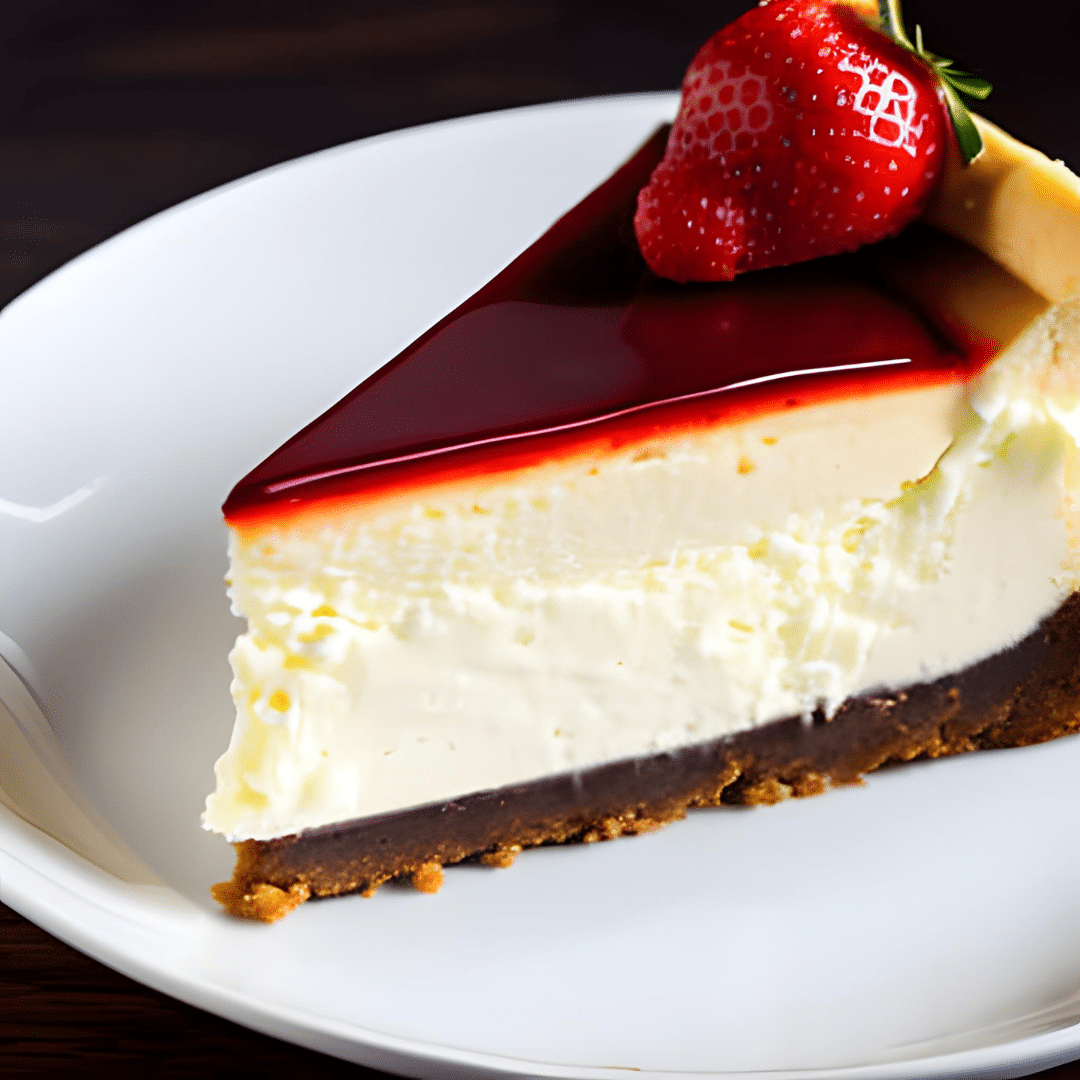
Today’s spotlight is on Cheesecake!
The origin of cheesecake is believed to be the island of Samos in Greece. Anthropologists discovered cheese molds there that date back to around 2,000 BC. The first known cheesecakes were made in the fifth century BC by the ancient Greeks. The cheesecakes were made with wheat flour, pounded cheese, and honey. Small cheesecakes were served to athletes at the first Olympic games in 776 BC.
The ancient Greeks considered cakes made with cheese to be a source of strength. They fed cheesecake to Greek athletes to aid their performance, and it was served at the first Olympic Games in 776 BCE. Cheesecakes were also commonly served at Greek weddings as a gesture of hospitality.
The first written recipe for cheesecake came about in 230 AD thanks to the Greek writer Athenaeus. After the Romans conquered Greece, they made their own variation known as “libuma”. With the expansion of the Roman empire, cheesecake began to make its way across Europe.
In 1872, William Lawrence from Chester, New York, developed the modern version of cheesecake that we know today. The typical American cheesecake is made with heavy cream or sour cream and has a rich, dense, and smooth consistency.
Cheesecake is called cheesecake because it’s a dessert made with cheese as the main ingredient. Cream cheese is the most common type of cheese used in cheesecake, but other soft, sweetened cheeses can be used, such as mascarpone, cottage cheese, or ricotta.
Cheesecake is generally unleavened and usually has a crust, whether that crust is baked or not. Most baked cheesecakes use a custard base for filling comprised of milk, eggs, sugar, salt, and vanilla or other flavorings.
Cheesecake was already a popular dish in ancient Greece. With the Roman conquest of Greece, the secret fell into Roman hands. The Roman name for this type of cake (derived from the Greek term) became “placenta”. Placenta was more like a cheesecake, baked on a pastry base, or sometimes inside a pastry case. They were also called “libum” by the Romans and were often used as an offering at their temples to their gods.
The term “cheesecake” originated in Ancient Greece, where cheesecake included some type of cheese as the main ingredient. The name has stuck since then.
But beyond the dessert, cheesecake has another meaning. “Cheesecake” is an old-fashioned slang term for a sexy, attractive woman. It’s also used to describe photographs of sexually attractive young women wearing very few clothes, or the women who appear in such photographs.
Here are some fun facts about cheesecake:
- Cheesecakes are almost 2000 years old
- “American” cheesecake wasn’t invented until the late 1800s.
- There are at least 11 different types of cheesecakes.
- Cheesecake isn’t actually a cake.
- It’s been eaten all over the world for hundreds of years.
- The ancient Greeks used the simple ingredients of flour, wheat, honey and cheese to make their cheesecakes.
- Greek brides and grooms were also known to use cheesecake as a wedding cake.
- Credit for the creation of the New York style cheesecake is bestowed upon Arnold Reuben
- New York dairyman William Lawrence accidentally invented cream cheese in 1872
- You can experiment with endless flavor combinations, from classic strawberry cheesecake to more creative flavors like pumpkin spice or key lime.
Cheesecake is considered a cake because it is made from a batter and baked. The name “cheesecake” stems from the Old Norse word “kaka” and is related to the German word for cake, “kuchen”. Cheesecake was originally a cake or tart containing cheese, and later one made with sweetened soft curds.
The name “cheesecake” is misleading because it often suggests that it is a type of cake, when in fact, it isn’t. The name most likely comes from the fact that it rises above the crust instead of staying level with the pastry, like a cake does. Bottom line, the shape of a cheesecake is why most people think of it as a cake.
Some argue that baked cheesecake is a type of cake purely because it is made using a type of batter that is then baked. Others argue that cheesecake is a pie as it often has a type of crust filled.
Here is a cheesecake recipe for you to try:
Crust Ingredients:
- 1 1/2 cups (150g) graham cracker crumbs (about 10 whole graham crackers, crushed)
- 1/4 cup (28g) confectioners’ sugar
- 6 tablespoons (85g) butter, melted
- 1/8 teaspoon salt
Filling Ingredients:
- two 8-ounce packages (452g) cream cheese, at room temperature
- 2/3 cup (133g) granulated sugar
- 2 large eggs, at room temperature
- 1 teaspoon King Arthur Pure Vanilla Extract
Instructions:
- Select a pie pan whose inside top dimension is at least 9″, and whose height is at least 1 1/4″. Preheat the oven to 350°F.
- To make the crust: Stir together all of the crust ingredients, mixing until thoroughly combined.
- Press the crumbs into the bottom and up the sides of the pie pan, making a thicker layer on the bottom than on the sides.
- To make the filling: Mix together the room-temperature cream cheese and sugar until smooth. Mix in the eggs and vanilla, again mixing until smooth. To avoid beating too much air into the batter, use a mixer set at low-medium speed. To avoid lumps, make sure the cream cheese is softened, and/or at room temperature.
- Set the pie pan onto a baking sheet, if desired; this makes it easier to transport in and out of the oven, and also protects the bottom of the crust from any potential scorching. Pour the filling into the crust.
- To bake the cheesecake: Place the cheesecake in the oven. Bake it for 20 minutes, then add a crust shield; or shield the crust with strips of aluminum foil. Bake for an additional 10 minutes (for a total of about 30 minutes). A digital thermometer inserted into the filling 1″ from the edge should read between 165°F and 170°F; the filling won’t look entirely set in the center.
- Remove the cheesecake from the oven and set it on a rack to cool. Once the cake is cool, refrigerate it, covered, until you’re ready to serve it.
- Serve cheesecake in wedges, with fresh fruit if desired.
- Storage information: Store any leftover cheesecake in the refrigerator for several days; freeze for longer storage.
Here are some statistics about cheesecake consumption:
- Cheesecake is one of America’s favorite desserts, with annual sales exceeding $400 million.
- The Cheesecake Factory sells almost 35 million slices of cheesecake every year.
- The Cheesecake Factory’s revenue in 2022 was $3.30 billion.
- Based on average weekly sales, The Cheesecake Factory makes nearly $12 million per unit on an annualized basis
- There are 14 basic types of cheesecake, including variations common in particular countries or regions of the world.
National Cheesecake Day is celebrated annually on July 30th. It’s a day to enjoy a slice of one of America’s favorite desserts, which comes in many varieties. You can celebrate by ordering a cheesecake with your favorite topping or making your own to try unique flavors or add your own toppings.
The original National Cheesecake Day was conceived and first celebrated in 1985, but it didn’t really take off until 2001 when the power of the internet helped its cause. It then gained traction and became a sensation that is now celebrated all over the world.
Let us know in the comments your favorite cheesecake and where you get it from.
0 Comments