
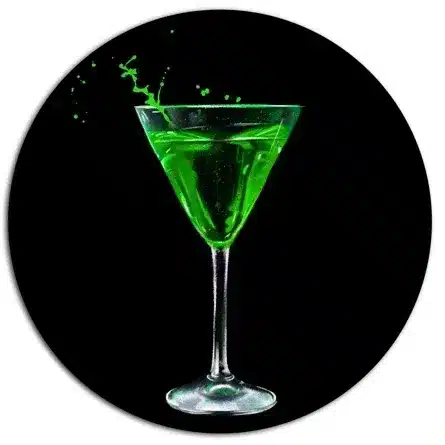
National Absinthe Day is celebrated on March 5th every year to celebrate the unique and complex spirit. Absinthe is an anise-flavored spirit that has a long and storied history. While it has been banned in many countries due to its purported hallucinogenic effects, its modern popularity has surged in recent years. Absinthe is named after the plant from which it is made, Artemisia absinthium (also known as wormwood). The word absinthium is derived from the Ancient Greek word for “undrinkable,” and the name of the drink itself is thought to be derived from the French pronunciation of the Greek word.
Absinthe is made with a variety of herbs and spices, including wormwood, anise, fennel, and other botanicals. It is often enjoyed with a ritualistic preparation, where a sugar cube is placed on a slotted spoon above a glass of absinthe and water is slowly dripped over the sugar cube, creating a delicate louche effect. This ritual has captivated imbibers for centuries and is an integral part of the National Absinthe Day celebration. On National Absinthe Day, many bars and restaurants will offer special absinthe-themed cocktails for the occasion. Whether you’re a fan of the traditional preparation or looking for something new and creative, Absinthe is quite interesting.
Absinthe, also known as The Green Fairy, is a distilled, highly alcoholic spirit derived from herbs, including wormwood, fennel and anise. It has a distinctively bitter anise flavor and a deep green color that is often accompanied by a milky louche when water is added. The drink has a long and storied history, with a reputation that has been both romanticized and demonized. Absinthe has been around since the 18th century. Its popularity initially spread in France and Switzerland, but soon it became popular in other parts of Europe and beyond. In the 19th century, it was a popular drink among artists, writers and intellectuals, who believed it had a stimulating and creative effect. However, its popularity waned due to its reputation for causing hallucinations and other mind–altering side–effects, which were attributed to its high alcohol content and the presence of thujone, a chemical found in wormwood. As a result, absinthe was banned in several countries in the early 20th century.
Although the ban was gradually lifted in the late 20th century, absinthe has never regained its former popularity. It is still available in some countries and is made in small batches using traditional methods, although it is no longer the popular drink it once was. Today, it is mainly enjoyed as a novelty or aperitif, but it is still regarded as having the potential to cause hallucinations and other mind–altering effects.
Fun Facts about Absinthe
• Absinthe is sometimes referred to as “The Green Fairy” due to its bright green hue.
• The traditional absinthe ritual originated in 19th century France.
• The production of absinthe was banned in many countries due to its alleged hallucinogenic effects.
Absinthe Cocktail recipe
Ingredients:
-1 1/2 ounces of absinthe
-1/2 ounce simple syrup
-2 ounces fresh lime juice
-1/2 ounce of club soda
Instructions:
1. Fill a highball glass with ice.
2. Pour the absinthe, simple syrup, and lime juice over the ice.
3. Stir for about 10 seconds.
4. Top with club soda.
5. Garnish with a lime wheel and serve.
National Absinthe Day is a great opportunity to celebrate this unique spirit. Let’s us know if it’s your bag.
0 Comments