Celebrating Chocolate Mint

Feb 18, 2026 | Food Blog

Today’s Spotlight is on Chocolate Mint.

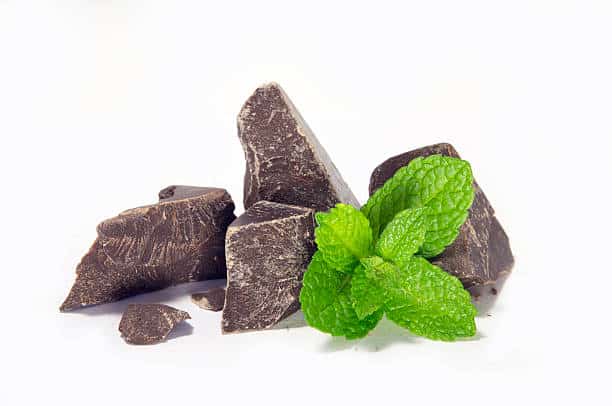
Chocolate mint is a hybrid variety of the mint plant that has a chocolate-like fragrance and flavor. It’s a cultivar of peppermint, meaning it’s a strain cultivated for specific desirable characteristics. In the case of chocolate mint, these characteristics include its brown stems and aroma.

Chocolate mint is native to Europe and the Middle East. It’s a perennial herb that can grow up to 3 feet in height. It can survive deep frosts if well mulched, going dormant over winter.

Chocolate mint has subtle notes of cocoa and vanilla that mix with a traditional spicy mint finish. The fragrant oval green leaves are usually harvested from late spring to early fall. The leaves have a minty taste.

Chocolate mint is commonly grown for its edible qualities, although it does have ornamental merits as well. It can be added to an after-dinner green salad as a palate cleanser that will actually aid in food digestion.

Chocolate mint is also known to repel ants, aphids, cabbage flies, and mice. It can be grown around the foundation of your home or sprinkled in your pantries and closets to keep pests from invading your home.

Chocolate mint is incredibly invasive, so it’s best not to plant it directly into the ground or anywhere near the ground.


Chocolate mint is commonly grown for its edible qualities. Here are some ways you can use chocolate mint:

  • Drinks – Add fresh sprigs or dried crushed flakes to hot chocolate. You can also use chocolate mint in cocktails, ice cubes, and popsicles.
  • Desserts – Add chocolate mint to ice cream, mousse, and custards. You can also use it in brownies.
  • Tea – Dry the leaves and flowers to make tea, or steep fresh leaves on their own. Chocolate mint tea is naturally caffeine-free and gluten-free.
  • Chocolate mint has similar medicinal actions as peppermint and spearmint. It can be used to calm overheated conditions and to soothe digestion.

Chocolate mint has a strong minty taste, plus a presence or bouquet of chocolate, and texture is crunchy and succulent. The aroma has been compared to Andes mints.

History

Chocolate mint is named for its color and scent rather than its taste, according to some sources. Others disagree. Chocolate mint is a cultivar of peppermint, a strain cultivated specifically for a few desirable characteristics. In the case of chocolate mint, these characteristics include the pretty brown hue of its stems.

Historians believe Europeans were the first to combine chocolate and mint after traveling to South America. The earliest archaeological evidence of cacao comes from Ecuador and dates back to 3,500 BCE. In Mexico and Central America, vessels with cacao residues date to as early as 1,900 BCE.

The history of chocolate can be traced to the ancient Maya, and even earlier to the ancient Olmecs of southern Mexico. Cacao was domesticated at least 4,000 years ago, first in the Amazon basin and then in Central America.

Baskin Robbins cites Mint Chocolate Chip as being one of the original 31 flavors when they began operations in 1945. Howard Johnson’s restaurants were serving the flavor by the early 1950s, which would become a common flavor into the 1960s and 70s.

The combination of chocolate and mint has a long history:

  • Europeans: When Europeans brought cacao beans back to Europe, they used mint to improve the flavor of chocolate drinks.
  • Hot drinks: Europeans mixed mint, cinnamon, and other sweet ingredients into hot drinks to combat the strong taste of dark chocolate.
  • Chocolate mints: Huylers, a New York chain store, was one of the first mass producers of chocolate mints. Girl Scouts popularized the snack in the 1950s.
  • York Peppermint Patties: Invented in Pennsylvania in 1940.
  • Mint chocolate chip ice cream: Invented in 1973 by culinary student Marilyn Ricketts.

Other chocolate mint pairings include:

  • Pearson’s Mint Patties (Minnesota, 1950)
  • After Eight Mints (UK, 1962)
  • Cooky-Mint (1939)
  • Frangos (Seattle, Washington, 1918)


Here are some more fun facts about chocolate mint:

  • Chocolate mint can grow up to 3 feet tall and 3 feet wide.
  • Chocolate mint can live for up to 10 years under ideal conditions.
  • Chocolate mint is rich in vitamins A and C and contains trace amounts of manganese.
  • Chocolate mint’s essential oils can help with nausea.
  • The combination of chocolate and mint can help produce serotonin and dopamine.
  • Mint is a powerful and aromatic herb that can aid in digestion and freshen breath.
  • Mint gets its name from Menthe, a Greek mythical character.
  • There are over 30 varieties of mint.
  • Ancient Romans and Greeks used mint to flavor cordials and fruit compotes, and for baths and perfumes.
  • Ancient Hebrews used to scatter mint over the synagogue floor for its scent.


Here are some recipes that use chocolate mint:

  • Chocolate mint leaves – This recipe uses dark chocolate, avocado oil, stevia glycerite, and fresh mint leaves.
  • Chocolate peppermint bars – This recipe uses peppermint extract, bittersweet chocolate, confectioners’ sugar, heavy cream, and unsalted butter.
  • Classic mint chocolate brownies – This recipe melts chocolate chips and butter in a saucepan or microwave, and then pours it over a mint layer.
  • Mint chocolate cake – This recipe uses fresh mint, vegetable shortening, and unsalted butter.


Other chocolate mint recipes include:

  • Mint chocolate mousse cupcakes
  • Homemade thin mint cookies
  • Mint Oreo cupcakes with chocolate Oreo frosting
  • Better than thin mints grasshopper poke cake
  • Chocolate mint brownie bark
  • Dark chocolate mint truffle Oreo fudge
  • Chocolate marshmallow mint cookies
  • Chocolate peppermint cheesecake bites
  • Milk chocolate peppermint bark
  • Dark chocolate peppermint fudge
  • Chocolate covered peppermint patties.


Celebrating Chocolate Mint

February 19 has been set aside as National Chocolate Mint Day. It a good time to experience perhaps something new. Let us know in the comments if you have ever tried chocolate mint.

0 Comments

Submit a Comment

Your email address will not be published. Required fields are marked *

Subscribe to our Blog to receive more content like this. Click here to subscribe.

Be sure to watch our shows on QVC+  or our YouTube channel

Give us your feedback on our Social Channels 

FacebookInstagramTik TokLinkedInPinterestTwitter  

National Bratwurst Day

National Bratwurst Day

Today’s Spotlight is on Bratwurst.
Bratwurst is a type of German sausage, also known as a "brat". It's typically made from pork and veal, but can also be made with beef, or any combination of meat. Bratwurst has a smooth texture, pale color, and mild flavor. It can be seasoned with salt, white pepper, nutmeg, lemon peel, marjoram, caraway, and garlic. They are often consumed for breakfast in German cities.
Bratwurst is prepared and stored fresh, so it doesn't have a long shelf life like a sausage can. It's usually grilled or fried in a pan

Read More

National Rum Day

National Rum Day

Today’s spotlight is on Rum.
Rum is a liquor that is distilled from sugarcane or sugarcane byproducts such as molasses or sugarcane juice. The sugarcane is fermented and then distilled, producing a clear liquid that is often aged in oak barrels. This aging process gives the final product its characteristic color and flavor.
Rum has a typical alcohol concentration of 40% ABV. Some rum is "overproof," meaning that it has an alcohol concentration of at least 57.5% ABV. Most overproof rum exceeds this minimum, usually reaching 75.5% ABV, which is equivalent to 151 proof.

Read More

National Lemon Meringue Pie Day

National Lemon Meringue Pie Day

Today’s spotlight is on Lemon Meringue Pie.
Lemon meringue pie is a dessert pie consisting of a shortened pastry base filled with lemon curd and topped with meringue. Lemon meringue pie has a buttery, flaky, and crispy pie crust. The filling is jelly-like, translucent, and smooth, and is yellow due to the lemon juice, lemon rind, butter, and egg yolk. The pastry is thin and flat due to being rolled out using a rolling pin. During baking, the edges turn golden brown.

Read More

National Filet Mignon Day

National Filet Mignon Day

Today’s Spotlight is on Filet Mignon.
Filet mignon is a cut of beef from the small end of the tenderloin, or psoas major, which is located near the spine of the cow. The tenderloin runs along both sides of the spine and is usually butchered as two long snake-shaped cuts of meat. The tenderloin is sometimes sold whole. The tenderloin is the most well-known muscle on a cow and is also the most tender. Filet mignon is a lean cut of beef, which means you'll enjoy a fork-tender steak without much fat or connective tissue.
Filet mignon is one of the most tender and milder cuts of steak, making it a favorite among steak lovers. It's also one of the most expensive cuts of steak, due to its prized texture and that it's only about 2 to 3% of the total animal.

Read More

National Kool-Aid Day

National Kool-Aid Day

Today’s spotlight is on the flavored water treat known as Kool-Aid.
Kool-Aid is an American brand of flavored drink mix. It's typically made with sugar, water, and artificial colorings. The powder form was created in 1927 by Edwin Perkins based on a liquid concentrate called Fruit Smack. Kool-Aid is owned by Kraft Heinz, based in Chicago, Illinois.

Read More

National Smores Day

National Smores Day

Today’s spotlight is on a fireside favorite – S’mores.
S'mores are a confection made of toasted marshmallows and chocolate sandwiched between two graham crackers. They are a traditional camping snack that are popular in the United States and Canada. S'mores are traditionally cooked over a campfire and warmed over an open flame until melted and gooey.

Read More

National Rice Pudding Day

National Rice Pudding Day

Today’s Spotlight is on Rice Pudding.
Rice pudding is a creamy mixture of rice and milk and other ingredients such as cinnamon, vanilla and raisins. It's cooked until it's thick and soft. It can be sweet or savory. Variants are used for either desserts or dinners. When used as a dessert, it is commonly combined with a sweetener such as sugar. American rice pudding often uses leftover rice and can be baked in the oven or cooked on the stove.

Read More

Sneak Some Zucchini onto Your Neighbor’s Porch Day

Sneak Some Zucchini onto Your Neighbor’s Porch Day

Today’s Spotlight is on Zucchini (and your neighbors)!
There are a lot of odd holidays but this one has got to be one of my favorites. Sneak Some Zucchini Onto Your Neighbor's Porch Day is celebrated on August 8th every year. The holiday encourages people to sneak their extra zucchinis onto the porches of unsuspecting community members. The day celebrates the bounty of the summer's zucchini harvest by demonstrating generosity, desperation, and cunning.

Read More

Raspberries and Cream Day

Raspberries and Cream Day

Today’s food spotlight is aimed at Raspberries and Cream.
Raspberries and cream is a simple treat that combines fresh, ripe berries with sweetened, hand-whipped cream. It's a good option for anyone with a sweet tooth.
Raspberries are the fruit of several shrubs in the rose family. They are usually red but can also be black or yellow. When ripe, they separate from the receptacle and are rounder and smaller than blackberries. The name "raspberry" may have come from "raspise", which means "a sweet rose-colored wine". The name may also be related to the Old English word "rasp", which means "rough berry".

Read More

National Root Beer Float Day

National Root Beer Float Day

Today’s spotlight is on Root Beer Floats!
The root beer float is traditionally made with vanilla ice cream and root beer, but it can also be made with other ice cream flavors. It's sometimes referred to by the nicknames “brown cow” or “black cow”. Root beer floats were a popular dessert drink in 1950s diners.

Read More

Pin It on Pinterest