
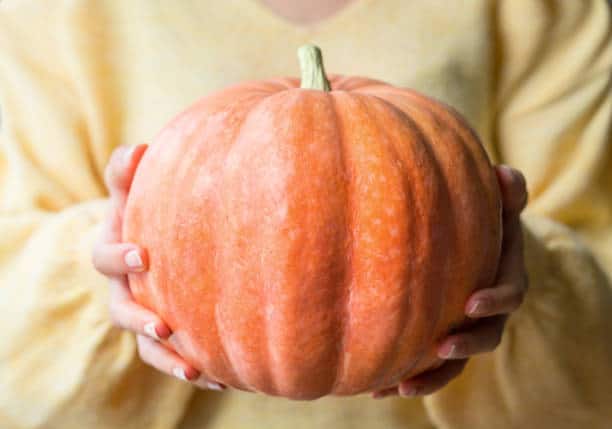
Today’s Spotlight in on Pumpkins.
A pumpkin is a vernacular term for mature winter squash of species and varieties in the genus Cucurbita that has culinary and cultural significance but no agreed upon botanical or scientific meaning. Pumpkin, from a botanist’s perspective, is a fruit because it’s a product of the seed-bearing structure of flowering plants. Vegetables, on the other hand, are the edible portion of plants such as leaves stems, roots, bulbs, flowers, and tubers.
Pumpkins are squash and also gourds, and also… fruit. At least according to the Farmer’s Almanac, all of those edible, seed-filled squash and gourds are fruit. Pumpkin, fruit of certain varieties of squash—such as varieties of Cucurbita pepo, C. moschata, and C. maxima—in the gourd family (Cucurbitaceae), usually characterized by a hard orange rind with distinctive grooves. Pumpkins are commonly grown for human consumption, for decoration, and also for livestock feed.
Although most people prefer eating them cooked or roasted, you can also eat pumpkin and pumpkin seeds raw. Still, key differences set apart raw and cooked varieties, especially in terms of taste, texture, and nutritional value.
Although pumpkin is a higher potassium food, in moderation it can be beneficial for your overall health. Pumpkin is packed with nutritional benefits that are great for the renal diet including fiber, Vitamin C and beta-carotene. So go ahead, enjoy this fall delights in moderation today!
Bigger in pumpkins is literally better, since the pumpkin represents abundance and prosperity! The whole pumpkin represents the world we live in now and is literally filled with blessings waiting to be granted.
History
Scientists believe that pumpkins originated in North America about 9000 years ago. The oldest pumpkin seeds have been found in Mexico and date back to somewhere between 7000-5550 B.C. Pumpkins (along with other forms of squash) were a historically important food staple among Native Americans.
Pumpkins are native to the Western Hemisphere and have been grown in North America for nearly 5,000 years. The tradition of carving pumpkins originated from the Irish tradition of carving turnips and potatoes. Pumpkins gradually replaced these vegetables because of their larger sizes and easier carving properties.
Rather than using their nutritional and readily available seeds, pre-Columbian natives grew pumpkins for their flesh. They were among the first crops grown for human consumption in North America. Thanks to their solid, thick flesh, pumpkins proved ideal for storing during cold weather and in times of scarcity.
References to pumpkins date back many centuries. The name pumpkin originated from the Greek word for “large melon” which is “pepon.” “Pepon” was nasalized by the French into “pompon.” The English changed “pompon” to “Pumpion.” Shakespeare referred to the “pumpion” in his Merry Wives of Windsor.
The very first Thanksgiving was held in New England between the Wampanoag Tribe and Plymouth Colonists. It was a way to celebrate the successful harvest. It’s said that pumpkin was served at this celebratory dinner, but no one knows if it was a pie-like dessert or a pumpkin dish, but pumpkins were definitely involved.
When Irish immigrants moved to the U.S., they began carving jack-o’-lanterns from pumpkins, as these were native to the region. As it was naturally dark in pre-industrial revolution Ireland, many would carve turnips, potatoes or other root vegetables and add coals or candles to create makeshift lanterns to help guide those celebrating. Encyclopedia Britannica, Inc. , a celebration in ancient Britain and Ireland that marked the end of summer and the beginning of the new year on November 1.
10 things you probably didn’t know about pumpkins:
- The word “pumpkin” originates from “peopon,” which means “large melon” in Greek. It then evolved to “pompon” in French and “pumpion” in Britain. The Americans later changed it to “pumpkin,” the name we still use today.
- Every year, the US produces 1.5 billion pounds of pumpkin. 80 percent of this crop (around 800 million pumpkins) are ripe for picking in one single month of the year — October.
- Over 45 different varieties of pumpkin exist. They range in color including orange, red, yellow and green, and they boast names like Hooligan, Cotton Candy, and Orange Smoothie.
- Technically a fruit, the pumpkin is a winter squash in the family Cucurbitaceae which includes cucumbers and melons.
- Every single part of a pumpkin is edible: the skin, leaves, flowers, pulp, seeds, and stems.
- Interestingly, pumpkins are 92 percent water.
- Naturally low in energy density, pumpkins are an excellent source of potassium, vitamin A and beta-carotene, the powerful antioxidant that gives orange vegetables and fruits their color.
- Scientists believe that pumpkins originated in North America about 9000 years ago. The oldest pumpkin seeds have been found in Mexico and date back to somewhere between 7000-5550 B.C..
- Pumpkins (along with other forms of squash) were a historically important food staple among Native Americans. They would grow the squash along river banks next to maize and beans, a planting technique that was called the “Three Sisters Method,” which allowed the three crops to sustain each other. Corn served as the trellis upon which the beans could climb; beans were nourished by the sunlight and kept the corn stalks stable on windy days, while also nourishing their soil; and pumpkins sheltered the corn’s shallow roots and prevented weeds from taking hold.
- The practice of carving Jack-O’-Lanterns was brought to America by Irish immigrants. In their homeland, the Irish used to carve Jack-O’-Lanterns out of potatoes or turnips, but upon arrival in America, they began to use pumpkins instead because they were far easier to carve. The tradition of the “Jack-O’-Lantern” stems from an Irish legend about a man named Stingy Jack who was a somewhat unpleasant character famous for playing tricks on people.
Here is a Pumpkin Bread Recipe for you to try:
Ingredients:
- 2 cups all-purpose flour, spooned into measuring cup and leveled-off.
- ½ teaspoon salt
- 1 teaspoon baking soda
- ½ teaspoon baking powder
- 1 teaspoon ground cloves
- 1 teaspoon ground cinnamon
- 1 teaspoon ground nutmeg
- 1½ sticks (¾ cup) unsalted butter, softened.
- 2 cups sugar
- 2 large eggs
- 1 (15-oz) can 100% pure pumpkin
Instructions:
- Preheat the oven to 325°F and set an oven rack in the middle position. Generously grease two 8 x 4-inch loaf pans with butter and dust with flour (alternatively, use a baking spray with flour in it, such as Pam with Flour or Baker’s Joy).
- In a medium bowl, combine the flour, salt, baking soda, baking powder, cloves, cinnamon, and nutmeg. Whisk until well combined; set aside.
- In a large bowl of an electric mixer, beat the butter and sugar on medium speed until just blended. Add the eggs one at a time, beating well after each addition. Continue beating until very light and fluffy, a few minutes. Beat in the pumpkin. The mixture might look grainy and curdled at this point — that’s okay.
- Add the flour mixture and mix on low speed until combined.
- Turn the batter into the prepared pans, dividing evenly, and bake for 65 – 75 minutes, or until a cake tester inserted into the center comes out clean. Let the loaves cool in the pans for about 10 minutes, then turn out onto a wire rack to cool completely.
- Fresh out of the oven, the loaves have a deliciously crisp crust. If they last beyond a day, you can toast individual slices to get the same fresh-baked effect.
- Freezer-Friendly Instructions: The bread can be frozen for up to 3 months. After it is completely cooled, wrap it securely in aluminum foil, freezer wrap or place in a freezer bag. Thaw overnight in the refrigerator before serving.
Consumption
In 2022, the per capita consumption of fresh pumpkins in the United States was about 5.6 pounds. In 2020, the per capita use of pumpkin was 6.44 pounds per person. The United States produces over 1.5 billion pounds of pumpkin each year. Most of these pumpkins are sold during October. However, only one fifth of the pumpkins produced in 2020 were used for food.
The top pumpkin-producing states are: Illinois, Indiana, Ohio, Pennsylvania, California. Around 90 to 95% of the processed pumpkins in the United States are grown in Illinois. Pumpkin seeds can be roasted as a snack. Pumpkins contain potassium and Vitamin A.
Celebrating Pumpkins
October is a good time to celebrate pumpkins! Not only is October Pumpkin Month but Pumpkin Day is celebrated on October 26, 2023. Why celebrate the pumpkin? Here are some suggestions.
There are many ways to celebrate pumpkins, including:
- Pumpkin Day: Celebrated on October 26, 2023
- Jack-o’-lanterns: Carved pumpkins used as decorations for Halloween.
- Autumn decor: Use pumpkins to add color to your home’s autumn décor.
- Thanksgiving: Pumpkin pie is a part of the national harvest celebration of Thanksgiving
Here are some creative pumpkin carving ideas:
- Carve sweet sayings into your pumpkin, such as kindness, generosity, happiness, love, or well wishes.
- Carve no more than three days before Halloween.
Let us know in the comments, how you celebrate pumpkins, including having a seasonal latte at Starbucks.
0 Comments