Celebrating Shawarma

Oct 16, 2025 | Food Blog

Today’s Spotlight is on Shawarma.

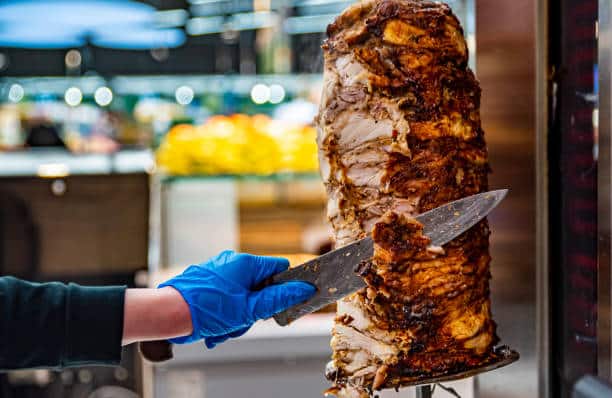
Shawarma is a popular Middle Eastern Street food. It’s made of thinly sliced, spice-marinated meat that’s cooked on a vertical spit in front of a rotisserie. The meat is often wrapped in or served with pita. Shawarma is similar to Greek gyros, but shawarma is seasoned with more spices and gyros are seasoned with more herbs.

Shawarma is a Middle Eastern dish that originated in the Ottoman Empire, consisting of meat cut into thin slices, stacked in an inverted cone, and roasted on a slowly turning vertical rotisserie or spit.

To make shawarma, the meat is:

  • Stacked on a vertical spit.
  • Cooked for hours.
  • Grilled evenly while it turns.
  • Slice thinly once the outside layers are grilled.

Shawarma can be made with: Lamb, Beef, Chicken, Goat, Turkey.

Cooking meat vertically on a spit allows it to cook in its own juices, which results in a moist and tender final product. The juices drip down and marinate the rest of the meat. The vertical rotisserie style of cooking was used to prioritize the flavor and tenderness of the meat. It’s been used for many years.

Shawarma is often served with:

Hummus, Tahini, Pickles, Vegetables, French fries, Garlic sauces.

You can also cook shawarma horizontally in a pan or on the BBQ.


Shawarma vs Gyros

Shawarma and gyros have different origins, seasonings, and serving styles. Shawarma is Middle Eastern and is seasoned with cumin, coriander, and turmeric. Gyros are Greek and are flavored with rosemary, thyme, and marjoram. Shawarma meat is marinated for a long time, often overnight, to give it a richer flavor. Gyros have a fresh flavor profile.

Shawarma and gyros share some ingredients, such as: Bread, Meat, Hummus. However, gyros are usually made with: Lamb, Beef, Chicken, Pork.


History

The exact origin of shawarma is unknown, but it’s believed to have originated in the Levant region, which includes modern-day Israel, Palestine, Jordan, Lebanon, and Syria. The earliest known shawarma was invented in Bursa, Turkey.  The word “shawarma” is Arabic and means “turning”. It comes from the Turkish term “Sevirme”.

The shawarma technique of grilling a vertical stack of meat slices and cutting it off as it cooks first appeared in the 19th-century Ottoman Empire. Many other cultures adopted it with minor variations and new names, such as the Greek gyro and the German doner kebab.

Shawarma spread to other Mediterranean and Middle Eastern civilizations. It was introduced to Saudi Arabia, Turkey, Syria, and Iraq by tourists from Lebanon. From Saudi, it later migrated to Pakistan and Europe during the first half of the 20th century.


Here are some fun facts about shawarma:

  • The word “shawarma” comes from the Turkish word çevirme, which means “turning”. The meat is cooked on a rotating spit in a rotisserie oven, which bastes it in its own juices.
  • The earliest known shawarma was invented in Bursa, Turkey. The dish quickly spread to other Mediterranean and Middle Eastern civilizations.
  • Shawarma is a good source of vitamin C.
  • You can pair shawarma with any vegetables or sauces you like. The most common sauces used in a shawarma wrap are tahini, garlic, and hummus.
  • Shawarma became popular in the United States in the 1970s. It was widely prepared as a street food throughout New York City and Chicago.
  • Shawarma can be refrigerated and is safe to eat for up to four days. You can also freeze shawarma and reheat it when you are ready to eat it.


Here is a Chicken Shawarma Recipe for you to try:

Ingredients:

  • 1 kg / 2 lb. chicken thigh fillets, skinless and boneless

MARINADE

  • 1 large garlic clove, minced (or 2 small cloves)
  • 1 tbsp ground coriander
  • 1 tbsp ground cumin
  • 1 tbsp ground cardamon
  • 1 tsp ground cayenne pepper (reduce to 1/2 tsp to make it not spicy)
  • 2 tsp smoked paprika.
  • 2 tsp salt
  • Black pepper
  • 2 tbsp lemon juice
  • 3 tbsp olive oil

YOGHURT SAUCE

  • 1 cup Greek yoghurt
  • 1 clove garlic, crushed
  • 1 tsp cumin
  • Squeeze of lemon juice
  • Salt and pepper


TO SERVE

  • 4 – 5 flatbreads (Lebanese or pita bread or homemade soft flatbreads)
  • Sliced lettuce (cos or iceberg)
  • Tomato slices
  • Red onion finely sliced.
  • Cheese, shredded (optional)
  • Hot sauce of choice (optional)


Instructions:

  1. Marinade chicken – Combine the marinade ingredients in a large ziplock bag. Add the chicken, seal, the massage from the outside with your hands to make sure each piece is coated. Marinate 24 hours (minimum 3 hours).
  2. Yogurt Sauce – Combine the Yogurt Sauce ingredients in a bowl and mix. Cover and put in the fridge until required (it will last for 3 days in the fridge).
  3. Preheat stove or BBQ – Heat a large non-stick skillet with 1 tablespoon over medium high heat, or lightly brush a BBQ hotplate/grill with oil and heat to medium high. (See notes for baking)
  4. Cook chicken – Place chicken in the skillet or on the grill and cook the first side for 4 to 5 minutes until nicely charred. Turn and cook the other side for 3 to 4 minutes (the 2nd side takes less time).
  5. Rest – Remove chicken from the grill and cover loosely with foil. Set aside to rest for 5 minutes.

TO SERVE

  1. Slice chicken and pile onto platter alongside flatbreads, Salad and the Yoghurt Sauce (or dairy free Tahini sauce from this recipe).
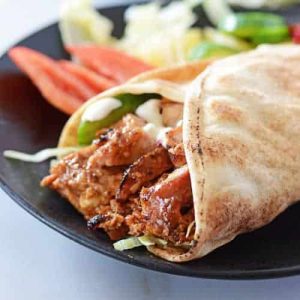
  2. To make a wrap, get a piece of flatbread and smear with Yoghurt Sauce. Top with a bit of lettuce and tomato and Chicken Shawarma. Roll up.
  3. Enjoy!
Chicken Shawarma

Chicken Shawarma

Consumption

Shawarma is a popular street food in many countries around the world. It’s a common meal at most Middle Eastern or Lebanese restaurants. It’s also sold at makeshift stalls and food trucks as a quick snack.

According to some, Shawarma Asham in Tampa has the best shawarma in the world. Others say that Istanbul Mediterranean Grill & Market has the best shawarma.

Shawarma’s popularity increased in North America in 2012 after the Avengers movie premiered. In the ending credit scene, the Avengers ate shawarma in New York. According to Tastewise, shawarma popularity has decreased by 23.95% over the past year. On average, shawarma is consumed 1.63 times per year. In Israel, the average person consumes over 28 pounds of turkey shawarma annually.

A serving of shawarma contains 30-35 grams of protein. A single shawarma wrap can contain between 400 and 1200 calories, depending on where it’s eaten and how much oil and fat is used.

Shawarma is a popular street food in many countries, including:

  • Egypt: One of the world’s most popular street foods
  • Israel: A popular street food and eaten daily in restaurants.
  • Turkey: A popular dish in Turkish diaspora communities
  • Lebanon: A staple street food
  • Syria: A popular street food
  • Kuwait: Widely served.
  • Iraq: Widely served.
  • Armenia: Widely served.
  • Georgia: Widely served.
  • Saudi Arabia: Widely served.
  • United Arab Emirates: Widely served.


According to food experts, some of the best places to eat shawarma include:

  • Barbar in Beirut, Lebanon
  • HaKosem in Tel Aviv, Israel
  • Boubouffe in Beirut, Lebanon
  • Joseph in Beirut, Lebanon
  • Mama Noura in Riyadh, Saudi Arabia
  • Dabush in Tel Aviv, Israel
  • Ilili in New York City, United States
  • Abu Haider in Cairo, Egypt


Celebrating Shawarma

National Shawarma Day is on October 15th. It celebrates the Middle Eastern rotisserie method of cooking meats like lamb, chicken, and beef. Some places are celebrating National Shawarma Day with giveaways. Let us know in the comments if you like Shawarma and who makes your favorite.

0 Comments

Submit a Comment

Your email address will not be published. Required fields are marked *

Subscribe to our Blog to receive more content like this. Click here to subscribe.

Be sure to watch our shows on QVC+  or our YouTube channel

Give us your feedback on our Social Channels 

FacebookInstagramTik TokLinkedInPinterestTwitter  

National Peaches and Cream Day

National Peaches and Cream Day

National Peaches and Cream Day is celebrated annually in the United States. This day commemorates the day in 1869 when druggist Thomas H. Brewer mixed together the first batch of the delicious fruit combo of juicy peaches and creamy milk or cream. He called it "Cream Peach".
National Peaches and Cream Day is thought to have started in the early 1900s as a way to promote the dairy and fruit industries. Whatever the reason for its creation, we are sure glad that this day exists so that we can all enjoy some peach-y goodness!

Read More

National Vanilla Milkshake Day

National Vanilla Milkshake Day

National Vanilla Milkshake Day is celebrated on June 20 and it's all about celebrating the original vanilla milkshake. It's made by blending milk, ice cream, and vanilla for a classic style beverage.

The vanilla milkshake has an interesting history. In 1885, the term “milkshake” showed up in print for the first time. The word milkshake combines the word 'milk', from the Old English 'milc' or 'meoluc', and the word 'shake', from the Old English 'sceacan' meaning 'move quickly back and forth'. The concoction of cream, eggs, and whiskey was often served with other alcoholic tonics such as lemonades and soda waters. Who has been holding out on this recipe? Don’t worry, we have it for you here:

Read More

National Martini Day

National Martini Day

Today is National Martini Day. National Martini Day is thought to have started in the 1940s, when the popularity of the martini drink began to rise. It's likely that people began celebrating the day as a way to honor the classic cocktail.

The martini is believed to have originated in the United States in the late 1800s by a bartender in either New York or San Francisco, however no one is certain. It was created by mixing gin and vermouth, an Italian fortified wine. The earliest known martini recipe was found in the 1888 book, "The Bartender's Guide" by Jerry Thomas. The recipe called for one-third gin and two-thirds French vermouth with a dash of orange bitters.

Read More

International Picnic Day

International Picnic Day

Today is International Picnic Day. International Picnic Day is believed to have originated in the late 18th century when an open-air meal enjoyed by friends became popular among the upper classes in France. It is thought to have been started by King Louis XVI and Marie Antoinette. The trend quickly spread throughout Europe, and eventually around the world. Today, many countries celebrate International Picnic Day to commemorate this long-standing tradition.

Picnics originated in the late 1700s as a way for the upper classes in Europe to enjoy an outdoor meal with friends. These gatherings typically featured elaborate arrangements of food and décor, often with musicians or performers to entertain the guests. Picnics were a way to socialize and enjoy nature and good company.

Read More

National Apple Strudel Day

National Apple Strudel Day

Today is National Apple Strudel Day. National Apple Strudel Day was started by a group of pastry chefs in Austria in the late 1990s. They wanted to honor the country's traditional food, and they decided to dedicate a day to the celebration of the iconic dessert. The chefs chose this day, and the holiday has been celebrated ever since.

Strudel has been a staple of Austrian cuisine for centuries, and it remains a favorite today. The history of apple strudel dates back to the 16th century, when it became popular in Austria, Germany, and Hungary. The traditional strudel is filled with apples, raisins, cinnamon, and sugar and can be served as a dessert or a snack.

Read More

National Lobster Day

National Lobster Day

National Lobster Day was started by the Lobster Institute at the University of Maine in 1974. The Lobster Institute is a non-profit organization dedicated to research, education, and outreach of lobster and the lobster industry. The day was created to celebrate the lobster industry and the iconic seafood.

And as fate would have it, National Lobster Day is observed during the peak of the lobster season. In the United States, the peak of the season usually starts in late May and runs through late October or early November.

Read More

National Strawberry Shortcake Day

National Strawberry Shortcake Day

Today is National Strawberry Shortcake Day a holiday to honor the classic strawberry shortcake dessert and its place in American food culture.

Strawberry shortcake has a long and storied history. The dessert is believed to have its origins in Britain, where it was served as early as the 16th century.

The earliest known recipe for strawberry shortcake appears in the book The Accomplisht Cook by Robert May, which was published in 1685. This recipe is for a dessert made with a mixture of flour, butter, eggs, cream, and sugar, which is rolled out into a shortbread-like dough and then topped with strawberries and cream. The recipe was most likely an adaptation of the traditional British trifle.

Read More

National Cupcake Lovers Day

National Cupcake Lovers Day

National Cupcake Lovers Day began as an online celebration in 2009. It was created by the founders of Cupcake Lovers, a website dedicated to cupcake recipes, reviews, and more. Since then, it has grown into an international day of celebration, with people around the world celebrating the joy of cupcakes on the same day each year.


Were cupcakes originally made in cups?

Yes, cupcakes were originally made in individual molds, rather than muffin tins. The name "cupcake" comes from the fact that the batter was poured or dropped into cups or molds. The cakes were then baked in the oven, and after cooling, they were removed from the molds.

Read More

National Jerky Day

National Jerky Day

Today is National Jerky Day.

This holiday was created by the National Jerky Association in order to celebrate the popular snack. The goal was to bring together jerky lovers everywhere to celebrate the nutritious and delicious snack.

Jerky has been around since ancient times. It was first made by Native Americans and was used as a way to preserve meat. Native Americans would dry strips of meat over a fire or in the sun to make jerky. The meat would be cut into thin strips and then salted and spiced before being left to dry. This process allowed them to preserve the meat and keep it edible for long periods of time. As the meat dried, it would become tough and chewy.

Read More

Corn on the Cob Day

Corn on the Cob Day

The holiday of Corn on the Cob Day has been celebrated since at least the 1950's.

Corn, or maize, is a member of the grass family and is believed to have been domesticated in Mexico around 9,000 years ago. Corn was an important part of the diets of many Native American tribes, including the Iroquois, Algonquian, and Pueblo tribes. By the time of European colonization, corn had spread throughout the Americas and was cultivated extensively by many tribes. Corn was introduced to Europe by explorers in the 15th century, and by the 17th century, it had become a common crop in many parts of Europe.

Read More

Pin It on Pinterest