Ybor City, located in Tampa, Florida, is a unique cultural hub with a long and interesting history related to food. In the late 1800s, Ybor City was founded by Don Vicente Martinez Ybor, a Spanish immigrant and cigar manufacturer. Ybor City quickly developed into a thriving and vibrant community of mostly Cuban, Spanish, and Italian immigrants, who not only brought their culture and language to the city, but also their culinary traditions.
Local restaurants began to sprout up, serving up traditional Cuban, Spanish, and Italian dishes. Italian-style pizzerias, Cuban-style sandwich shops, and Spanish-style seafood restaurants were among the most popular. The Italian community also opened a variety of Italian bakeries and ice cream parlors.
In the early 1900s, Ybor City began to attract many other immigrants, including Germans and Jews, who brought their own culinary traditions to the city. This new influx of immigrants led to an even more diverse range of cuisines, including Greek, Middle Eastern, and Latin American dishes.
The Columbia Restaurant is one of the oldest and most popular restaurants in Ybor City. Established in 1905, it is the oldest restaurant in the state of Florida and serves traditional Spanish and Cuban cuisine.
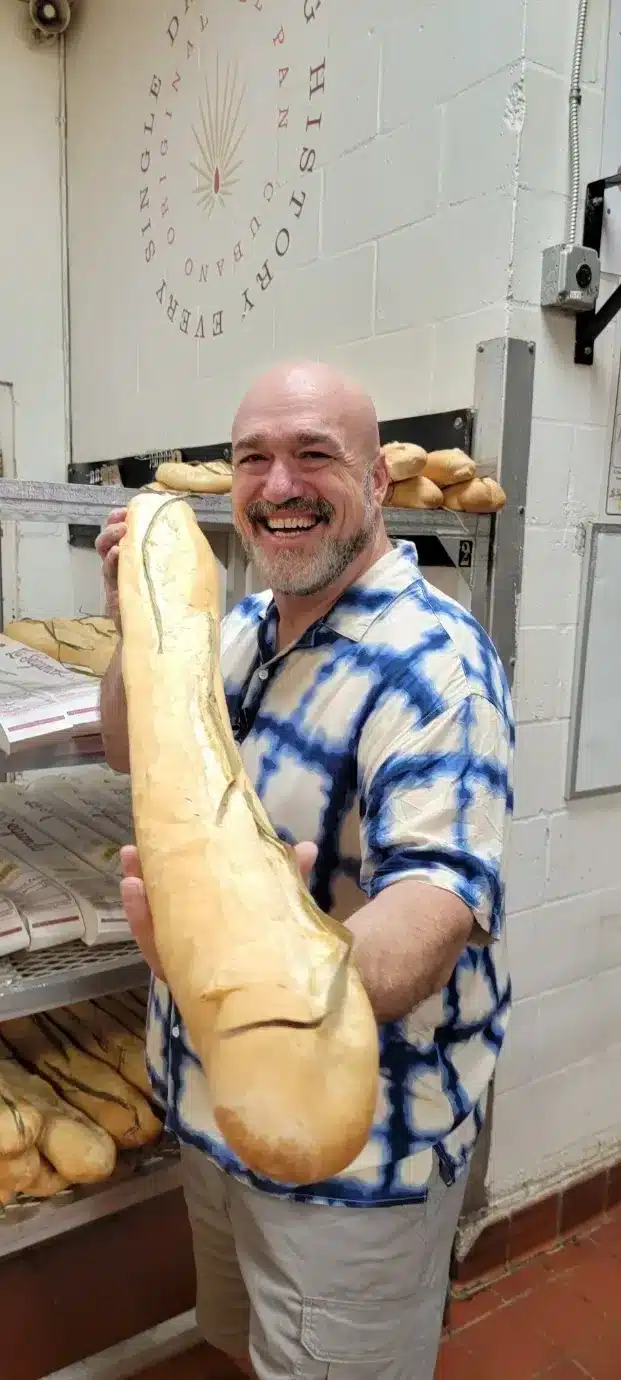
But then La Segunda Bakery was founded in 1915 in Ybor City, Florida, by Cuban immigrant Francisco Ferlita and his wife Carmen Valls Ferlita. The bakery was established to supply the large Cuban-American community in Ybor City with fresh Cuban bread. Francisco and Carmen began selling their bread door-to-door and later opened a small storefront. There, they also sold sandwiches and other baked goods. Among which was a newly created sandwich influenced by the immigrant population in Ybor City. The sandwich included inspiration from a variety of immigrant groups; pickles for the Germans, Salami for the Italians, Mojo ham for the Spanish and Cuban Bread inspired by the Cubans and La Segunda Bakery’s heritage itself.
In the early 1920s, Francisco took on two of his sons, Joe and Casimiro Ferlita, as partners in the business. The family grew the business, opening a larger production facility on 15th Street and continued to sell bread door-to-door as well as in the store.
In the 1950s, the business expanded again, this time to the current location on 22nd Street. The family continued to bake and deliver Cuban bread throughout the Tampa Bay area, as well as selling to local restaurants and grocery stores.
In the 1970s, the business was taken over by Joe and Casimiro’s sons, Joe and Tony Ferlita, who continued the family tradition of baking Cuban bread. In addition to Cuban bread, the bakery began producing other Cuban pastries such as guava pastelitos, Cuban sandwiches, and Cuban coffee.
Today La Segunda Bakery produces approximately 20,000 loafs of Cuban Bread ad day and ships them to grocery and specialty stores all across America. That’s a LOT of Cuban Sandwiches!
Cuban Sandwich Recipe
Ingredients:
-4 slices of Cuban bread
-4 slices of ham
-4 slices of Swiss cheese
-2 tablespoons of yellow mustard
-1/4 cup of dill pickles, sliced
-1/4 cup of butter, melted
Instructions:
1. Preheat oven to 350°F (175°C).
2. Place two slices of the Cuban bread on a cutting board.
3. Spread the yellow mustard evenly over the two slices of bread.
4. Layer two slices of ham, two slices of Swiss cheese, and the sliced pickles evenly over the mustard.
5. Place the other two slices of Cuban bread on top of the sandwich.
6. Brush the melted butter over both sides of the sandwich.
7. Place the sandwich in a greased baking dish and bake for 15 minutes.
Today’s Spotlight is on Chocolate.
Chocolate is a sweet, brown food made from cocoa beans. It's usually sold in solid bars, but can also be powdered or melted. Chocolate is used as a flavor for desserts, drinks, and other foods.
Chocolate is rich in carbohydrates and is an excellent source of quick energy. It has several health benefits.
Today’s Spotlight in on Pumpkins.
A pumpkin is a vernacular term for mature winter squash of species and varieties in the genus Cucurbita that has culinary and cultural significance but no agreed upon botanical or scientific meaning. Pumpkin, from a botanist's perspective, is a fruit because it's a product of the seed-bearing structure of flowering plants. Vegetables, on the other hand, are the edible portion of plants such as leaves stems, roots, bulbs, flowers, and tubers.
Today’s Spotlight is on Pasta.
Pasta is a type of food typically made from an unleavened dough of wheat flour mixed with water or eggs, and formed into sheets or other shapes, then cooked by boiling or baking.
Pasta is a type of food made from unleavened dough of wheat flour, water, and sometimes eggs. The dough is formed into different shapes and then cooked by boiling or baking. Pasta can be dried or used fresh.
Today’s Spotlight is on Boston Cream Pie.
A Boston cream pie is a cake with a cream filling. The dessert acquired its name when cakes and pies were cooked in the same pans, pie tins were more common than cake pans, and the words were used interchangeably. In the late 19th century, this type of cake was variously called a "cream pie", a "chocolate cream pie", or a "custard cake".
The Boston cream pie is a sponge cake. The cake batter was originally baked in a pie crust. At some point, the crust was eliminated, and the batter was poured directly into the pie pan.
Today’s spotlight is on a Whole Hog BBQ.
Whole hog barbecue involves cooking an entire hog in one piece over a pit in the ground. It's a time- and labor-intensive process. Whole hog barbecue is a regional style of barbecue where a pitmaster cooks an entire hog. The hog smoked for hours on a wood pit. The meat is seasoned with sauces like mustard-based, tomato-based, or vinegar-based.
To serve, the skin is cracked along the back, hams, and shoulders. The meat should pull easily from the bone. Guests can choose the type of meat they want, such as:
Loin, Tenderloin, Shoulder, Hams, Belly, Ribs.
Today’s focus is on nuts!
Nuts (tree nuts and peanuts) are nutrient dense foods with complex matrices rich in unsaturated fatty and other bioactive compounds: high-quality vegetable protein, fiber, minerals, tocopherols, phytosterols, and phenolic compounds.
There are over 20 edible nuts in the world. Some of the most common edible nuts include:
Today’s Spotlight is on Nachos.
Nachos is a Mexican culinary dish consisting of tortilla chips or totopos covered with cheese or cheese sauce, as well as a variety of other toppings and garnishes, often including meats, vegetables, and condiments such as salsa, guacamole, or sour cream.
They can also include other toppings and garnishes, such as:
Today’s Spotlight is on Chicken and Waffles.
Chicken and waffles is a dish that combines chicken and waffles. It's popular in the United States and is served in many restaurants. The dish first appeared in the United States in the 1600s in Pennsylvania Dutch country. The traditional Pennsylvania Dutch version consists of a plain waffle with pulled, stewed chicken on top, covered in gravy.
Today’s Spotlight is on Seafood Bisque.
A bisque is a French style of soup that is made from crustaceans, such as lobster, crab, shrimp, and crayfish; their shells are used to make a stock and the meat is incorporated into the finished dish. So, in a way, calling the soup a "seafood bisque" is somewhat redundant.
The main characteristic of a bisque is that it is smooth and has a velvety texture. Most recipes will include wine and cream to give it its signature flavor and texture. But it's not merely the choice of ingredient that makes bisque different from other types of soups. It’s also the technique for utilizing that ingredient, including the parts you can't eat, making a bisque what it is.
0 Comments