
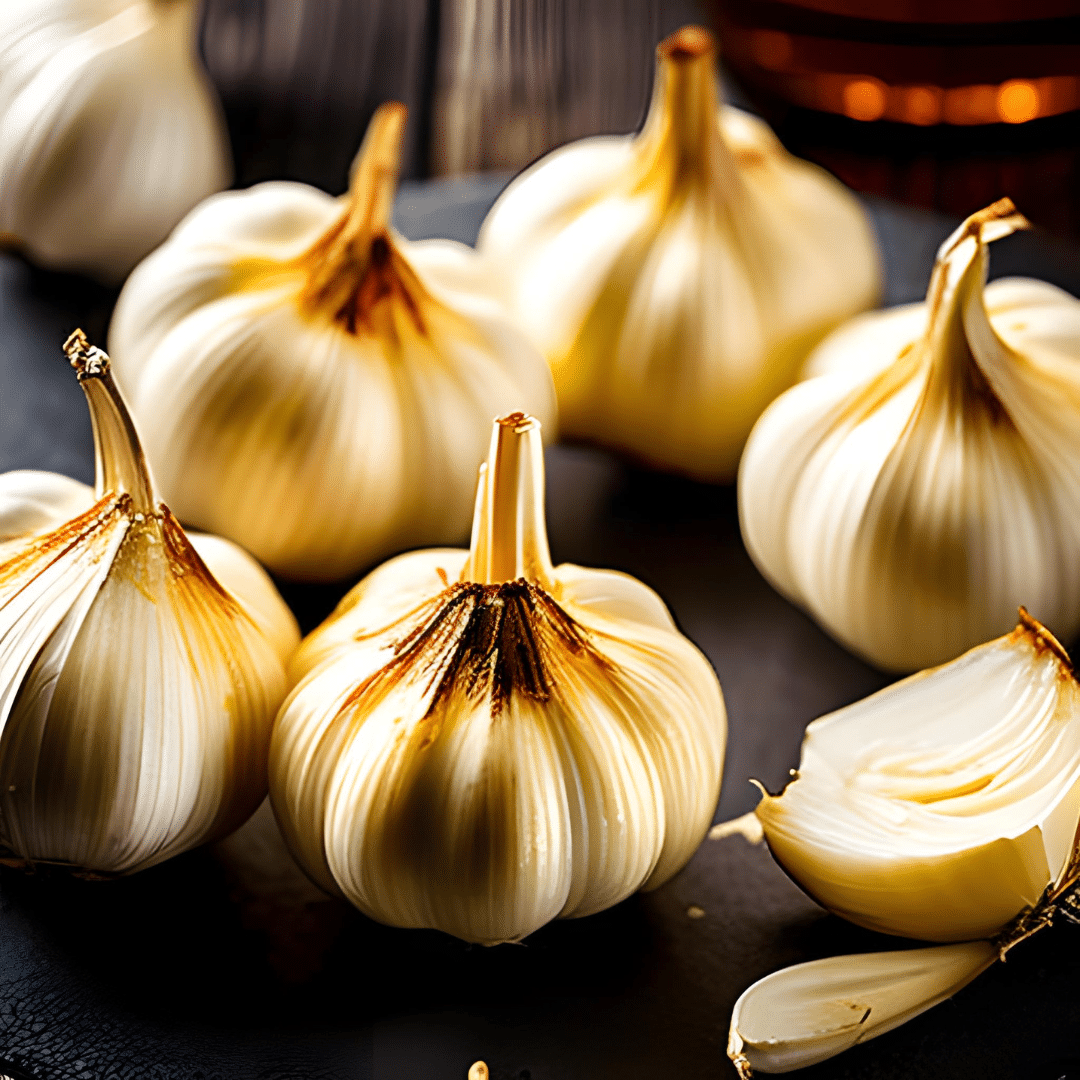
Of all of the cultivated plants nothing seems to have such an interesting background as garlic. “The Stinking Rose,” also known as garlic, is one of the oldest cultivated plants in the world and has been around approximately 5,000 years. Garlic is given this nickname due to its belonging to the Lily, or Allium, family and its pungent smell. The term “stinking rose” reportedly goes back to Greek and Roman times. In 1918, French writer and physician Henri Leclerc roughly translated garlic’s ancient Greek name, scorodon, to skaion rodon, and then to rose puante, or stinking rose.
Garlic (Allium sativum) is a member of the onion family (Amaryllidaceae). It is classified in the same genus as onions, leeks, chives, and shallots. The word Allium is Latin for “garlic”.
The Allium family is high in sulfuric compounds, which give them their distinct pungency. Garlic has the strongest flavor profile of all the Allium family members, with leeks and chives being the mildest.
Garlic is native to central Asia but grows wild in Italy and southern France. It is a classic ingredient in many national cuisines.
Garlic is among the oldest known horticultural crops. In the Old World, Egyptian and Indian cultures referred to garlic 5000 years ago and there is clear historical evidence for its use by the Babylonians 4500 years ago and by the Chinese 2000 years ago. Some writings suggest that garlic was grown in China as far back as 4000 years ago.
According to some myths, garlic sprang from the Devil’s left footprint when he was cast out of the Garden of Eden. In Mohammed’s writings, he equates garlic with Satan. In European folklore, garlic is said to ward off evil spirits, devils, werewolves, and vampires. To ward off vampires, garlic could be worn on one’s person, hung in windows, or rubbed on chimneys and keyholes. In Greek folklore, hanging garlic in a room can protect newborns from evil spirits.
Garlic was believed to protect people and homes from evil spirits, and to cure sicknesses such as colds and coughs.
Garlic grows wild only in Central Asia (centered in Kyrgyzstan, Tajikistan, Turkmenistan, and Uzbekistan) today. Earlier in history garlic grew wild over a much larger region and, in fact, wild garlic may have occurred in an area from China to India to Egypt to the Ukraine.
Garlic has been revered as an offering fit for the gods and despised as a substance suitable only to be fed to hogs. For over 5,000 years garlic has been used as food, medicine, an aphrodisiac, money, and magic potions.
Garlic warded off the evil eye, was hung over doors to protect medieval occupants from evil, gave strength and courage to Greek athletes and warriors, protected maidens and pregnant ladies from evil nymphs, and was rubbed on door frames to keep out blood thirsty vampires. Garlic clove pendants hung around the neck protected you from the sharp horns of a bull, warded off local witches, kept away the black plague, and even prevented others from passing you (or your horse) in a race.
Today, garlic is most commonly used as a dietary supplement for conditions related to the heart and blood vessels, including high blood cholesterol and high blood pressure. It is also used for the prevention of lung cancer, prostate cancer, breast cancer, stomach cancer, rectal cancer, and colon cancer.
Garlic is also used for other conditions, including:
- Atherosclerosis (hardening of the arteries)
- Insulin resistance
- Liver cell protection from some toxic agents
- Boosting the immune system
- Preventing Alzheimer’s and dementia
- Slowing collagen depletion
- Preventing hair loss
- Providing relief for a cold
Oh, and garlic is also used to flavor foods.
Here is a garlic recipe for you to try:
Roasted Garlic
Ingredients:
- 1 whole heads of garlic
- Extra virgin olive oil
Instructions:
- Preheat your oven to 400° f
- Peel and discard the papery outer layers of the whole garlic bulb.
- Using a sharp knife, cut 1/4 to a 1/2 inch from the top of cloves.
- Put garlic in baking pan or muffin tin cut side up
- Drizzle with olive oil
- Cover the bulb with aluminum foil.
- Bake at 400°F for 30-40 minutes, or until the cloves are lightly browned and feel soft when pressed.
- Cool and remove roasted garlic cloves from their skins.
- Enjoy! Try it spread over toast.
Here are some fun facts about garlic:
- There are over 450 varieties of garlic.
- The average person eats about 2 lbs of garlic each year.
- China grows two-thirds of the world’s garlic.
- California is the largest garlic-growing state in the US, producing 90% of the nation’s total garlic crop.
- The garlic that we eat is usually just the root of the plant.
- Garlic contains allicin, a compound that has been shown to have antibacterial, antiviral, and antifungal properties.
- Garlic may help to lower blood pressure and cholesterol levels.
- Garlic can help boost your body’s immune system.
- Garlic can help with the prevention of cancer.
- Garlic has antibiotic properties.
- Garlic may prevent Alzheimer’s and dementia.
However, eating too much garlic can cause side effects like bad breath, acid reflux, digestive issues, and an increased risk of bleeding.
The recommended dosage for adults is 4 g (one to two cloves) of raw garlic per day, one 300-mg dried garlic powder tablet two to three times per day, or 7.2 g of aged garlic extract per day.
So with garlic being such an interesting and diverse cultivation, why not pay a bit of attention to it today. Let us know in the comments, your favorite use for the Stinking Rose.
0 Comments