
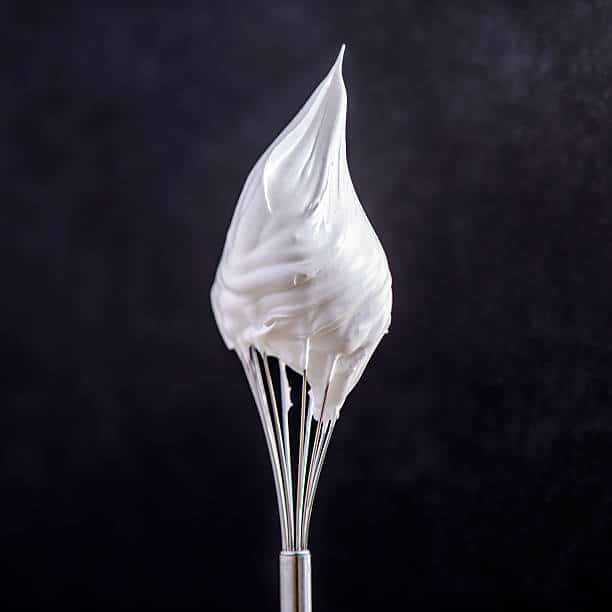
Today’s Spotlight is on Whipped Cream.
Whipped cream is heavy cream, double cream, or other high-fat cream that is whipped by a whisk or mixer until it is light and fluffy and holds its shape. Cream aerated by the expansion of dissolved gas, forming a firm colloid, is also called whipped cream. Whipped cream is a high-fat cream that is whipped until it is light and fluffy. It can be made with a whisk or mixer. The higher the fat content of the cream, the quicker it will take to whip.
To make whipped cream, you can use:
- Heavy cream
- Double cream
- Other high-fat cream
- A whisk or mixer
You can also add ingredients like: Powdered sugar, Vanilla, Coffee, Orange zest, Chocolate. There are three main types of whipped cream: Dairy, Non-dairy, Powdered. Whipped cream is an example of a colloidal solution. The dispersed phase is gas, and the dispersion medium is liquid.
The three types of whipped cream are:
- Dairy: Made with heavy cream
- Non-dairy: Made with full-fat coconut milk or coconut cream
- Powdered: Made with a vegetable-based powder
In India, non-dairy whipped cream is the most common.
History
Whipped cream has been around since the 16th century. It was popular in Italy and was often sweetened and aromatized. The earliest written recipe for whipped cream appears to have come from Renaissance Italy. The recipe was written by Cristoforo di Messisbugo, a chef in the court of Alfonso I d’Este, the Duke of Ferrara.
Whipped cream was called “milk snow” in English, “neve di latte” in Italian, and “neige de lait” in French. The French term crème fouettée appeared in print in 1629, and the English “whipped cream” in 1673.
The most widespread theory is that François Vatel, a famous intendant (a butler) in the 17th century, invented whipped cream. However, historians say the recipes don’t yet include sugar, so it’s not real whipped cream.
The first published recipe for traditional whipped cream appeared in England in 1545. It’s possible that Catherine de Medici’s cooks introduced the recipe to France.
Reddi-Wip was invented in 1948 by Aaron Lapin, a dairy salesman from St. Louis. Lapin was born on January 5, 1914. He collaborated with Aaron Block to create Reddi-Wip using real cream.
Lapin was one of the first customers of the Spra-tainer, the first aerosol canister. He put his product in the aerosol cans and sold it door-to-door by milkmen. Lapin also invented Sta-Whip during World War II. Sta-Whip was a cream substitute made with vegetable oil. He mixed light cream and vegetable oil to create the substitute.
Reddi-Wip’s iconic red-and-white label was designed in 1954. Lapin was mentioned in Time magazine as one of the 20th century’s most influential inventors.
Reddi-Whip vs Cool Whip
Reddi-Wip is closer to real whipped cream than Cool Whip. Reddi-Wip’s main ingredient is cream, while Cool Whip’s main ingredient is water. However, Reddi-Wip also contains corn syrup, emulsifiers, and stabilizers.
Reddi-Wip has more calories than Cool Whip, but its ingredients are easier to digest. For example, 2 tablespoons of Cool Whip Free has 15 calories, while 2 tablespoons of Fat Free Reddi-wip has 5 calories.
Here’s a comparison of the ingredients in Reddi-Wip and Cool Whip:
- Reddi-Wip: Cream, water, sugar, corn syrup, nonfat milk, less than 2% of mono- and diglycerides, natural flavor, carrageenan
- Cool Whip: Oil, syrups, artificial flavors
Real whipped cream is the healthiest whipped topping.
Here are some fun facts about whipped cream:
- Whipped cream was called “milk snow” in English, “neve di latte” in Italian, and “neige de lait” in French.
- Before the 19th century, cream was whipped with a willow or rush branch.
- Cream only whips at temperatures under 50 degrees.
- The world record for the tallest dollop of whipped cream on a mug of hot chocolate is just over 18cm.
- When cream is whipped, small air bubbles become trapped in the mixture. The fat, which exists as fairly stable droplets inside a cream carton, begins to break up when whizzed around with a whisk.
- In New York, it is illegal for people under 21 to buy cans of whipped cream. Some teens use the nitrous oxide (a.k.a. laughing gas) in the whipped cream canister to get high.
Here are some tips for making whipped cream:
- Use gelatin to stabilize the whipped cream and keep it fluffy.
- Keep the cream cold. You can chill the whisk and bowl in the refrigerator or freezer for 20 minutes.
- Use a metal bowl.
- Add acid and fat, such as sour cream or crème fraiche.
- Add honey and a pinch of fine sea salt.
You can also try these tips:
- Start on low speed to prevent splattering.
- Gradually increase the speed.
- Switch to a whisk and finish whipping by hand.
- Don’t whisk any further once the cream is holding a peak.
- If the cream clumps together, add a splash of liquid cream and gently stir together.
Consumption
On average, whipped cream is consumed 1.68 times per year. In 2020, 203.82 million Americans consumed whipped topping.
The whipping cream market was valued at $7.6 billion in 2022. It’s expected to grow at a compound annual growth rate (CAGR) of over 5.5% between 2023 and 2032. Consumer demand for convenience and quality is driving the market size.
Celebrating Whipped Cream
National Whipped Cream Day is celebrated on January 5 each year, but candidly I celebrate whipped cream whenever I get the chance. Let us know in the comments, your favorite whip cream?
0 Comments