Celebrating Bavarian Cream Pie

Nov 26, 2025 | Food Blog

Today’s Spotlight is on Bavarian Cream Pie.

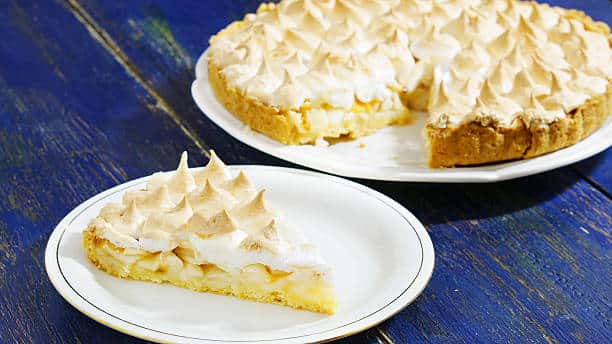
Bavarian cream pie is perhaps the easiest of American desserts to prepare. A short crust pastry made with just flour, butter and sugar is pressed into a pie plate and usually baked at a medium temperature. Once cooled, a custard made with milk, sugar, yolks, eggs, and cream is poured into a pie shell and topped with whipped cream. Alternatively, the crust can be made with anything from wafers, chocolate cookies, even sugar cones, and cornflakes, while the standard vanilla custard, depending on the recipe, can be additionally flavored and decorated with, for example, coconut, chocolate, or bananas. Meringue can be used as topping instead of whipped cream in which case it must be baked. Coconut cream pie, as well as banana cream pie, are the most popular kinds, with chocolate cream pie coming in close second. Basically, there is no limit to how you can flavor a cream pie, all that is necessary is to add the desired flavor ingredient to the basic recipe.


History

Bavarian cream is a custard made with milk, eggs, and gelatin. It’s often used as a filling for cakes and pastries or eaten on its own. The origins of Bavarian cream are unclear, but it’s believed to have originated in Bavaria, Germany in the 17th century. French chefs who worked for the Wittelsbach princes, a German family that ruled Bavaria from the 12th century until 1918, may have learned the recipe while working in Bavaria.

Marie-Antoine Carême, a famous French chef who lived from 1784 to 1833, is sometimes credited with inventing Bavarian cream. He wrote a recipe for it in the early 18th century.

Bavarian cream first appeared in cookbooks in the late 1800s, in the Boston Cooking School cookbooks. It was initially served in gourmet restaurants and luxury hotels in France in the early 19th century.

Bavarian cream can be flavored with chocolate, coffee, or fruit. It’s usually molded in a fancy shape and garnished with fruit or a sweet sauce.


Here are some fun facts about Bavarian cream pie:

  • National Bavarian Cream Pie Day is on November 27.
  • Bavarian cream was a culinary triumph before refrigeration.
  • From 1884 to 2022, there were over 95,000 references to Bavarian cream in US and Canadian newspapers.
  • Bavarian cream is also known as crème bavaroise.
  • Bavarian cream is made with milk, eggs, and gelatin, and folded with whipped cream.
  • Bavarian cream pie is made with Bavarian cream, ice cream, and whipped heavy cream.
  • A vanilla Bavarian cream is made with vanilla pastry cream, infused with vanilla or liquor, and lightened with fresh whipped cream.


Here is a Bavarian Cream Pie Recipe for you to try:

Ingredients:

FOR THE CRUST

  • 1 (9 inch) pie crust, baked


FOR THE CREAM:

  • 1 ½ (.25 ounce) packages unflavored gelatin
  • 8 tbsp cold water
  • 9 tbsp white sugar
  • 2 ¼ tbsp cornstarch
  • 2 eggs
  • 1 ½ cups milk
  • 3/4 cup vanilla ice cream
  • 1 tsp vanilla extract
  • 2 cups heavy whipping cream


Instructions:

Bavarian Cream Pie

  1. Line a 9-inch pie plate with pie crust, cover it with foil and place weights such as dry beans or rice to hold the crust down as it bakes.
  2. Bake in an oven preheated at 350 °F for 20 minutes, then remove the weights and the foil and bake for another 10 minutes until the crust is golden. Once out of the oven, set aside to completely cool.
  3. In a small bowl combine gelatin and cold water. In a large saucepan, heat the milk, and remove it just before it starts to boil. Take a mixing bowl, whisk sugar and cornstarch, then add the eggs, followed by milk and softened gelatin, all the time constantly stirring. Place the mixing bowl over a pan of hot water and cook until the custard thickens.
  4. Add ice cream to the hot custard and leave it to cool to room temperature. Beat the cream to stiff peaks, then carefully fold 1 ½ cups into the cooled custard.
  5. Spoon the filling into the pie crust and place in the refrigerator to set. Decorate with the remaining whipped cream and serve.
  6. Enjoy!


Consumption

Here’s some information about Bavarian cream:

  • Bavarian cream is a versatile dessert that can be served on its own or used as a filling for cakes and pastries.
  • Bavarian cream is made with milk, eggs, and gelatin, and folded with whipped cream.
  • Bavarian cream is shelf stable for 5–7 days unrefrigerated. It can also be frozen and thawed without issue.
  • Bavarian cream is pH balanced.
  • One serving of Bavarian cream has 475 calories.
  • An unopened sleeve of Bavarian cream filling stays fresh for up to one year from time of purchase. After opening, an opened pack stays fresh for 3–6 months.


Celebrating Bavarian Cream Pie

Bavarian Cream Pie Day is celebrated every year on November 27th. Let us know in the comments if you like Bavarian Cream Pie.

0 Comments

Submit a Comment

Your email address will not be published. Required fields are marked *

Subscribe to our Blog to receive more content like this. Click here to subscribe.

Be sure to watch our shows on QVC+  or our YouTube channel. 

Give us your feedback on our Social Channels 

Facebook • Instagram • Tik Tok • LinkedIn • Pinterest • Twitter  

Celebrating Carmel Apples

Celebrating Carmel Apples

Today’s Spotlight is on Caramel Apples.
Caramel apples are whole apples covered in a layer of caramel. They are made by dipping or rolling apples-on-a-stick in hot caramel, and sometimes rolling them in nuts or other small savories or confections. The caramel used to coat caramel apples is made from heavy cream, corn syrup, brown sugar, butter, salt, and vanilla.
Caramel apples have a softer, chewier coating around the apple that is similar to taffy. They are often called “taffy apples” when additional ingredients such as peanuts are applied. Caramel apples are enjoyed by people of all ages. Kids love the flavor and crunch, while adults reminisce their childhood memories. Caramel apples were created by Kraft Foods employee Dan Walker by accident. He was experimenting with leftover Halloween inventory, melting the caramels together, and incorporating different fruits.

Read More

Celebrating Oatmeal

Celebrating Oatmeal

Today’s Spotlight in on Oatmeal.
Oatmeal is a preparation of oats that have been de-husked, steamed, and flattened, or a coarse flour of hulled oat grains that have either been milled, rolled, or steel-cut. Ground oats are also called white oats. Steel-cut oats are known as coarse oatmeal, Irish oatmeal, or pinhead oats.
Oatmeal is a popular breakfast food made from oats and liquids, such as water, cow's milk, or plant-based milk. It's made by stewing oats in a heated liquid.

Read More

Celebrating Chocolate

Celebrating Chocolate

Today’s Spotlight is on Chocolate.
Chocolate is a sweet, brown food made from cocoa beans. It's usually sold in solid bars, but can also be powdered or melted. Chocolate is used as a flavor for desserts, drinks, and other foods.
Chocolate is rich in carbohydrates and is an excellent source of quick energy. It has several health benefits.

Read More

Celebrating Pumpkins

Celebrating Pumpkins

Today’s Spotlight in on Pumpkins.
A pumpkin is a vernacular term for mature winter squash of species and varieties in the genus Cucurbita that has culinary and cultural significance but no agreed upon botanical or scientific meaning. Pumpkin, from a botanist's perspective, is a fruit because it's a product of the seed-bearing structure of flowering plants. Vegetables, on the other hand, are the edible portion of plants such as leaves stems, roots, bulbs, flowers, and tubers.

Read More

Celebrating Pasta

Celebrating Pasta

Today’s Spotlight is on Pasta.
Pasta is a type of food typically made from an unleavened dough of wheat flour mixed with water or eggs, and formed into sheets or other shapes, then cooked by boiling or baking.
Pasta is a type of food made from unleavened dough of wheat flour, water, and sometimes eggs. The dough is formed into different shapes and then cooked by boiling or baking. Pasta can be dried or used fresh.

Read More

Celebrating Boston Cream Pie

Celebrating Boston Cream Pie

Today’s Spotlight is on Boston Cream Pie.
A Boston cream pie is a cake with a cream filling. The dessert acquired its name when cakes and pies were cooked in the same pans, pie tins were more common than cake pans, and the words were used interchangeably. In the late 19th century, this type of cake was variously called a "cream pie", a "chocolate cream pie", or a "custard cake".
The Boston cream pie is a sponge cake. The cake batter was originally baked in a pie crust. At some point, the crust was eliminated, and the batter was poured directly into the pie pan.

Read More

Celebrating Whole Hog BBQ

Celebrating Whole Hog BBQ

Today’s spotlight is on a Whole Hog BBQ.
Whole hog barbecue involves cooking an entire hog in one piece over a pit in the ground. It's a time- and labor-intensive process. Whole hog barbecue is a regional style of barbecue where a pitmaster cooks an entire hog. The hog smoked for hours on a wood pit. The meat is seasoned with sauces like mustard-based, tomato-based, or vinegar-based.
To serve, the skin is cracked along the back, hams, and shoulders. The meat should pull easily from the bone. Guests can choose the type of meat they want, such as:
Loin, Tenderloin, Shoulder, Hams, Belly, Ribs.

Read More

Celebrating Nuts

Celebrating Nuts

Today’s focus is on nuts!
Nuts (tree nuts and peanuts) are nutrient dense foods with complex matrices rich in unsaturated fatty and other bioactive compounds: high-quality vegetable protein, fiber, minerals, tocopherols, phytosterols, and phenolic compounds.
There are over 20 edible nuts in the world. Some of the most common edible nuts include:

Read More

Celebrating Nachos

Celebrating Nachos

Today’s Spotlight is on Nachos.
Nachos is a Mexican culinary dish consisting of tortilla chips or totopos covered with cheese or cheese sauce, as well as a variety of other toppings and garnishes, often including meats, vegetables, and condiments such as salsa, guacamole, or sour cream.
They can also include other toppings and garnishes, such as:

Read More

Pin It on Pinterest