
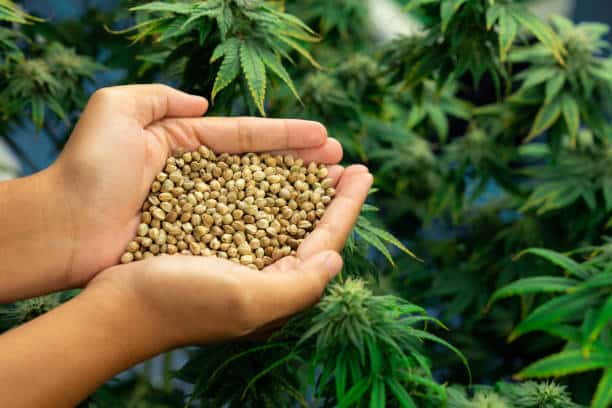
Today’s Spotlight is on Hemp.
Hemp, or industrial hemp, is a botanical class of Cannabis cultivars grown specifically for industrial or medicinal use. Hemp is a member of the Cannabis sativa family. It can be used to make a wide range of products and food. Along with bamboo, hemp is among the fastest growing plants on Earth.
Hemp is one of the fastest growing plants on Earth. Hemp is grown for its bast fiber or its edible seeds. Hemp seeds are a good source of protein and fiber. They may also have other health benefits, but there is not enough clinical research to say.
Hemp is different from cannabis because it contains very low levels of delta-9-tetrahydrocannabinol (THC). THC is the psychoactive component of the cannabis plant that makes users feel “high”. Legally, hemp is defined as a cannabis plant that contains 0.3 percent or less THC.
Hemp is a CO2 negative material, meaning it stores more CO2 than it emits. Its production requires few pesticides and herbicides, and it releases few toxins into the soil and the wider ecosystem. It also improves soil quality.
Hemp is sometimes confused with the cannabis plants that serve as sources of the drug marijuana and the drug preparation hashish.
History
Hemp has been cultivated for over 10,000 years. It originated in Central Asia. The first records of hemp cultivation are from China, where it was used for fiber as early as 2800 BCE.
Hemp was also used in ancient Mesopotamia, where villagers used hemp cord in their pottery.
Hemp was used for many purposes, including:
- Rope, Fabric, Paper, Sail cloth, Food, Medicine.
Hemp spread to Europe in the Christian era and was widely distributed by the 16th century. It was used in Russia and Germany as early as 500–600 BCE.
The DEA refused to issue permits for legal hemp cultivation in the United States. The DEA argued that hemp was prohibited under the Controlled Substances Act because it’s from the same species as cannabis.
In the 1600s, the British required all colonists to grow one acre of hemp on their property or be fined. A royal decree in the 1600s also required all Jamestown property owners to grow hemp for export. In 1619, the first House of Burgesses passed an act requiring all Virginia planters to sow hemp. Henry VIII of England and the Virginia Assembly fined farmers who did not grow it.
In the 1700s, laws required farmers to grow hemp throughout the British Colonies. The US Founders wrote the Declaration of Independence drafts on hemp paper. Abraham Lincoln used hemp oil in his lamps in 1840.
Hemp production has been federally legal since the passage of the Agricultural Improvement Act in 2018. Producers can grow hemp if they meet the university research pilot requirements of Section 7606 of the 2014 Farm Bill, or if they are growing in accordance with an approved State or Tribal hemp production plan.
Hemp seeds and oil are used in a variety of food products.
- Hemp milk: A plant milk made from hemp seeds that are soaked and ground in water. Hemp milk is similar to soy milk in color, texture, and flavor.
- Hemp oil: An oil obtained by pressing hemp seeds. Cold pressed, unrefined hemp oil is dark to clear light green in color, with a nutty flavor.
- Hemp cheese substitutes: Hemp seeds can be used to make cheese substitutes.
- Hemp protein powder: Hemp seeds can be used to make protein powder.
- Hemp seed flour: A byproduct of extracting hemp oil from hemp seed. Hemp seed flour has higher protein, fat, minerals, fiber, essential amino acids, and essential fatty acids compared to wheat flour.
Hemp seeds can also be eaten raw or used as a flavoring in meat, poultry, and egg products.
Here is a Hemp Milk Recipe for you to try:
Ingredients:
- 1/2 cup hulled hemp seeds (hemp hearts)
- 3 1/2 to 4 cups water (depending on how creamy you want it.
OPTIONAL
- 1 tablespoon maple syrup, honey or 2-3 pitted dates
- 1 teaspoon vanilla extract
Instructions:
- Add hemp seeds, water, and any additional sweeteners to a high-powered blender.
- Blend for 1 minute or until the milk is nice and creamy.
- Pour the hemp milk into a sealable container.
- Place it into the fridge and store it for up to 5 days.
Fun Facts about Hemp:
- Benjamin Franklin used hemp in his paper mill – one of the country’s first – and the first two copies of the Declaration of Independence were supposedly written on hemp paper.
- In parts of the Americas, hemp was legal tender and could be used to pay taxes.
- Levi jeans were originally made from hemp sailcloth (and rivets), for goldminers in California, who would fill their pockets with gold.
- Henry Ford, founder of the Ford Motor Company, created a plastic car in 1941 which ran on hemp and other plant-based fuels, and whose fenders were made of hemp and other materials. Ford had a plan to “grow automobiles from the soil.” (Note: a company in France is experimenting with a similar vehicle in current day.)
- By weight, hemp seeds contain similar levels of protein to beef and lamb meat. Plus, it contains all 21 known amino acids, including the essentials. Plus, they are rich in essential fatty acids including gamma linolenic acid (GLA) which is actually a substance found in breast milk. This is something that is rare in the plant world.
- Hemp can grow nearly anywhere in the world, in many types of soil — even in short growing seasons or in dry regions — and helps purify soil as well as kills some types of weeds.
- The Hemp plant has been an integral part of Germany’s culture – even longer than the potato. It is one of the first crops and cultivated plants introduced in Germany. The oldest find of hemp in Germany was near Eisenberg in present-day Thuringia (approx. 5,500 BC). The potato, on the other hand, was first cultivated in Germany in 1647 after being imported from America.
- Hemp can grow without pesticides. The crop also kills some weeds, purifies soil (bioregenerative), and is suitable for rotation use, due not only to its short harvest cycle (120 days).
- Hemp has the strongest (and longest) plant fibre in the world, resistant to rot and abrasion, and was in long use before DuPont patented nylon in 1937. It was used for ship rigging, military uniforms, parachute webbing, baggage and more.
- Hemp seeds contain a protein that is more nutritious and more economical to produce than soybean protein. Hemp seeds are not intoxicating. Hemp seed protein can be used to produce virtually any product made from soybean: tofu, veggie burgers, butter, cheese, salad oils, ice cream, milk, etc. Hemp seed can also be ground into a nutritious flour that can be used to produce baked goods such as pasta, cookies, and breads.
- Hemp seed oil can be used to produce non-toxic diesel fuel, paint, varnish, detergent, ink and lubricating oil. Because hemp seeds account for up to half the weight of a mature hemp plant, hemp seed is a viable source for these products.
- The hemp plant can help clean up radioactive soil contaminated with heavy metals and nuclear material. As the plant’s long roots dig deep into the soil, they absorb harmful chemicals and draw out toxins. Therefore, simply growing hemp offers a natural alternative to expensive detoxification processes. This is why in the wake of the Chernobyl disaster, scientists planted hemp in contaminated soil, as it removed chemicals and absorbed heavy metals better than any other plant.
Here are five health benefits of Hemp Seeds:
- Protein to curb hunger
- Antioxidants and omega-3s to fight disease
- Fatty acids to protect skin and hair
- Healthy fat and fiber to lower cholesterol
- Linolenic acids to reduce PMS symptoms
Consumption
In 2019, about 40 countries produced 275,000 tonnes of raw or semi-processed industrial hemp. China leads the pack, followed by France, Canada, and the United States.
In 2021, the total value of hemp production in the United States was $824 million. The planted area for industrial hemp grown in the open was 54,152 acres. The area harvested for all utilizations was 33,480 acres.
The global hemp fiber market size was $7.1 billion in 2022.
It is expected to grow at 37.8% CAGR to reach $26 billion by 2026.
The global industrial hemp market size was valued at $4.5 billion in 2021. It is expected to reach $17.24 billion by 2030.
Celebrating Hemp
Hemp may just be the plant that provides more benefits than any other in the world. For all of the benefits it has to offer, there is plenty of reason to celebrate hemp.
Here are some ways to celebrate hemp:
- National Hemp Day: Celebrated on February 4th, this day recognizes the potential of hemp.
- National Hemp Month: Celebrated in July, this month highlights hemp cultivation and products.
- Texas Hemp Harvest Festival: This festival celebrates the hemp-growing community.
Hemp can be used in many ways, including Clothing and textiles, Food, Beauty products, Biofuels, Building materials.
Hemp is also an eco-friendly plant that captures carbon dioxide from the atmosphere. For every tonne of hemp produced, 1.63 tonnes of carbon are removed from the air.
Let us know in the comments how you celebrate hemp.
0 Comments