Celebrating Maple Syrup

Oct 16, 2025 | Food Blog

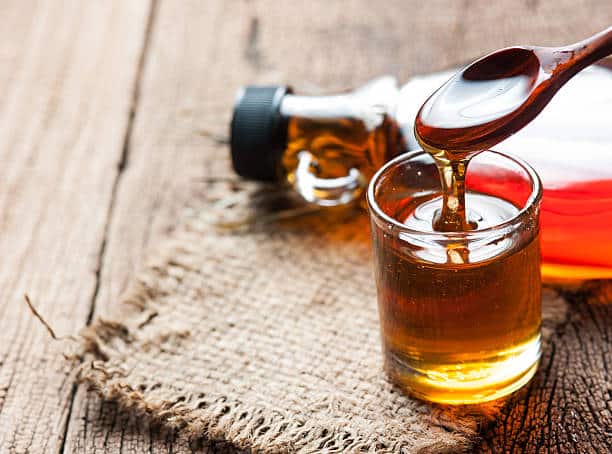
Today’s Spotlight is on Maple Syrup.

Maple syrup is a syrup made from the sap of maple trees. In cold climates, these trees store starch in their trunks and roots before winter; the starch is then converted to sugar that rises in the sap in late winter and early spring.

Maple syrup is a natural sweetener made from the sap of maple trees. It’s produced by:

  • Tapping maple trees in early spring
  • Collecting the sap
  • Boiling down the sap to reduce the water content and concentrate the sugars.
  • Caramelizing the sugars gives maple syrup its rich color and flavor.

It takes about 10 gallons of sap to make 1 quart of maple syrup. Maple syrup is made from the sap of certain species of North American maple trees, chiefly the sugar maple and black maple. It was used by Indigenous peoples of the Great Lakes and St. Lawrence River regions before the arrival of European settlers.

Maple syrup is claimed to be more nutritious and healthier than sugar. It’s a decent source of antioxidants, and one study found 24 different antioxidants in maple syrup.


History

Indigenous peoples in northeastern North America were the first to produce maple syrup. According to oral traditions and archaeological evidence, they were processing maple tree sap into syrup long before Europeans arrived in the region.

Maple syrup has been important to Indigenous peoples for thousands of years. It has been used for many purposes, including A sweetener, an anesthetic, Preserving meats, Trading, A sweetener for bitter medicines.

Maple syrup is also prized for its medicinal properties. For example, the Akwesasne Mohawks consider it one of the first medicines of the year. The maple harvest has been an opportunity for ceremony and celebration in many First Nations communities. The harvest coincides with the end of winter and the promise of spring.

The Algonquin word for maple syrup is “sinzibuckwud” which literally means “drawn from wood”.

The tradition of collecting sap and making maple syrup likely began one spring when temperatures rose from freezing at night into the 40s or 50s during the day, allowing the sap to run.

The process of making maple syrup involved:

  • Tapping into a maple tree
  • Inserting a spigotlike device at a height of 2 to 4 feet (0.6 to 1.2 metres)
  • Draining the sap
  • Boiling the sap until enough water evaporated to transform it into a thick sugary syrup

Native Americans made maple syrup by:

  • Collecting maple sap in hollowed-out logs
  • Putting hot rocks into the sap


Native Americans used maple syrup for:

  • Trading
  • Mixing with grains, berries, and bear fat
  • Making sweet drinks
  • Cooking
  • Seasoning food

The Ojibwe boiled maple sap in kettles made of birch bark or copper. They boiled it down into granulated sugar, which they used as the primary seasoning in food.

The Native Americans made three types of maple sugar:

  • Grain sugar: Similar to brown sugar
  • Cake sugar: Molded into blocks.
  • Wax sugar: Created by pouring boiled syrup on snow.

Colonists brought iron pots that made it easier to boil the sap, increasing the speed and efficiency of the syrup-making process.

Maple sugar was far more common than maple syrup. Dry maple sugar was much easier to store than liquid syrup, so it made more sense to create that instead. Maple sugar was given as gifts and used in trade.


Here are some fun facts about maple syrup:

  • It takes 40 liters of sap to make one liter of maple syrup.
  • A maple tree takes about 40 years to grow big enough to tap.
  • Most sap harvesting is done with suction pumps, rather than spiles and buckets.
  • Only three of 13 species of maple trees native to Canada are used for syrup.
  • Maple syrup is a natural source of energy.
  • Maple syrup contains phytonutrients that can help fight inflammation.
  • Maple syrup is a decent source of antioxidants.
  • Darker syrups like Grade B supply more antioxidants than lighter ones.

Maple syrup should be refrigerated once opened to prevent spoilage. Freezing is also a good option.


Consumption

The United States is the second-largest producer of maple syrup and the biggest consumer of it.  In 2023, the U.S. produced about 4.2 million gallons of maple syrup.  Vermont produces more than 50% of the U.S.’s maple syrup. In 2022, Vermont produced a record 2.5 million gallons of maple syrup.

Canada produces about 80% of the world’s pure maple syrup. Quebec alone produces over 90% of Canada’s maple syrup. In 2020, Canadian maple producers harvested 14.3 million gallons of maple syrup.

The global maple syrup market was valued at USD 1.35 billion in 2022. It’s projected to grow to USD 2.28 billion by 2030.


Generative AI is experimental. Info quality may vary.

The pandemic increased demand for maple syrup by almost 37%. The world’s largest importers of maple syrup in 2022 were:

  • USA: 52% of the world’s imports ($292 million)
  • Germany: 5.82% ($32 million)
  • Netherlands: 5.46% ($30 million)
  • France: 5.2% ($29 million)
  • United Kingdom: 5.07% ($28 million)

The maple syrup industry is expected to expand at a compound annual growth rate (CAGR) of 6.2% from 2022 to 2028. The market is projected to grow from USD 1.44 billion in 2023 to USD 2.28 billion by 2030.


Celebrating Maple Syrup

National Maple Syrup Day is celebrated on December 17th every year. This day is an opportunity to enjoy maple syrup’s warm and comforting flavors during the holiday season.

Canadian Maple Syrup Day is also celebrated on December 17th. This day revolves around the creation and use of maple syrup.

National Maple Syrup Day is an unofficial national holiday celebrated across North America. The Northeastern U.S Indigenous Peoples are noted for inventing maple syrup.

Let us know in the comments where you like to get your Maple Syrup from.


0 Comments

Submit a Comment

Your email address will not be published. Required fields are marked *

Subscribe to our Blog to receive more content like this. Click here to subscribe.

Be sure to watch our shows on QVC+  or our YouTube channel

Give us your feedback on our Social Channels 

FacebookInstagramTik TokLinkedInPinterestTwitter  

National Bacon Lovers Day

National Bacon Lovers Day

Today’s Spotlight is on Bacon.
By definition, bacon is a type of salt-cured pork that comes from a pig. It is typically made from the belly or less fatty parts of the back. Bacon is often smoked after being cured. Bacon can be eaten on its own as a side dish, or used as an ingredient in dishes like sandwiches, salads, soups, and even sweets. It can also be used as a flavoring or accent, such as in bacon bits in a salad.

Read More

National Soft Serve Ice Cream Day

National Soft Serve Ice Cream Day

Today’s Spotlight is on Soft Serve Ice Cream.
Soft serve is a frozen dessert that is similar to ice cream but is softer and less dense. Soft serve is made by churning air into the ice cream mixture as it freezes, giving it a lighter and creamier texture. Soft serve is at least 50% air, while ice cream is between 30% and 50% air.
Soft serve also contains less milk fat than hard ice cream, often 3% to 6%. Hard ice cream is more likely to contain other flavorings, like pieces of chocolate, fruit, nuts, and other sweets. The final product is formed at retail, made from a powdered or liquid premix.

Read More

National Potato Day

National Potato Day

Today’s spotlight is on the Potato.
A potato is a starchy tuber, or underground stem, that grows under the ground. The part of the potato that people eat is the tuber, which can be round or oval and have small white roots called "eyes". The size and color of the potato's skin can vary by variety, and can be white, yellow, or purple.
Potatoes are a root vegetable, which refers to any underground part of a plant that is eaten by humans. They are native to the Andes Mountains in South America and have been grown for thousands of years. Potatoes are a staple food in many countries around the world and are used in a wide variety of dishes.

Read More

National Ice Cream Pie Day

National Ice Cream Pie Day

Today’s Spotlight is shining on Ice Cream Pie.
Ice cream pie is a frozen dessert made with a sweet crust, creamy ice cream, and whipped cream topping. The crust can be made from a standard pastry, crumbled cookies, or graham cracker. The ice cream can be filled with your favorite flavors and topped with hot fudge or more whipped cream.

Read More

Celebrate National Cheeseburger Day

Celebrate National Cheeseburger Day

Today’s Spotlight is on the Cheeseburger.
A cheeseburger is a grilled sandwich made of a patty of ground meat, topped with a slice of cheese, and placed between two halves of a bun. The patty is often seasoned with chopped onions, spices, or breadcrumbs before cooking. The cheese is added near the end of the cooking time. The burger is then placed in a bun and topped with condiments like lettuce, tomato slices, onion slices, pickles, and ketchup. The bun should be slightly crunchy on the outside and soft inside. The cheese should be melting over the meat.

Read More

National Vanilla Custard Day

National Vanilla Custard Day

Today’s Spotlight is on Vanilla Custard.
Custard is a culinary preparation made with milk or cream, egg yolks, sugar and vanilla. Depending on its consistency, custard can be served on its own or used as a filling for other desserts or dessert sauce. It can be served warm or cold and is often combined with fruits and cookies to create other dessert dishes. Vanilla custard contains egg yolks which gives it a yellow color.

Read More

National Bratwurst Day

National Bratwurst Day

Today’s Spotlight is on Bratwurst.
Bratwurst is a type of German sausage, also known as a "brat". It's typically made from pork and veal, but can also be made with beef, or any combination of meat. Bratwurst has a smooth texture, pale color, and mild flavor. It can be seasoned with salt, white pepper, nutmeg, lemon peel, marjoram, caraway, and garlic. They are often consumed for breakfast in German cities.
Bratwurst is prepared and stored fresh, so it doesn't have a long shelf life like a sausage can. It's usually grilled or fried in a pan

Read More

National Rum Day

National Rum Day

Today’s spotlight is on Rum.
Rum is a liquor that is distilled from sugarcane or sugarcane byproducts such as molasses or sugarcane juice. The sugarcane is fermented and then distilled, producing a clear liquid that is often aged in oak barrels. This aging process gives the final product its characteristic color and flavor.
Rum has a typical alcohol concentration of 40% ABV. Some rum is "overproof," meaning that it has an alcohol concentration of at least 57.5% ABV. Most overproof rum exceeds this minimum, usually reaching 75.5% ABV, which is equivalent to 151 proof.

Read More

National Lemon Meringue Pie Day

National Lemon Meringue Pie Day

Today’s spotlight is on Lemon Meringue Pie.
Lemon meringue pie is a dessert pie consisting of a shortened pastry base filled with lemon curd and topped with meringue. Lemon meringue pie has a buttery, flaky, and crispy pie crust. The filling is jelly-like, translucent, and smooth, and is yellow due to the lemon juice, lemon rind, butter, and egg yolk. The pastry is thin and flat due to being rolled out using a rolling pin. During baking, the edges turn golden brown.

Read More

National Filet Mignon Day

National Filet Mignon Day

Today’s Spotlight is on Filet Mignon.
Filet mignon is a cut of beef from the small end of the tenderloin, or psoas major, which is located near the spine of the cow. The tenderloin runs along both sides of the spine and is usually butchered as two long snake-shaped cuts of meat. The tenderloin is sometimes sold whole. The tenderloin is the most well-known muscle on a cow and is also the most tender. Filet mignon is a lean cut of beef, which means you'll enjoy a fork-tender steak without much fat or connective tissue.
Filet mignon is one of the most tender and milder cuts of steak, making it a favorite among steak lovers. It's also one of the most expensive cuts of steak, due to its prized texture and that it's only about 2 to 3% of the total animal.

Read More

Pin It on Pinterest