
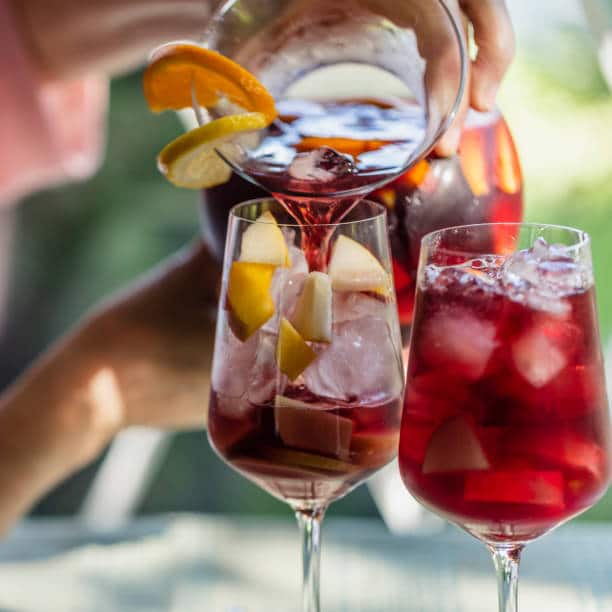
Today’s Spotlight is on Sangria.
Sangria is a sweet, alcoholic beverage originating in Spain and Portugal. A punch, sangria traditionally consists of red wine and chopped fruit, often with other ingredients or spirits. It’s made with red or white wine, fruit juice, and sliced fruits like oranges, pineapples, mango, pears, and kiwi. Other ingredients can include Flavored liqueur, Liquors, Sweeteners.
Sangria made with red wine is usually stronger than white wine punches. Bottles from Spain are limited by law to less than 12% alcohol by volume (ABV). Bottles produced in the U.S. usually have between 5% and 15%.
You can make sangria sweeter or less sweet by:
- Using a dry red wine
- Choosing fruits that are tarter than sweet.
- Adding more acidic juice like lemonade
- Not adding sugar to the mixture
It’s great for making it ahead of time.
History
Sangria’s origins date back to the Middle Ages. In ancient Roman times, people added wine to poor quality water to kill bacteria. They also added herbs and spices to cover the taste of the wine.
These spiced wines were called hippocras and were served after meals. In the 18th century, sangria originated in Spain as a thirst quencher after a hot day. It was a communal experience, with family and friends sharing a pitcher or bowl of Spanish red wine, fruit, and brandy.
Sangria was officially introduced to the American market at the 1964 World’s Fair. The term “sangria” means “bloodletting” in Spanish and Portuguese and symbolizes the drink’s red color.
Sangria is made in Spain and Portugal. It’s been a popular drink in Spain for centuries. Cruz Garcia Real Sangria is made in Spain. It’s made with Spanish red wine and natural citrus flavors. The grapes come from the best wine-making regions of Spain, including La Mancha, Valencia, Alicante, and Rioja. The grapes give the sangria its ruby red color and fresh citrus aroma. Ed Hardy Sangria is also made in Spain.
Here are some interesting facts about sangria:
- Sangria is both a cocktail and a punch.
- Sangria’s name comes from the Spanish word sangre, which means “blood”. The word sangre comes from the Latin word sanguis.
- Sangria contains the same properties and benefits as red wine. It has antioxidants, polyphenols, and flavonoids that protect cells from aging. It also contains resveratrol, which protects against inflammation in the body.
- The earliest versions of sangria are believed to have originated more than 2,000 years ago.
- Spaniards introduced some versions of sangria to the Americas in the early 1800s.
- Sangria became popular in the United States during the 1964 World’s Fair in New York.
Here is a Sangria Recipe for you to try:
Ingredients:
- 1/2 medium apple (cored, skin on, chopped into small pieces)
- 1/2 medium orange (rind on, sliced into small pieces, large seeds removed // plus more for garnish)
- 3-4 Tbsp organic brown sugar (or 3 Tbsp (37.5 g) organic cane sugar as original recipe is written)
- 3/4 cup orange juice (plus more to taste)
- 1/3 cup brandy (plus more to taste)
- 750 ml bottle dry Spanish red wine
- ~1 cup Ice to chill
Instructions:
- Add apples, oranges, and sugar to a large pitcher and muddle with a muddler or wooden spoon for 45 seconds.
- Add orange juice and brandy and muddle again to combine for 30 seconds.
- Add red wine and stir to incorporate, then taste and adjust flavor as needed. I added a bit more brandy, orange juice and brown sugar. Stir to combine.
- Add ice and stir once more to chill. Serve as is, or with a bit more ice. Garnish with orange segments (optional).
- Store leftovers covered in the refrigerator for up to 48 hours, though best when fresh.
- Enjoy!
Consumption:
According to IWSR data, 3.25 million nine-liter cases of sangria were sold last year. However, sangria remains a relatively small category. According to Tastewise, sangria is consumed 1.55 times every year on average. Market adoption for sangria in restaurants is 3.09%, with an average pricing of $11.44.
Bottle sangria volumes have nearly doubled since 2010. Depletions of sangria (excluding wine brands whose overall volumes are not primarily sangria) increased 1.9% to 2.39 million cases last year. Domestically produced sangria represents the larger slice of the market, 3.7 million cases to imports’ 972,459 cases. However, import volume grew faster during that period, surging 9.6% versus domestic growth of 2.7%.
Celebrating Sangria
National Sangria Day is celebrated on December 20 every year. Sangria was first introduced to the United States at the 1964 World’s Fair in New York. The Spanish Pavilion served the drink to visitors. Sangria was reintroduced to the U.S. in the late 1940s by Hispanic Americans and Spanish restaurants. It became popular after being featured at the 1964 World’s Fair.
Sangria was originally created in Spain in the 18th century as a thirst quencher after a hot day. It was a communal experience, with family and friends sharing a pitcher or bowl of Spanish red wine, fruit, and brandy.
Let us know in the comments if you prefer red or white sangria.
0 Comments