
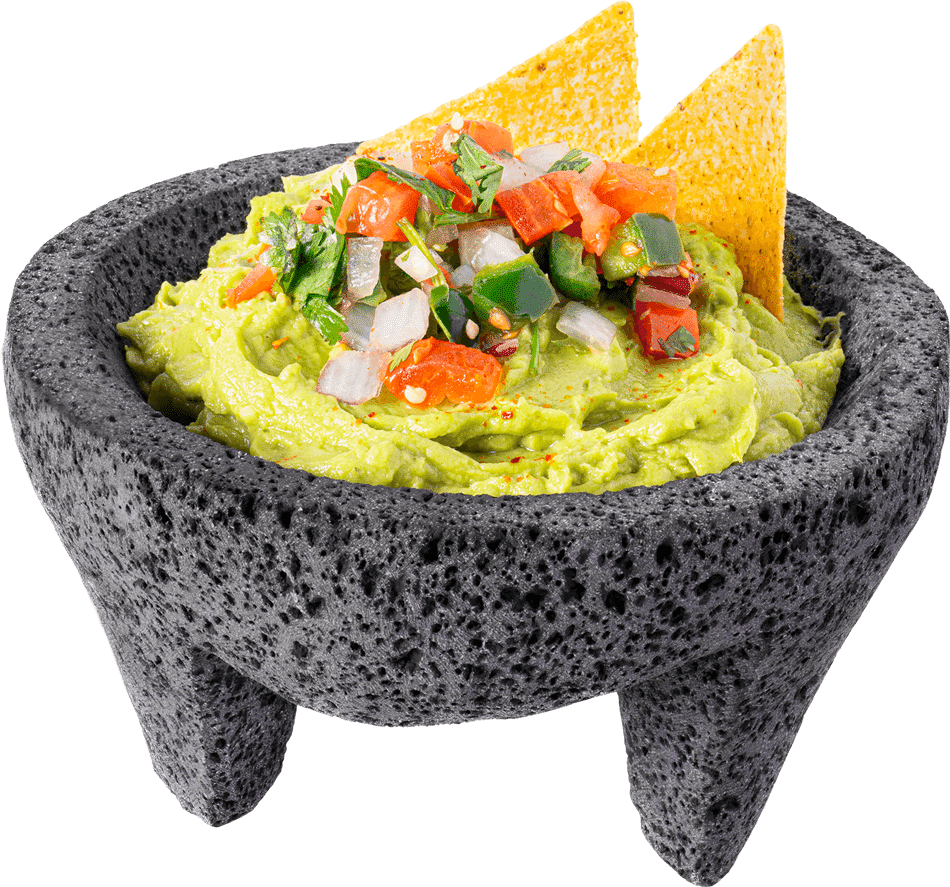
Today’s Focus is on Guacamole!
Guacamole is an avocado-based dip, spread, or salad first developed in Mexico. In addition to its use in modern Mexican cuisine, it has become part of international cuisine as a dip, condiment and salad ingredient. In addition to its use in modern Mexican cuisine, it has become part of international cuisine as a dip, condiment and salad ingredient.
In Mexican Spanish, it is pronounced wakaˈmole. In American English, it tends to be pronounced /ˌɡwɑːkəˈmoʊliː/, and this pronunciation is also common in British English, but /ˌɡwɑːkəˈmoʊleɪ/ is more common.
Guacamole originated in Mexico and is often eaten with chips or as a topping on tacos. It’s especially popular on Super Bowl Sunday and Cinco de Mayo.
Guacamole goes well with many side dishes, including:
- Hummus
- Pita bread triangles
- Vegetable patties
- Corn tortilla chips
- Potatoes au gratin
- Cheese bread
Here are some other foods that pair well with guacamole:
- French fries – The crispness of the fries’ pairs well with the rich and creamy guacamole.
- Vegetables – Roasted vegetables are a great pairing with guacamole. You can also try dipping baby carrots, celery sticks, cauliflower, broccoli, julienne bell peppers, jicama sticks, and grape tomatoes in guacamole.
- Toast – Spread guacamole on toast and add poached eggs for a gourmet breakfast.
- Eggs – Guacamole goes well with eggs in a breakfast burrito, omelet, or egg salad.
- Jicama – This Mexican yam is like a sweet potato and can be cut into fries and dipped in guacamole.
Guacamole is also a popular topping for many Mexican foods.
History
The exact origins of guacamole are unknown, but it is believed to have been first made by the Aztecs in the 1500s. The Aztecs called the dish “ahuaca-mulli”, which means “avocado mixture” or “avocado sauce”. The dish was a popular part of Aztec cuisine by the time of the Spanish conquest in the 16th century.
Avocado seeds were first found in the Tehuacan Valley of Mexico around 9,000–10,000 years ago (7000–8000 BCE) and had been domesticated by various Mesoamerican groups by 5000 BCE. They were likely cultivated in the Supe Valley in Peru as early as 3100 BCE.[14] In the early 1900s, avocados frequently went by the name alligator pear. In the 1697 book, A New Voyage Round the World, the first known description of a guacamole recipe (though not known by that name) was by English privateer and naturalist William Dampier, who in his visit to Central America during one of his circumnavigations, noted a native preparation made of grinding together avocados, sugar, and lime juice.
The Spanish spread the dish to other parts of Mexico and introduced it to the rest of the world. The Spaniards loved the dish but could not pronounce the name correctly. They added garlic, onion, lemon sauce, and salt to the recipe, giving birth to guacamole as we know it today. The Spaniards took the recipe back to Europe. After some translation, the word “guacamole” was given to the dish.
The word “guacamole” is derived from two Aztec Nahuatl words: “ahuacatl” (avocado) and “molli” (sauce). The Aztecs created guacamole because avocados grow naturally in South Central Mexico. The word “guacamole” is pronounced “waka’mole” and “huaka’mole” in Nahuatl. In the United States, it’s been informally shortened to “guac” since the 1980s.
The first person to write an English-language recipe for guacamole was the British privateer, William Dampier. He described the recipe in his 1697 book, A New Voyage Round the World.
Today, guacamole is a popular dish in many countries and is often served as a dip or a condiment.
Here are some fun facts about guacamole:
- September 16th is National Guacamole Day.
- The Apollo 11 astronauts brought guacamole to space with them.
- In the early 20th Century, avocados were referred to as “Alligator Pears” due to their scaly skin.
- Avocados contain healthy monounsaturated fat, which boosts brain function and health.
- Avocados are gluten free, dairy free, vegan, vegetarian, and cholesterol-free.
- The Haas avocado does not begin to ripen until it is harvested.
Here is a guacamole recipe for you to try:
Guacamole is traditionally made by mashing peeled, ripe avocados and salt with a molcajete y tejolote (mortar and pestle). Guacamole is a dip or spread made of mashed avocados and other ingredients. The avocados provide a creamy base, while the other ingredients add flavor and texture.
Ingredients:
- 3 avocados, ripe
- ½ small yellow onion, finely diced
- 2 Roma tomatoes, diced.
- 3 tablespoons finely chopped fresh cilantro.
- 1 jalapeno pepper, seeds removed and finely diced.
- 2 garlic cloves, minced.
- 1 lime, juiced.
- ½ teaspoon sea salt
Directions:
- Slice the avocados in half, remove the pit, and scoop them into a mixing bowl.
- Mash the avocado with a fork and make it as chunky or smooth as you’d like.
- Add the remaining ingredients and stir together. Give it a taste test and add a pinch more salt or lime juice if needed.
- Serve the guacamole with tortilla chips.
- Enjoy!
Consumption
Guacamole has increased avocado sales in the U.S., especially on Super Bowl Sunday and Cinco de Mayo. The rising consumption of guacamole is most likely due to the U.S. government lifting a ban on avocado imports in the 1990s and the growth of the U.S. Latino population.
The United States consumed about 3 billion pounds of avocados in 2021. This is a significant increase from 2000, when per capita consumption was 2.21 pounds. In 2021, per capita consumption was 8.43 pounds. The U.S. is one of the world’s biggest consumers of avocados.
Americans also consumed 6,961,940 pounds of guacamole at work in the past year. This is enough to fill an Olympic swimming pool. On Super Bowl game day, Americans consume 130 million pounds of guacamole.
Celebrating Guacamole
National Guacamole Day is celebrated on September 16th every year. This day celebrates the avocado-based dip or spread, guacamole. National Guacamole Day falls on the same day as Mexican Independence Day. Festivities often include stories from 1810. National Spicy Guacamole Day is celebrated on November 14th every year.
Let us know in the comments how you like your Guacamole and if you will be celebrating.
0 Comments